The many lives of India's real Dhurandhar
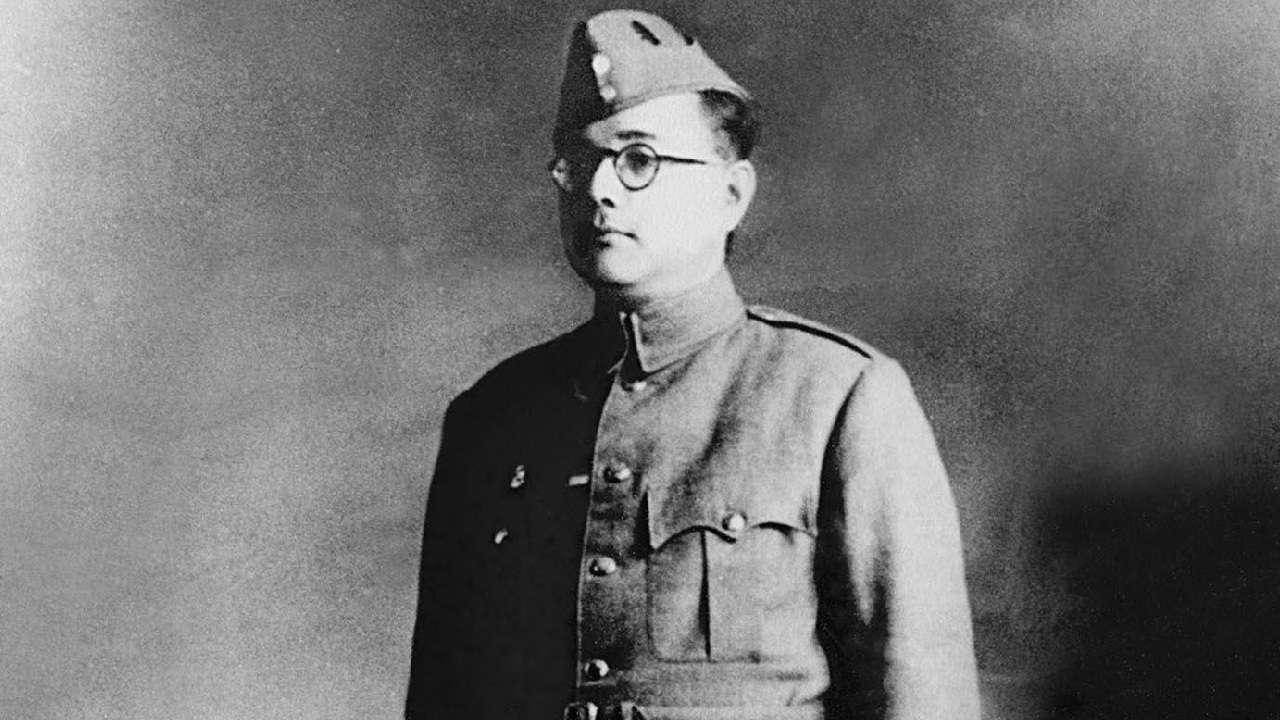
Not every patriot fights in plain sight. Some speak from podiums. Some march in protest. And some, under the shadow of an empire, disappear behind false names, cross borders in silence, and return not just as men, but as movements. He belonged to that rare last category. He was not merely a freedom fighter in the familiar sense. He was a planner, a risk-taker, a man of discipline, a military organiser, and someone who understood that freedom would never be handed over by an empire out of kindness. It had to be pursued - with courage, strategy, sacrifice, and absolute clarity of purpose.
In simple terms, Dhurandhar means someone who is highly capable, sharp-minded, dependable, and able to carry great responsibility. It is not just about bravery. It is about strength of mind, seriousness of mission, and the ability to act decisively when history demands it.
That is Bose, Netaji Subhash Chandra Bose. One of India's most operationally brilliant sons, also an apt Dhurandhar. Before he became a legend in military uniform, before he became a symbol of resistance, he first became a man who moved in secrecy for the sake of freedom. He travelled under cover names such as Mohammad Ziauddin and Orlando Mazzotta, slipping past British watch and confusing one of the most powerful empires in the world. That alone tells us something important: he was not only bold, but he was also deeply strategic. He did not fight the British only with words. He fought them with planning.
That is why the real story of Netaji is far more vast than this piece of article; it is much bigger than the few familiar images we remember - the military cap, the round glasses, the powerful slogan: "Give me blood, and I will give you freedom." That line still stirs the heart, but Netaji was much more than a powerful speaker. He was a man of action, and in many ways, one of the sharpest political minds of India's freedom struggle.
Among the many remarkable chapters of Netaji Subhash Chandra Bose's life, few are as gripping as the moments when he chose to vanish into the shadows so that India's hope could remain alive. In 1941, when the British believed they had him cornered under strict surveillance at his Calcutta residence, Bose quietly slipped away right under their noses. Disguised as a Pathan or Afghan traveller and using the name Mohammad Ziauddin, he carried not only a false identity but also the burden of a nation still waiting to be free.
His journey through Peshawar and Kabul unfolded in a world thick with danger - spies, double agents, embassy manoeuvring, and the paranoia of war. This was far more than an escape. It was an act of immense courage, sharp planning, and extraordinary composure under pressure.
As his mission carried him deeper into wartime Europe, another name became linked to his secret movement: Orlando Mazzotta. It was yet another borrowed identity in a life that had willingly embraced risk for a cause far greater than personal safety. After weeks of uncertainty in Afghanistan and unsuccessful efforts to secure Soviet support, Bose was eventually able to move forward under this Italian identity - often described as that of an Italian diplomat and radio operator. Over time, Orlando Mazzotta came to be remembered as one of the most fascinating aliases in Netaji's covert journey across continents.
Under this cover, Bose went on to undertake one of the boldest and least spoken-about missions of India's freedom struggle. In 1943, he travelled nearly 18,000 kilometres through perilous wartime waters aboard the German submarine U-180, before making a dramatic mid-ocean transfer near Madagascar to the Japanese submarine I-29. It was the kind of journey that feels less like political history and more like a wartime thriller. By then, Bose had already outwitted British surveillance in India through disguise, secrecy, and astonishing nerve. But he was not done. He was determined to reach East Asia and build a military front against the British Raj. Through rough seas, hostile territory, and constant threat, he is said to have remained calm, disciplined, and unwavering - reportedly even dictating instructions in the midst of grave danger.
And yet, beneath every disguise, every changed route, and every assumed name, the man himself never changed. The face may have been altered. The passport may have been different. But the mission remained the same. Behind Mohammad Ziauddin and Orlando Mazzotta stood the same unyielding spirit - Netaji, moving through silence, shadows, and immense risk, so that one day India could walk towards freedom in the light. Netaji understood something very important: an empire is not defeated only by emotion or moral anger. It is defeated when it is challenged from every side - politically, psychologically, and strategically.
This is why one of the most remarkable chapters of his life is not just what he said, but how he escaped. In 1941, while he was under strict British surveillance in Calcutta, Netaji carried out one of the most daring escapes in India's anti-colonial history. He left his family home in disguise, avoided the eyes of British intelligence, and began a dangerous journey out of India.
This was not just an act of personal courage. It was proof of his discipline, his planning, and his willingness to take enormous risks for the country; all of these were executed by the man in an era when communication was far slower, riskier, and far more dependent on human networks, coded movement, and physical transmission than it is today.
And that is what made him different. He did not want Indians to remain afraid of British power. He wanted them to believe that the empire could be challenged - and defeated. Netaji understood that British rule was not held together only by guns or laws. It was also held together by fear. The British wanted Indians to believe that their rule was permanent, that resistance was useless, and that freedom was too far away to be real.
Netaji wanted to break that mindset. He wanted Indians to stop thinking like subjects and start thinking like a free people. He was also among the few Indian leaders of his time who clearly understood the global political moment.
When the Second World War broke out, he saw that Britain was no longer unbeatable. Its power was stretched. Its enemies were growing. The empire was vulnerable. While many saw only danger, Bose saw a possible opening for India's freedom.
His efforts to seek support from countries like Germany and later Japan are still debated, and rightly so. But these decisions cannot be understood in a shallow or simplistic way. Bose was not thinking in comfortable moral terms from a safe distance. He was acting in a brutal world, under colonial rule, with one overriding goal: to free India from British control.
People may disagree with some of his choices. Historians may continue to debate them. But what cannot be denied is the scale of his commitment and foresight as an eligible ICS candidate. He was willing to risk reputation, safety, and even history's judgement for the cause of India's freedom.
That commitment came alive most powerfully through the genesis of the Indian National Army, or the INA. Under Netaji, the INA became much more than a military force. It became a symbol of national confidence. It told Indians that they were not born only to be ruled, punished, or commanded by others. They could organise themselves. They could fight under their own flag. They could imagine themselves as builders of a free nation.
Because freedom is not only won on battlefields or in legal documents. It is first won in the minds of people. The INA changed how many Indians saw themselves. It gave shape to the idea that freedom was not just a dream or a distant promise - it was something worth marching for, sacrificing for, and, if needed, dying for. One of the most remarkable parts of this vision was the Rani of Jhansi Regiment, the women's unit of the INA. This was not just symbolic. It showed that Netaji's idea of freedom was larger and more modern than many imagined. He believed that women, too, had an equal role in the struggle for the nation. That was a bold and meaningful statement for its time.
And perhaps that is one reason why Netaji still feels so relevant today. In a time when leadership is often mistaken for visibility, he stood for something deeper: calm under pressure. In a time when patriotism is often reduced to slogans, he lived it through personal sacrifice. In a time when public life often rewards appearance over substance, Netaji stood for seriousness, risk, and responsibility.
Netaji Subhash Chandra Bose was not made for easy remembrance, and that is exactly why he remains unforgettable. He was not a man of half-measures, nor a patriot built for comfort or applause. He was forged in urgency, carried by conviction, and driven by a love for India so fierce that it demanded everything of him.
In an age where strength is often mistaken for display, Netaji reminds us that true strength is quieter, harder, and far more demanding - it is discipline in the face of fear, sacrifice in the face of uncertainty, and purpose that does not bend even when history does. He did not wear courage for the world to see; he carried it within, like a vow. He did not wait for his time to arrive; he carved his way into it. And that is why he rises above memory and enters something larger - legend, yes, but also duty. If India has ever produced a true Dhurandhar, a son who carried the burden of freedom like destiny itself, it was Netaji Subhash Chandra Bose, no matter, even if subject to people's views and political consent.
The author is a Delhi-based independent contributor to print and online publications ; views are personal