Social consciousness is Ambedkar’s mantra for achieving social equality
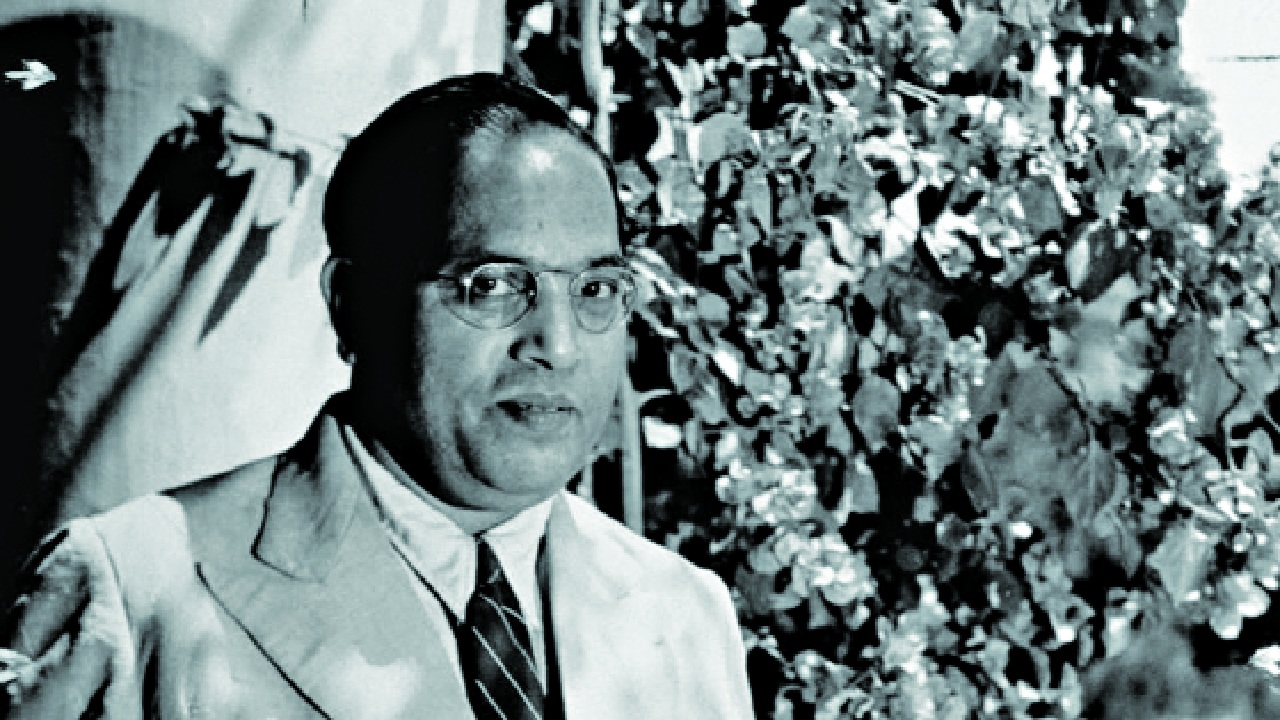
On the occasion of the 135th birth anniversary of the great Bhimrao Ambedkar, whose name instantly evokes thoughts of social equality, we remember his contributions to igniting social change through a legal rights-driven mechanism. His tireless efforts and unwavering dedication paved the way for countless reforms that continue to inspire generations. Today, we honour his legacy by reaffirming our commitment to justice and human dignity for all.
Ambedkar advocated legal rights to eliminate inequality and discrimination. He believed that such rights must be accompanied by “social consciousness, without which equality cannot be achieved”. He devoted his entire life to this cause, viewing social consciousness as the fundamental mantra of social equality. His efforts culminated in drafting the Indian Constitution, which enshrines the principles of justice, liberty, equality, and fraternity for all citizens. His vision extended beyond law; he championed education and economic empowerment as essential tools to uplift marginalised communities. Through his unceasing struggle, he laid the groundwork for a more inclusive and democratic society. Even today, his teachings inspire movements for social reform and human rights across India and beyond.
Vision of a casteless society
Ambedkar envisioned a casteless society where everyone enjoys equal rights and opportunities. He drafted the Indian Constitution, embedding principles of equality, liberty, and fraternity. He prioritised equality before liberty, placing Articles 14-18 (fundamental rights to equality) before liberty rights such as Articles 19 and 21 in Part III of the Constitution. By abolishing untouchability and prohibiting discrimination on the basis of caste, the Constitution aimed to dismantle centuries-old social hierarchies. Ambedkar believed that social reform was essential for true democracy and that legal safeguards must accompany social change. His vision sought to create an inclusive India where all individuals could realise their full potential without the barriers of caste-based discrimination.
Roots of inequality
According to Ambedkar, India’s social and economic inequalities stem from the caste system. Born into a Dalit family, he faced discrimination from childhood, which strengthened his resolve to fight for the oppressed. His father’s lesson “education makes everything possible”— ignited his lifelong faith in learning. Overcoming countless barriers, he earned degrees from Columbia University and the London School of Economics, laying the foundation for his advocacy. Ambedkar argued that true social reform required not only legal changes but also a deep transformation of societal attitudes. His work emphasised the need for political representation and economic empowerment of marginalised communities to achieve genuine equality.
Twofold freedom
As a philosopher and social reformer, Ambedkar argued for twofold freedom: first, freedom from shackles (liberation from social restrictions and inequalities), and second, freedom to act without discrimination (the capacity to pursue one’s goals and aspirations). He saw the caste system as restricting these freedoms for lower castes, viewing social consciousness as a powerful tool for achieving social justice through awareness of inequalities. Ambedkar believed that true emancipation required both the removal of systemic barriers and the empowerment of individuals to participate fully in society. He emphasised education and legal reforms as essential mechanisms to dismantle oppressive structures and promote equal rights. Ultimately, his vision of twofold freedom was foundational in shaping modern democratic ideals and policies aimed at creating an inclusive and equitable social order.
Individual consciousness vs social awakening
People in his time had consciousness, but it was too feeble and individualistic to become truly social. Two examples illustrate this: his Marathi Brahmin teacher, Keshav Ambedkar, gave him the surname “Ambedkar” for social protection, and another Brahmin teacher, Dada Keluskar, recognised his talent and took him to Maharaja Sayajirao Gaekwad III for funding his foreign education. These were acts of personal consciousness. Ambedkar transformed personal consciousness into social consciousness through legal mechanisms. He realised that individual advancement, while important, could not dismantle systemic oppression without collective action and structural reforms. Ultimately, his efforts laid the groundwork for a broader social awakening that challenged entrenched caste hierarchies and fought for equal rights across society.
Key contributions
His efforts inspired countless people to challenge social norms and discrimination. His negotiation skills secured the 1932 Poona Pact, reserving seats for Dalits in legislative bodies-a milestone for marginalised communities’ political representation. As Chairman of the Constitution’s Drafting Committee, he ensured provisions for social justice, equality, and the abolition of untouchability. He championed the cause of education for all, advocating policies that promoted access to schooling for disadvantaged groups. Additionally, he played a pivotal role in formulating laws that protected labour rights and improved working conditions across India. Through his writings and speeches, he raised awareness about caste-based inequalities and mobilised public support for progressive social reforms.
Beyond dalits: Universal equality
It would be unfair to say Ambedkar worked only for Dalits. He championed equality, liberty, justice, and fraternity for all deprived classes, with equal emphasis on women’s rights. The Uniform Civil Code (Article 44) reflected his vision for women’s equality, liberty, and justice. Before his death in 1956, he introduced the Hindu Code Bill, securing laws such as the Hindu Marriage Act, Hindu Succession Act, Hindu Minority and Guardianship Act, and Hindu Adoptions and Maintenance Act. His efforts laid the groundwork for a more inclusive society, challenging deeply entrenched social hierarchies and advocating legal reforms that aimed to protect the marginalised across caste, gender, and class lines. Ambedkar’s legacy continues to inspire movements for social justice and equality in contemporary India and beyond.
Ambedkar and Gandhi
History notes ideological differences between Ambedkar and Gandhi. Ambedkar did not participate in the freedom struggle (Gandhi’s domain), but fought for equality, eradication of discrimination, and socio-economic justice. He believed liberty without equality cannot yield justice-a truth, since equality and liberty complement each other. Even expelling the British for self-rule without social equality would barely differ from subjugation. Gandhi, on the other hand, prioritised spiritual and moral awakening through non-violent resistance, emphasising unity but favouring personal reform over structural change. Though both approaches mattered, Ambedkar’s assertion of “social consciousness” uniquely addresses the call for structural transformation to achieve a just society.
The writer is a Professor of Law and Research at Amity University, Noida ; views are personal