Delhi’s water future depends on what we do today!
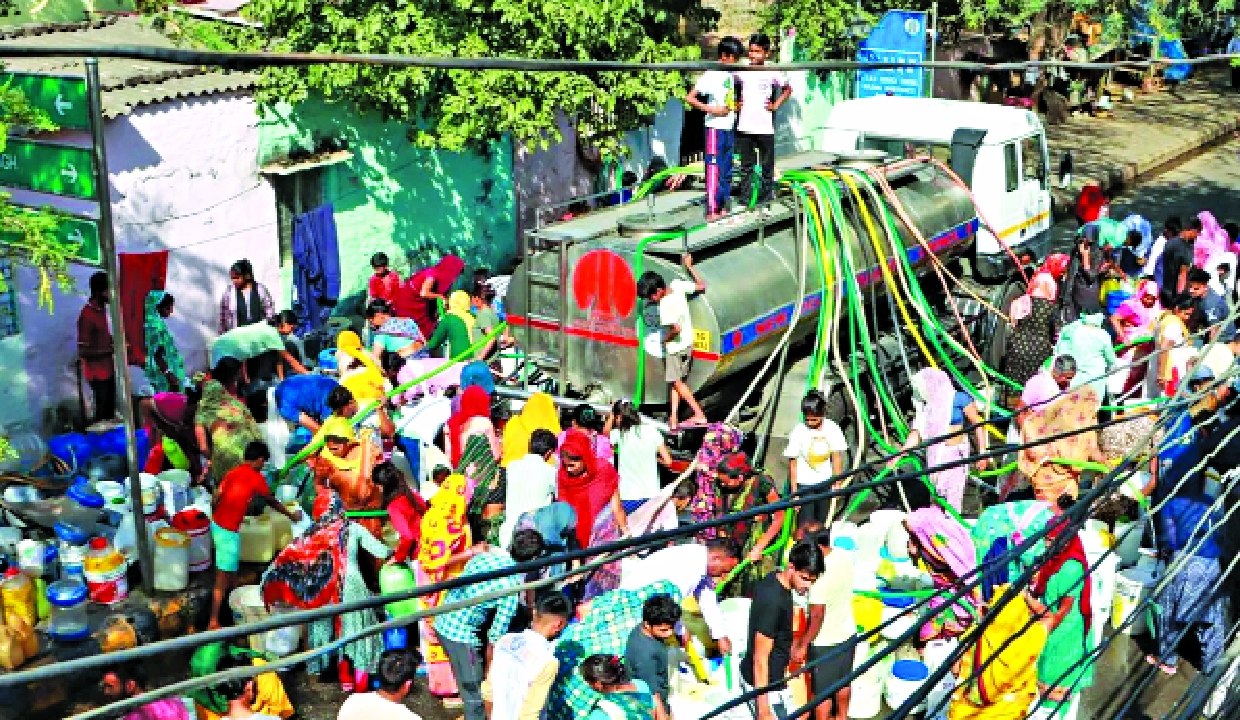
Every year, Delhi faces the same issues in summer -- rising temperatures, increasing demand for water, and stress on the water resources of the city. What is new about the issue today is the seriousness of the efforts to solve the problems effectively.
To understand the challenge better, it is essential to focus on the basic problem that Delhi faces every year in relation to water. While the demand increases in summer, the water supply in the city remains the same. This makes it important to look at ways to better manage the city's supply requirements.
A considerable amount of the city's water requirement is fulfilled by north Indian rivers. Over the years, these rivers have come under increasing strain. Pollution, untreated waste, encroachment, and shrinking river flows have all reduced both the quantity and quality of water available.
It has also become critical to see the bigger picture here with reference to our environment. Low snowfall in the Himalayas due to climate change impacts our sources of water directly and highlights the need to look at measures on a large scale. We need to be ready for both the present and the future.
In such a situation, it is worth noting that a new approach to resolving the water problem is emerging. Though Delhi has received abundant rains in the monsoon period for many years, the runoff from this monsoon water was not being used and was allowed to drain away.
At the same time, there were problems related to floods and a shortage of water in the summer months. It had become important to address this issue, which is the focus of current policymaking. It is for this reason that rainwater harvesting has gained significance as an important area of policy implementation.
The concept of rainwater harvesting is very clear and easy to understand. The objective behind it is to conserve rainwater in its place and recharge it into the groundwater, thus addressing the problem of floods and ensuring water security by minimising dependency on external water.
This is a positive trend, as it is no longer merely a suggestion but something that is enforced. The government has established deadlines for achieving compliance with installing the rainwater harvesting systems before the onset of the monsoon season for government properties, parks, residential areas, and campuses. Accountability appears to be at the heart of this initiative.
It is worth noting here that the Delhi Jal Board has played an instrumental role in enforcing rainwater harvesting by providing financial incentives to encourage compliance. Incentives such as rebates for installation of the system have been proposed along with stricter compliance procedures. Self-certification has also been proposed as another mechanism of compliance and long-term accountability of property owners.
That said a rapid depletion of groundwater resources remains an issue of concern not just in areas around Delhi, but in many other states also. India is among the biggest consumers of groundwater resources in the world. According to estimates, groundwater provides irrigation for about 62% of India's cultivated land, accounts for 85% of rural water needs, and satisfies almost half of urban water demands.
It is due to over-construction, less space available for rainwater to infiltrate, and increased water consumption that depletion of groundwater resources has increased. Thus, it has become critical to conserve groundwater resources. Instead of letting rainwater runoff into storm sewers, it has to be allowed to seep into the ground. For this, we are focused on proper planning, monitoring the exploitation of groundwater resources, and safeguarding water bodies.
Meanwhile, as the summer season progresses, the government has implemented its action plan, which includes efficient distribution of water, increased responsiveness to water shortage areas, and better monitoring.
This has enabled the authorities to ensure that people suffer no inconvenience even in peak demand.
Nevertheless, even the most effective initiatives can only work when people equally participate in them. The need for conservation of water should involve everyone. Be it individual homes adopting rainwater harvesting methods or the RWAs and the entire community making sure of its efficient use, each step is significant. Ultimately, the goal should be to make water conservation a mass movement in Delhi. In this process, the communities and the RWAs can be a very valuable partner of the government and work collectively to make it a success.
Rainwater harvesting and other water conservation methods are the way to go. In addition, we need strict policies to enforce them and citizen participation to ensure water security.
While the problem may be difficult, solutions still exist. It is through proper planning and teamwork only that we can ensure the city does not face any future water shortages.
Author is member of the Delhi Legislative Assembly & MTech in mechanical engineering and Masters in international business from University of Southampton, UK; Views presented are personal.