From efficiency to sustainability: The evolution of conscious industry
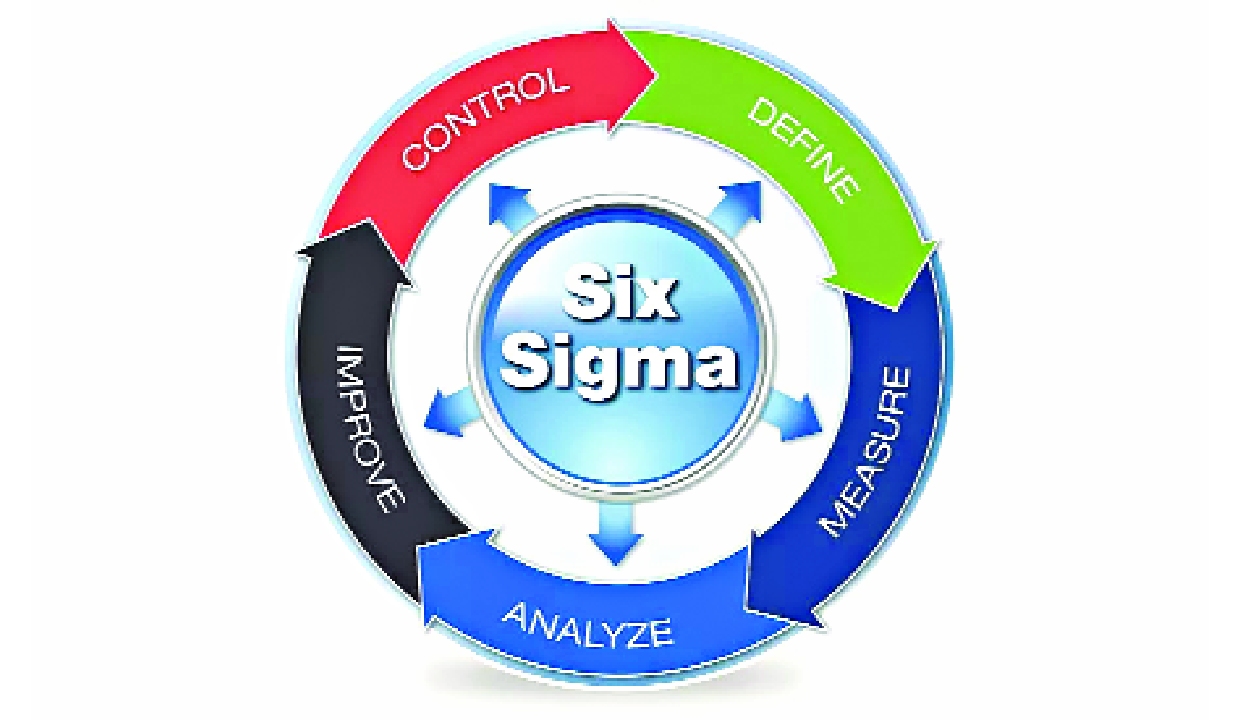
At the turn of this century, the most intelligent boardroom conversations revolved around a single obsession: efficiency. The language was clinical, precise, mathematical. Waste reduction. Defect control. Process optimisation. Lean systems.
I remember walking into the meeting where Six Sigma was to be introduced. Our CEO asked if I knew what it stood for. In those pre-Google days, I reached for common sense and humour: ‘If it’s American, it must be simple.” As it turned out, the very first line of the presentation read: “Six Sigma plugs the hole in the bucket.” We made eye contact and laughed. But beneath the simplicity, the concept was powerful.
Six Sigma became the gold standard of industrial discipline. If you were a certified champion, those credentials walked into the room slightly ahead of you — much like a pot belly. Factories embraced it. Production lines worshipped it. Consultants built empires around it. And, to be fair, it worked. The manufacturing world became sharper, faster, cleaner, and more accountable. Every scrap of excess material, every unnecessary movement, every defective output was treated as a leak in a carefully engineered system. The goal was simple: preserve value by eliminating waste.
But nearly a quarter of a century later, humanity discovered something larger. The bucket itself was leaking — not merely in factories or supply chains, but in ecosystems, lifestyles, cities, oceans, and our very relationship with consumption itself.
That is where sustainability quietly entered - not as a replacement for efficiency, but as its natural evolution. Because sustainability, in many ways, is Six Sigma expanded to life itself.
Today, the conversation is no longer only about how efficiently we manufacture fabric. It is about what happens to everything left behind once manufacturing is complete — the offcuts, the trims, the rejected panels, the tiny mountains of discarded material that silently accumulate across the world every single day. For decades, fabric scraps were treated as unavoidable industrial residue: too small to value, too inconvenient to process, too insignificant to discuss. But sustainability changes the lens entirely.
What if the scrap is not waste? What if it is simply material waiting for its next identity?
A discarded fragment today can become insulation tomorrow, handcrafted accessories, regenerated yarn, or even the design statement itself. Reuse and recreation are no longer experiments in niche studios. They are becoming central to the future of responsible manufacturing. The beauty of fabric is that, unlike many materials, it carries memory — texture, history, energy. A scrap is not dead matter. It is unfinished possibility.
This is why the philosophy of textile reuse feels so connected to the ancient wisdom of Yoga. At its core, Yoga is not merely exercise. It is alignment. It teaches that waste occurs the moment there is disconnection — between breath and awareness, between movement and intention, between body and mind. The moment we lose consciousness of how energy flows through us, imbalance begins.
The same principle applies to sustainability. Modern consumption has functioned like a body breathing incorrectly. We inhale endlessly through production, extraction, and acquisition — but we have forgotten how to exhale responsibly through reuse, restoration, and mindful circulation. The result is imbalance: overflowing landfills, polluted rivers, burning textile waste, and societies consuming faster than they can emotionally process.
Yoga reminds us that health lies in circulation, not accumulation. Nothing in nature wastes itself — a fallen leaf becomes soil, a river recycles its own journey. Sustainability is, in this sense, industrial yoga. It asks industries to move with awareness, to understand that every output carries a consequence and every resource deserves respect.
In traditional manufacturing, scraps represented inefficiency. In sustainable systems, they represent opportunity. That single change in perception is revolutionary. When designers build collections around leftover materials, creativity transforms. When factories intelligently segregate scraps, systems transform. When consumers value recreated products, markets transform. And when businesses measure not only profit margins but also environmental footprints, priorities transform.
The remarkable thing is that sustainability has moved far beyond environmental activism - it has become operational intelligence. The companies shaping the future are no longer simply those producing the fastest or cheapest products. Increasingly, they are those designing circular systems where materials stay in motion longer, waste is minimised before it exists, and regeneration is built into the strategy itself.
Six Sigma taught us how to control defects in manufacturing. Sustainability asks us to examine defects in behaviour.
Six Sigma asked: How do we reduce wastage inside the factory? Sustainability asks: How do we reduce wastage within civilisation?
It is no longer enough for a process to be efficient if the planet supporting that process becomes inefficiently burdened.
And perhaps the most hopeful part of this transition is that creativity is returning to industry. For years, mass production rewarded uniformity. Now, sustainability rewards imagination. A recreated fabric panel carries character. A repaired garment feels personal in ways a new one rarely does. Imperfection becomes individuality rather than failure. Yoga teaches acceptance — not of stagnation, but of transformation. A stiff body can grow flexible. A fragmented life can become integrated. Likewise, a fragmented textile can become whole again. The scrap is not the end of the story. It is simply the pause before reinvention.
Value does not disappear merely because form changes. A cutting on a factory floor still holds purpose. A repaired product still carries dignity. A recreated object still possesses beauty.
We are entering an era in which the most admired industries may not be those that produce the most, but those that waste the least while creating the most meaning. The future belongs not to those who build bigger buckets — but to those who finally learn how to stop the leaking altogether.
The writer is a trained Sivananda Yoga teacher; Views presented are personal.