NEET & the crisis of trust
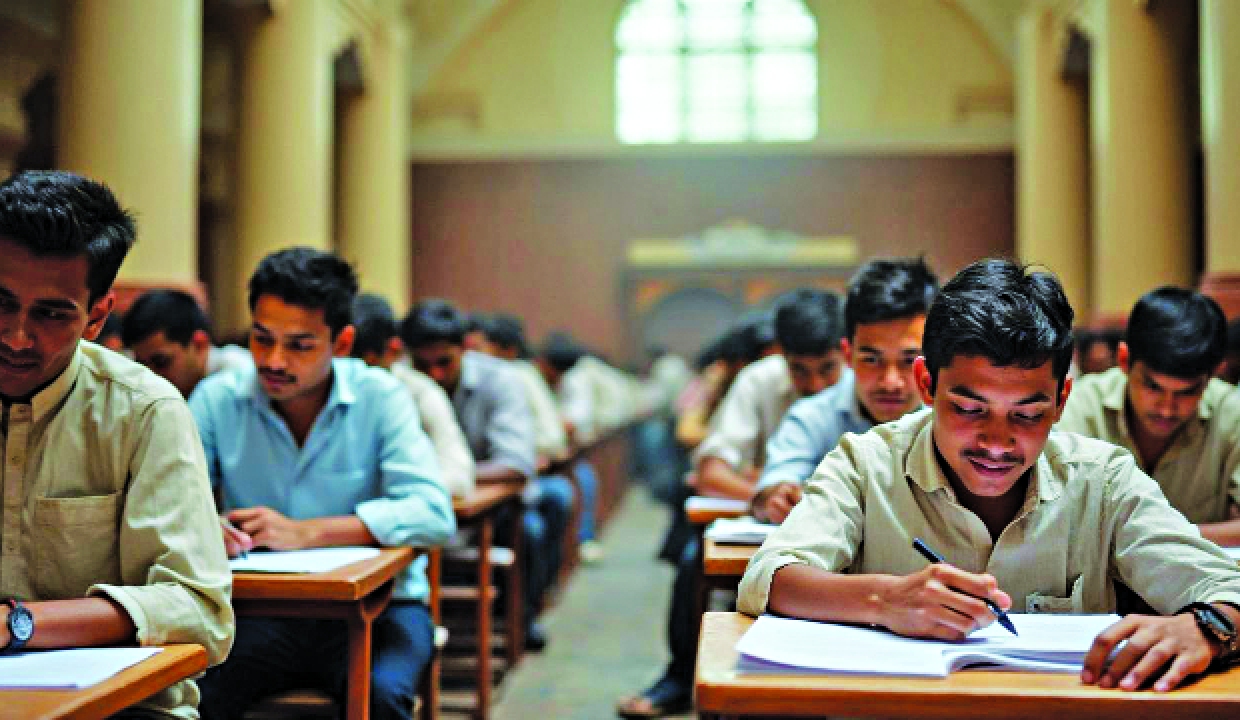
Every year, lakhs of young students across India prepare for one dream — becoming a doctor. For many families, NEET is not just an exam. It is years of sacrifice, hard work, coaching classes, sleepless nights, and emotional pressure. Parents invest their savings. Students give up festivals, holidays, and social life. They study with the hope that their efforts will decide their future fairly.
Having gone through the same process in 1996, I am well aware of the stress and anxiety that students face when they feel that their fate is at stake. This kind of easy access to exam papers is highly regrettable. I really empathise with the plight of the students. Such acts create serious doubts about the validity of the system, as well as put tremendous pressure on students, parents, and the government. Any allegation of a paper leak or exam irregularity deeply hurts not only students but also the faith of the entire nation. NEET-UG is today one of the largest entrance examinations in the world. As per reports, NEET-UG 2026 was held in over 551 cities in India and 14 foreign countries, at over 5,400 exam centres. Around 22.8 lakh students registered for the test, while over 22 lakh appeared. After reports of paper leakage, the examination will now be conducted again in June. The exam is also linked to a massive medical education system. India reportedly has more than 1.28 lakh MBBS seats across over 800 medical colleges. Along with this, there are thousands of seats in dental and AYUSH colleges. The future healthcare workforce of India begins with this one examination.
Exams such as NEET should reflect honesty, merit, discipline, and equal opportunities. Students must believe that their efforts have value. Over the last few years, allegations related to paper leaks and cheating have repeatedly raised concerns. Whether proven or under investigation, such incidents damage public trust.
The biggest impact is not only administrative but also emotional. Students preparing for NEET already face extreme pressure. Many study for years. Some repeat attempts multiple times. They live under constant stress, and when reports of leaks or unfair practices emerge, students start feeling helpless. This uncertainty even affects their mental health. Today, anxiety, burnout, sleep problems, depression, and emotional exhaustion are becoming common among competitive exam students.
Parents also silently suffer. In many homes, the entire family’s routine revolves around the child preparing for NEET. Expectations become very high. If trust in the system weakens, stress increases further.
As doctors, we often talk about mental wellness, but we must also understand the mental pressure created by academic systems. A student preparing for medicine should not feel broken before even entering medical college.
At the same time, we must also acknowledge the positive side. Conducting an examination of this scale is not easy. The conduct of examinations for lakhs of students in thousands of centres requires tremendous coordination, manpower, and security. There are many officials, teachers, administrators, and staff members who genuinely try their best for the smooth conduct of the examination. We must also appreciate their efforts.
However, in the present era of technology, it is not sufficient. India is an IT nation. If technology can secure the banking system, digital payment systems, and national databases, then surely the examination system can also be improved. Artificial intelligence and data analytics could be used for the detection of anomalies in students’ answers. If a group of candidates shows highly abnormal answer similarities, systems can immediately flag it for investigation. This can help detect organised cheating networks early.
There is a need to strengthen biometric authentication and standardise it across all NEET examination centres in the country. Facial recognition, fingerprint scanning, and live verification can minimise impersonation and fraudulent candidate entry. There is a need to make sure that question paper movement becomes totally encrypted and digitally traceable. All stages, from printing to transporting, storing, and distributing papers, have to be digitally tracked in real time.
Technology can play an important role in monitoring examination centres. AI-enabled CCTV systems can detect suspicious activity, while live monitoring from central control rooms can improve transparency. Multiple paper sets generated through secure algorithms can further reduce the risk of leaks. Cybersecurity must also become a priority for examination bodies. Stronger cyber audits, ethical hacking tests, and independent technology reviews should be mandatory before every major national examination.
In addition, we also need institutional accountability. In the case of any irregularities, the process of investigation should be quick, unbiased, and fair. Information should reach students immediately rather than creating rumours and chaos. Any delay will increase panic. Strict punishment is equally important. When people leak papers, they are not just committing an act against the system; they are robbing honest students of opportunities. Strict legal action can instil fear among such groups indulging in malpractices. It is also necessary to decrease over-centralisation. India is a vast and diverse nation. According to some experts, states should play an active role in counselling, monitoring, and conducting exams. The pressure around a single examination is another major issue. For lakhs of students, one exam decides everything. This creates enormous stress. India should gradually explore systems where academic performance, aptitude, practical assessment, and multiple opportunities also play a role in admissions. A single three-hour exam should not completely define a student’s worth or future.
Career counselling is equally important. Not qualifying for NEET should not be seen as failure. India needs skilled professionals in many healthcare fields - nursing, physiotherapy, psychology, public health, biotechnology, research, and allied sciences. Society must stop treating only MBBS degrees as success.
Parents also play a very important role during such crises. Students preparing for competitive exams need emotional support more than pressure. They need reassurance that their value as individuals is worth more than mere marks and rankings. I firmly believe that the future of medicine lies in the psychological health of students choosing this field. A stressed, exhausted, and emotionally damaged student cannot become a compassionate doctor easily. The NEET examination system does not only select future doctors. It shapes the future culture of Indian healthcare.
India has the talent, technology, and administrative strength to make NEET more secure and transparent. What is needed now is continuous reform, political will, institutional responsibility, and student-first thinking. Lakhs of students are not asking for shortcuts. They are simply asking for fairness. And fairness is the minimum any young dream deserves.
The writer is Managing Director, Aakash Healthcare, and an Affiliate at the Dr Syama Prasad Mookerjee Research Foundation (SPMRF), New Delhi; Views presented are personal.