India’s era of cultural renaissance: Reclaiming our civilisational glory
India stands as one of the world’s oldest living civilisations. For centuries, our resilience was tested by brutal onslaughts from foreign invaders. Regimes changed and political power shifted, yet the core ethos of Bharat successfully endured, passed down seamlessly from one generation to the next
As India scales new heights across diverse sectors 1 from economic robustness and national security to cutting-edge science and infrastructure - the path to becoming a truly Viksit Bharat (Developed India) demands more than just material milestones. True national progression requires an unyielding anchor in our ancient culture, history, and heritage.
India stands as one of the world’s oldest living civilisations. For centuries, our resilience was tested by brutal onslaughts from foreign invaders. Regimes changed and political power shifted, yet the core ethos of Bharat successfully endured, passed down seamlessly from one generation to the next. Though our sacred places of worship, ancient texts, libraries, and universities were systematically demolished during these turbulent eras, our cultural soul remained indomitable.
However, the most insidious blow to cultural India came later through a systematically altered education system. This framework was deliberately engineered to instil a deep-seated inferiority complex within us towards our own heritage, intentionally severing us from our civilisational roots.
2014: The dawn of a cultural reawakening
The year 2014 marked a historic paradigm shift. Under the visionary leadership of Prime Minister Shri Narendra Modi, India began shedding its colonial cloak and initiated a massive cultural resurrection. Today, a confident Bharat is not merely recalling its glorious past; it is actively restoring its grandeur, majesty, and spiritual values to the very fabric of our mainstream social life.
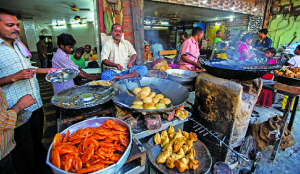
Our timeless festivals, historical monuments, traditional cuisine, attire, fine arts, music, and profound craftsmanship are no longer viewed as mere relics of history — they have emerged as dynamic pillars of global fascination and respect.
Activating India’s cultural soft power
Over the past 12 years, the global acceptance and appreciation of Indian heritage have reached unprecedented heights. The universal adoption of June 21 as International Day of Yoga is a spectacular example. Yoga is not merely a physical regimen; it is a profound ancient Indian philosophy that the world has embraced for holistic human well-being.
Our commitment to our heritage is equally reflected in the aggressive repatriation of stolen antiquities, marking a sharp departure from past decades of institutional apathy:
- Prior to 2013: A mere 13 stolen artefacts were brought back to India over several decades.
- Past 12 Years: More than 640 sacred heritage artefacts have been successfully retrieved from foreign soil.
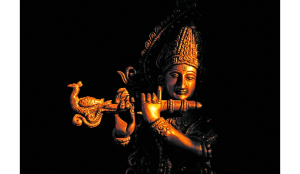
This overwhelming shift proves that preserving culture is no longer just a rhetorical exercise; we are fiercely determined to reclaim the physical and spiritual symbols of our civilisation. These artefacts are the living imprints of our ancestors’ mastery of art, craft, and science, serving as eternal beacons of inspiration.
Furthermore, UNESCO’s recognition of Durga Puja and Diwali as Intangible Cultural Heritage of Humanity validates the timeless, universal messages embedded in our traditions — the eternal triumph of truth over falsehood and light over darkness. With 44 World Heritage Sites, India now ranks sixth globally and second in Asia, offering proud testimony to our tangible historical legacy.
Reclaiming forgotten and suppressed knowledge
For centuries, foreign forces that lacked respect for intellectual and spiritual traditions tried to obliterate India’s knowledge repositories by burning our universities, dismantling gurukuls, and scattering our manuscripts. While dedicated sages and households quietly preserved these priceless manuscripts in remote monasteries and temples, they unfortunately slipped from public memory. Regrettably, even after gaining independence, past regimes made no structured, national-level effort to compile these texts and reclaim our civilisational wisdom.
To rectify this historic oversight, the ‘Gyan Bharatam’ National Manuscript Survey has been launched as a massive nationwide initiative. Today, over 1 crore manuscripts have been successfully catalogued from across the country.
We are not just collecting these texts; we are pairing ancient wisdom with modern technological capability. By leveraging cutting-edge tools such as Artificial Intelligence (AI) and advanced digitisation, we are securing this intellectual wealth for posterity. This monumental archive will introduce future generations to India’s historic excellence in spirituality, science, art, and craft, inspiring an unshakeable pride in their roots.
Virasat Bhi, Vikas Bhi: Rejuvenating our sacred places
Our grand temples, imposing forts, and historical fairs are the physical anchors of our civilisational narrative. Yet, for nearly seven decades after independence, these cultural landmarks faced systemic neglect and administrative apathy, while only a select few monuments were curated for global visibility. Temples in India have historically been the unifying threads of our diverse social fabric. Over the past 12 years, we have completely reversed this culture of neglect.
Through iconic transformations such as the Kashi Vishwanath Dham, Mahakal Lok Corridor, Kedarnath, and Somnath, we are executing a comprehensive overhaul of our spiritual landscape. By creating world-class infrastructure and seamless facilities for pilgrims, we have successfully championed the philosophy of ‘Virasat Bhi, Vikas Bhi’ (Heritage alongside Development).
This revitalisation has sparked a massive boom in spiritual tourism, directly strengthening local economies and transforming these holy towns into vibrant economic hubs.
Most heartening is the massive influx of young people to these sacred centres. Their growing presence is the ultimate symbol of India’s cultural revival, proving that our younger generation is eagerly re-establishing its bond with our spiritual heritage.
Bharat reconnecting with its eternal roots
Today, India is confidently walking a dual path: keeping pace with the cutting-edge modern world while remaining deeply anchored in its ancient civilisational roots. We are writing a glorious new chapter of cultural decolonisation. After centuries of existential struggle, Bharat is firmly asserting its timeless spiritual and cultural identity on the global stage.
We are demonstrating to the world how ancient traditions and state-of-the-art modernity can seamlessly coexist. The future belongs to this vibrant, self-reliant New India. In this Amrit Kaal, the thought, philosophy, and cultural values of Bharat are poised to give a fresh, holistic direction to the global community.
Through iconic transformations such as the Kashi Vishwanath Dham, Mahakal Lok Corridor, Kedarnath, and Somnath, we are executing a comprehensive overhaul of our spiritual landscape. By creating world-class infrastructure and seamless facilities for pilgrims, we have successfully championed the philosophy of ‘Virasat Bhi, Vikas Bhi’ (Heritage alongside Development)
The writer is the Union Minister for Culture and Tourism, Government of India; Views presented are personal.