World Bee Day: Saving pollinators for food Security
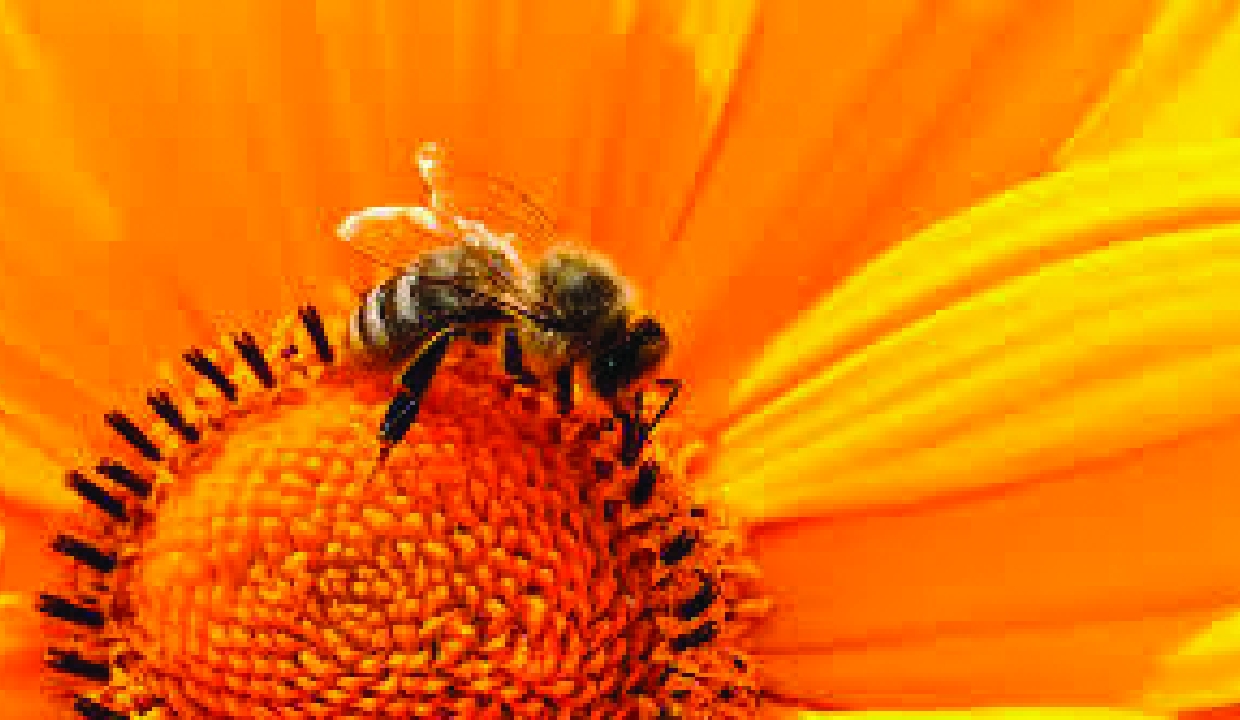
Every year on May 20, the world observes World Bee Day to raise awareness about the vital role played by bees and other pollinators in sustaining ecosystems, biodiversity, agriculture, and human welfare. Though tiny in size, bees are among the most important living creatures on Earth. Forests, flowering plants, fruits, vegetables, and agricultural crops all depend significantly on these silent workers for survival through the process of pollination. The growing decline in bee populations across the globe is therefore not merely an environmental concern, but a warning signal about the future of food security, ecological balance, and sustainable development. While working as a disaster management and climate resilience expert in the agriculture sectors across several countries, I witnessed firsthand how climate change, environmental degradation, and unsustainable development practices are affecting agricultural systems. Among the less discussed yet deeply alarming issues is the rapid depletion of pollinators, particularly bees.
Their disappearance threatens not only agriculture but also the resilience of ecosystems that sustain life itself. Most people associate bees mainly with honey production. However, their contribution extends far beyond honey. Bees are among nature's most efficient pollinators and are essential for the reproduction of flowering plants. According to the Food and Agriculture Organization, more than three-fourths of the world's food crops depend, at least partially, on pollination, while nearly 90 percent of flowering plants rely on animal pollinators. Pollination is a natural process through which pollen grains are transferred from one flower to another, enabling fertilization and seed formation. Bees perform this process with remarkable efficiency while collecting nectar and pollen. Their activities directly support the cultivation of fruits, vegetables, oilseeds, pulses, spices, medicinal plants, and nuts.
In India, crops such as mustard, sunflower, apple, almond, cucumber, pumpkin, litchi, coffee, and cardamom benefit enormously from bee pollination. Several forest trees and wildflowers also depend on pollinators for regeneration and survival. Scientific studies indicate that pollinators influence nearly one-third of global food production. Their contribution extends beyond agriculture to maintaining forests, grasslands, and natural ecosystems that support countless species of wildlife. Healthy ecosystems enriched by pollinators also improve climate resilience by enhancing soil fertility, supporting water cycles, and reducing vulnerability to droughts, floods, and land degradation. Bees are therefore not merely pollinators; they are silent protectors of ecological stability.
The connection between bees and biodiversity is equally significant. Biodiversity ensures ecological balance, and bees play a central role in preserving this balance by enabling the reproduction of flowering plants that sustain food chains and wildlife habitats. A healthy bee population reflects a healthy environment, while declining pollinator populations indicate environmental stress and ecological imbalance. There are more than 20,000 known species of bees worldwide, many of which have evolved alongside local ecosystems and vegetation. Yet urbanization, deforestation, industrial expansion, monoculture farming, and land degradation are rapidly destroying their natural habitats. Monoculture agriculture, in particular, has emerged as a major challenge. Large-scale cultivation of a single crop reduces floral diversity, limiting the availability of nectar and pollen sources throughout the year. Similarly, rapid urbanization and shrinking green spaces deprive bees of nesting and feeding habitats. Such ecological stress weakens the resilience of ecosystems, making them more vulnerable to climate-related disasters.
The importance of bees becomes even greater in the context of food security. A significant proportion of global agriculture depends directly or indirectly on pollination. Pollinator-dependent crops provide essential vitamins, minerals, and nutrients necessary for human health. According to the United States Department of Agriculture, nearly one-third of the food consumed by humans depends on pollinators such as bees. For developing nations like India, pollinators are especially crucial for small and marginal farmers. Effective pollination improves crop yield, enhances quality, increases farm incomes, and strengthens rural livelihoods.
Sustainable agriculture cannot succeed without the conservation of ecosystems that support pollinators. Beekeeping and apiculture also provide important livelihood opportunities for rural and tribal communities. Climate change remains one of the most dangerous and complex. One of the most alarming impacts is the mismatch between flowering seasons and pollinator activity. Due to rising temperatures, many plants are blooming earlier than usual, while bees may not adapt quickly enough to these shifts in seasonal cycles. As a result, pollination becomes less effective. Extreme weather events further damage pollinator habitats and reduce nectar availability. Agrochemicals affect bees' nervous systems, immunity, navigation abilities, and reproductive health. Often, bees exposed to pesticides fail to return to their colonies. The decline of bees should therefore be viewed as a warning from nature.
A world with declining pollinator populations will face reduced agricultural productivity, food shortages, nutritional insecurity, biodiversity loss, and increasing ecological instability. Economically, reduced pollination directly impacts farmers' incomes, especially in countries heavily dependent on climate-sensitive agriculture. Ecologically, the disappearance of pollinators weakens soil conservation, carbon absorption, and water regulation systems, making communities more vulnerable to environmental disasters. Protecting bees requires urgent collective action at international, national, and local levels. Agriculture must become more pollinator-friendly by reducing pesticide use and promoting sustainable alternatives such as organic farming and integrated pest management. Conservation of forests, wetlands, and grasslands must become a priority, alongside the plantation of native flowering species that support pollinators. Ultimately, although bees are small creatures, their contribution to sustaining life on Earth is immeasurable. Their declining populations reflects disruption of nature's balance. World Bee Day should therefore not merely be a symbolic celebration, but a global call for sustainable action. Protecting bees means protecting biodiversity, agriculture, climate resilience, food security, and ultimately the future of humanity itself.
The writer is former Executive Director, National Institute of Disaster Management, Government of India; Views presented are personal.