Mandate for a new Bengal: Be royal again, be great again!
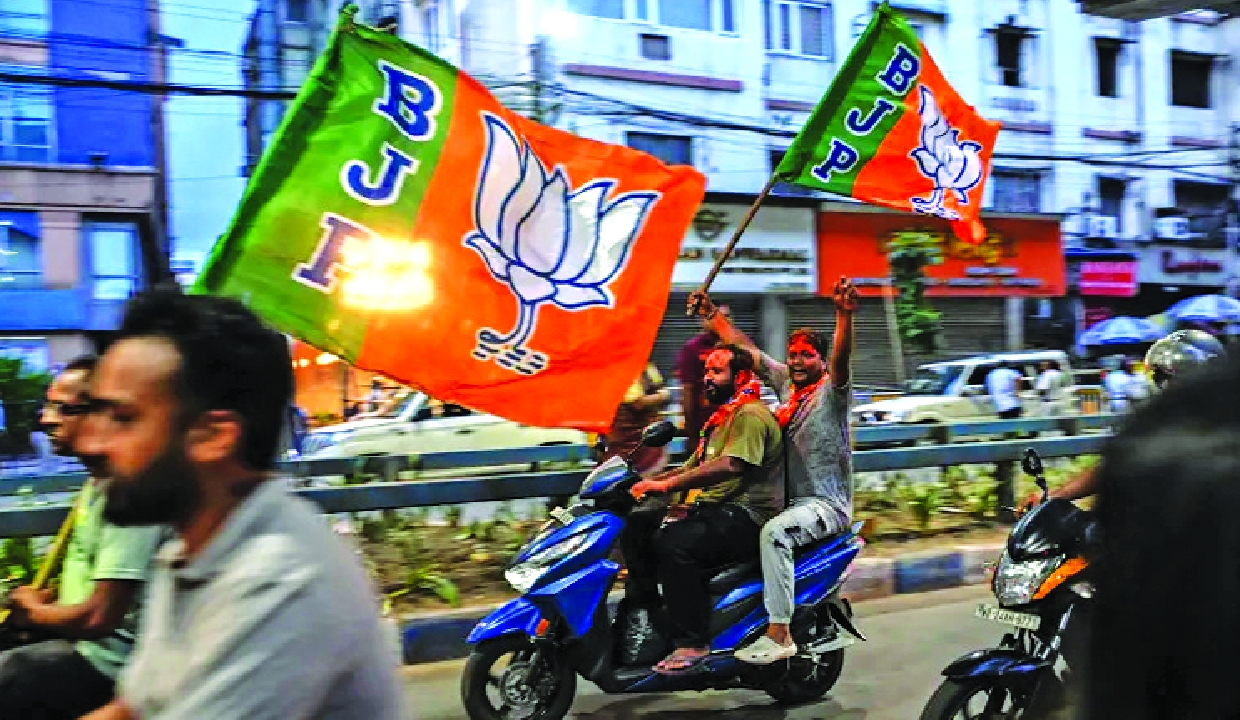
By the time this column reaches its readers, Bengal will likely have settled into that familiar, contemplative pause that follows a decisive electoral verdict — poised between memory and mandate. Elections in the state have never been mere arithmetic; they are textured, almost cultural expressions shaped by identity, emotion, and an evolving idea of justice. This time, however, beneath the cadence of campaign rhetoric and the machinery of party politics, a quieter but more consequential shift is discernible. After fifteen years of continuity, Bengal is not simply weighing a change of guard — it is reconsidering what it expects from power itself.
At the centre of this transition stands an unlikely figure: Ratna Debnath. Neither a career politician nor a product of institutional grooming, she enters public life as a mother marked by loss and reshaped by it. Her political journey does not follow the familiar arc of ambition; it emerges instead from disruption — personal, moral, and ultimately civic. Until recently, she existed outside the conventional contours of political relevance, working within communities, engaging with local concerns, and building a presence that was neither headline-driven nor strategically curated. Yet today, she has come to embody one of the most compelling shifts in Bengal’s political narrative.
Her victory in the Panihati Assembly constituency is significant not merely because she has won, but because of what her win unsettles. Panihati, located in North 24 Parganas, has long been defined by structure — dense grassroots networks, organisational loyalty, and a consistent inclination towards the Trinamool Congress. Electoral outcomes here were historically shaped less by individual candidatures and more by the durability of party machinery. In 2026, that script has been meaningfully altered.
Contesting on a Bharatiya Janata Party ticket, Debnath secured a decisive margin — one that moved beyond statistical comfort into the realm of unmistakable public endorsement. The contest, featuring TMC’s Tirthankar Ghosh and CPI(M)’s Kalatan Dasgupta, ultimately reflected the bipolar dynamic that has increasingly come to define Bengal’s electoral landscape. Yet within this familiar polarity, something distinctly unfamiliar unfolded.
Debnath did not arrive with a legacy of political inheritance or an entrenched organisational base. What she carried instead was a narrative — one that the electorate did not merely register but internalise. The “Abhaya” case, as it came to be widely known, transcended the contours of a criminal investigation to become a rupture in Bengal’s collective conscience. The alleged sexual assault and death of her daughter, a young trainee doctor at RG Kar Medical College and Hospital, catalysed a broader public introspection on women’s safety, institutional accountability, and the perceived distance between governance and justice.
In the months that followed, the discourse evolved from immediate outrage into something more enduring. It became a mirror, reflecting anxieties long present but seldom articulated with such urgency. Urban constituencies like Panihati, marked by political awareness and media visibility, absorbed this discourse in layered ways. Voter behaviour did not abandon its reliance on organisational strength, but it expanded its evaluative lens. Credibility remained central - but its meaning evolved.
For decades, credibility in such constituencies was synonymous with organisational depth and political continuity. In 2026, it began to be measured through lived experience and perceived integrity. This shift, though subtle, is consequential. It signals an electorate that is no longer satisfied with representation that is merely functional; it seeks representation that resonates.
Panihati, in this sense, becomes a microcosm of a broader transformation. It moves from predictability to empathy, from structure to sentiment, from alignment to assertion. Ratna Debnath’s victory, therefore, is not just another electoral outcome; it reads as a quiet yet pointed commentary for any government that occupies, or aspires to occupy, the seat of power. It suggests that Bengal, even if momentarily, is willing to suspend its entrenched loyalties to acknowledge a different kind of political legitimacy — one that is neither inherited nor engineered, but earned through an unfiltered connection with public emotion.
This is not to suggest that Bengal’s deeply rooted political frameworks have weakened. They remain potent, relevant, and often determinative. What this election reveals, however, is that within these structures there is now space — however narrow — for disruption. For individuals who do not conform to the mould yet possess the ability to redefine it. Embedded within this moment is also a larger question for governance. When an electorate responds so emphatically to a narrative born out of institutional failure, it is not merely endorsing a candidate — it is issuing a reminder that governance is not only about delivery, but about trust; not only about systems, but about how those systems respond under strain.
In that sense, this result is as much a mandate as it is a message. Governance has prevailed — but not in the conventional sense of administrative efficiency or policy articulation. It has met its most fundamental expectation: listening, acknowledging, and responding. Debnath’s journey — from enduring an unspeakable personal loss to stepping into public life and earning the mandate of a constituency — captures a transformation that is often invoked but rarely witnessed with such clarity: the conversion of private grief into public leadership.
It is a reminder that politics, at its most consequential, is not about control — it is about connection. And perhaps that is the deeper takeaway for what has long been regarded as India’s cultural capital. If the system falters, people may no longer wait for its correction; they may instead seek to become the system themselves. For Bengal, a state that has historically prided itself on intellectual and cultural leadership, this moment offers an inflection point — to reimagine not just its politics, but its priorities.
To align governance with empathy. To ensure justice is not episodic but embedded. To rebuild trust not through rhetoric, but through response. Bengal has turned a page. Whether it evolves into a chapter of renewal or remains a brief departure from continuity will depend on what follows. For now, however, one conclusion is inescapable: the electorate has spoken — not just in numbers, but in nuance.
The writer is a Delhi-based independent contributor to print and online publications; Views presented are personal.