Modi’s 12-year transformation of India’s development paradigm
As Narendra Modi completes twelve years as Prime Minister, assessments of his tenure naturally crowd the public discourse. Most analysts examine economic reforms, infrastructure growth, foreign policy and national security. Yet one of the most consequential transformations of this period remains underexamined: a fundamental reimagining of what social justice means in India.
For most of independent India’s history, social justice was understood through a relatively narrow lens - reservations, representation and political participation. These were legitimate priorities in a society shaped by centuries of caste-based discrimination and exclusion. Over time, however, the discourse calcified into electoral arithmetic and identity mobilisation, often losing sight of the deeper question: were ordinary citizens actually living better lives? The Modi government has challenged that confinement. Its central proposition is that social justice cannot be measured by institutional representation alone. It must also be measured by access to housing, healthcare, education, economic opportunity and human dignity.
This philosophy is captured in the governing motto Sabka Saath, Sabka Vikas, Sabka Vishwas, Sabka Prayas - development for all, with all, trusted by all and driven by all. Under this framework, development itself becomes a vehicle for social transformation. Modi’s own rise carries symbolic weight within this story. He became the first Prime Minister from an Other Backward Class background to win repeated national mandates on the strength of governance rather than dynasty or elite patronage. His ascent signalled a democratisation of political power in a country where leadership had historically concentrated within narrow social circles. But symbolism alone does not define a legacy - policy does.
On representation, successive Union Councils of Ministers under Modi have included significant participation from Scheduled Castes, Scheduled Tribes, OBC communities and women, earning recognition as among the most socially diverse cabinets in independent India’s history. On substantive reform, perhaps the single most consequential intervention was extending 27 percent OBC reservation to the All India Quota in medical admissions through NEET. For decades, a glaring inconsistency existed: OBC students competed for these seats without the reservation benefits available in state institutions. Correcting this anomaly was widely regarded as the most significant pro-OBC policy step since the Mandal Commission’s implementation.
Alongside this, granting constitutional status to the National Commission for Backward Classes addressed a long-standing demand from backward-class organisations, embedding institutional protection into the constitutional framework itself. The Cabinet’s more recent endorsement of caste enumeration reflects an acknowledgment that effective policymaking requires clearer data on India’s social realities. The government has also invested in recognising the intellectual and moral heritage of India’s social justice movement. Conferring the Bharat Ratna on Karpoori Thakur - a towering figure for backward-class communities - carried deep resonance across generations. Similarly, the institutionalisation of Dr. B.R. Ambedkar’s legacy, through the development of memorial sites and the observance of Constitution Day, has reinforced public consciousness of the foundational role Ambedkar played in Indian democracy. These are not merely ceremonial gestures; they connect contemporary governance to the long tradition of social justice thinking in India.
The government also expanded affirmative action beyond its traditional categories. The introduction of 10 percent reservation for Economically Weaker Sections within the general category formally recognised economic deprivation as an independent basis for affirmative action - the first time such a principle was codified in India’s policy framework. Crucially, this was designed without disturbing existing protections for SC, ST and OBC communities. The passage of Women’s Reservation legislation, guaranteeing one-third of seats in the Lok Sabha and state assemblies, represents another structural commitment to inclusive political participation.
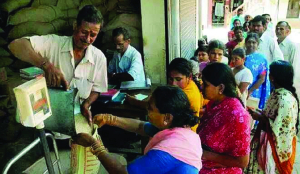
Perhaps the most practically transformative initiative of the Modi years has been the shift to beneficiary-centric welfare delivery. Historically, social welfare programmes haemorrhaged resources through leakages, middlemen and patronage networks. The convergence of Jan Dhan bank accounts, Aadhaar-based authentication and Direct Benefit Transfers fundamentally disrupted that model. Schemes including Ujjwala Yojana, Ayushman Bharat, PM Awas Yojana, Swachh Bharat Mission and Jal Jeevan Mission have extended basic capabilities - clean cooking fuel, health insurance, housing, sanitation and piped water - to tens of millions of previously excluded citizens. The principle driving these programmes is universality: delivery based on need, not political affiliation.
The cumulative impact on human welfare has been significant. Hundreds of millions of Indians have seen measurable improvements across multidimensional poverty indicators over the past decade. Poverty is not only a deficit of income - it is a denial of security, dignity and opportunity. When a family gains a permanent home, healthcare coverage or access to a bank account for the first time, those are social justice achievements as much as economic ones. During the COVID-19 pandemic, the Pradhan Mantri Garib Kalyan Anna Yojana provided free food grains to nearly 800 million people, demonstrating the state’s capacity to function as a guarantor of basic security in a national crisis.
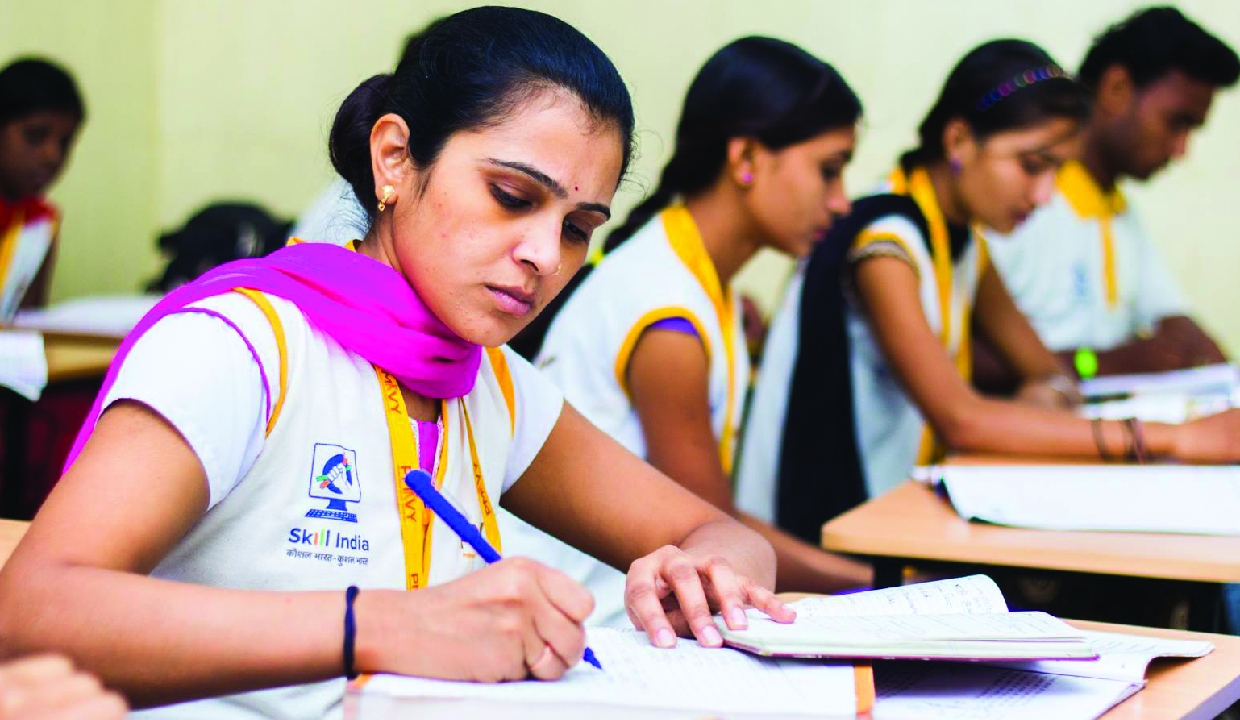
Underlying all of this is a broader ideological shift - from identity politics to aspirational politics. The traditional social justice framework asked who holds power. The Modi framework adds a further question: do young Indians have access to education, skills, healthcare and upward mobility regardless of background? Development, in this vision, becomes the most powerful instrument of social transformation.
India’s social justice tradition has been shaped by towering figures - Ambedkar, who built its constitutional foundations; Karpoori Thakur, who gave voice to backward communities; B.P. Mandal, who reshaped the politics of representation. What the Modi years have attempted is a synthesis: integrating representation, welfare delivery, economic empowerment and cultural confidence into a single governance framework. Whether that integration fully succeeds remains for history to judge - but the ambition to move social justice from slogan to nation-building principle marks a genuine shift in India’s political imagination.
Dr. Nikhil Anand is the National General Secretary of the BJP OBC Morcha; Views presented are personal.