Key achievements of Prime Minister Narendra Modi in 12 years of governance
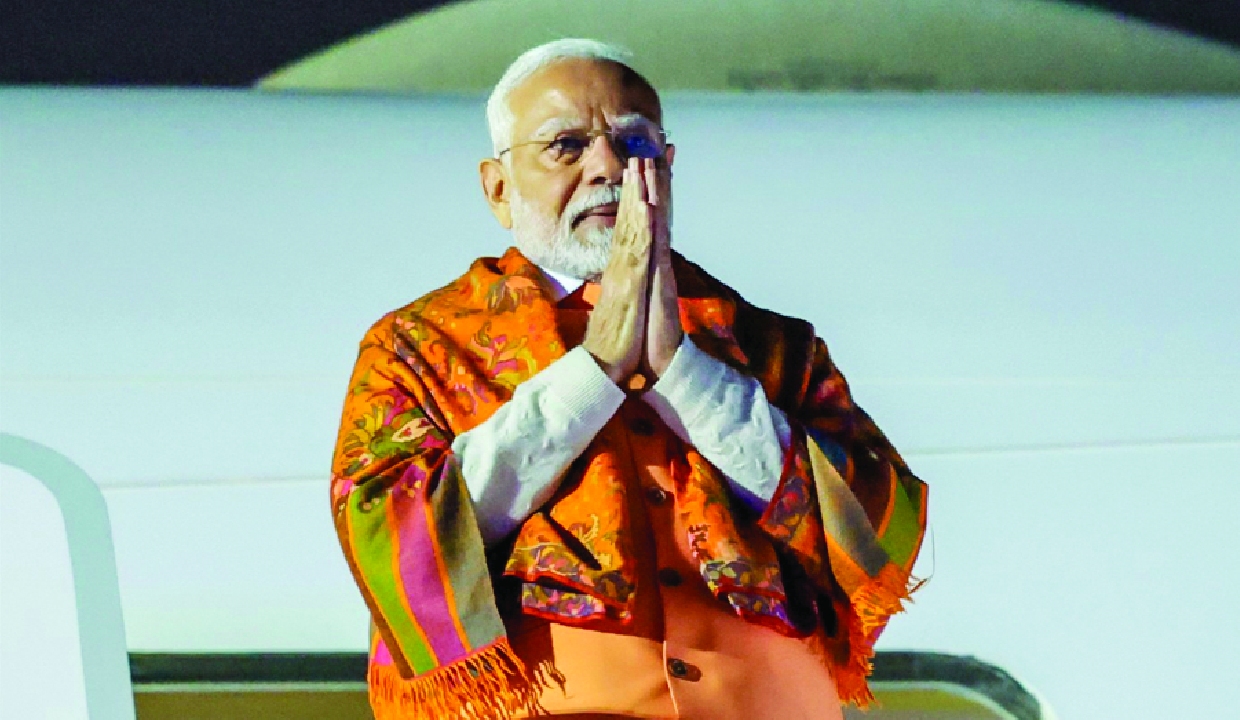
On May 26, 2014, Narendra Modi was sworn in as India’s Prime Minister after the BJP-led National Democratic Alliance swept the Lok Sabha elections. On May 10, 2026, he quietly crossed a historic threshold - 4,399 days in office - surpassing the 4,398-day tenure of Jawaharlal Nehru, India’s first Prime Minister. Winning three consecutive mandates, Modi expanded BJP’s state-level presence from 7 to 22 governments, covering 72 per cent of India’s landmass and 78 per cent of its population. Over these twelve years, his leadership has fundamentally reoriented India’s governance ethos, economic ambitions, and global standing, anchored by the guiding philosophy of “Sabka Saath, Sabka Vikas, Sabka Vishwas” - together with all, development for all, trust of all.
The transformation of India’s economic architecture has been sweeping. The nominal GDP nearly doubled, climbing from Rs 125.41 lakh crore to Rs 345 lakh crore, placing India at approximately $4.15 trillion and cementing its position as the world’s fifth-largest economy by nominal terms and third-largest by purchasing power parity. Per capita income rose from Rs 86,647 to Rs 2,19,575.
The 2017 introduction of the Goods and Services Tax unified a fragmented indirect tax maze into a single “One Nation, One Tax” framework, eliminating cascading levies and widening the formal tax base. Demonetisation in 2016 targeted black money and counterfeit currency, accelerating the shift toward digital transactions. The Insolvency and Bankruptcy Code resolved stressed assets worth lakhs of crores. Foreign exchange reserves climbed to approximately $670 billion. FDI inflows surged following liberalisation in defence, railways, and insurance. Make in India propelled manufacturing in electronics, solar energy, semiconductors, and pharmaceuticals. Startup India grew the entrepreneurial ecosystem from a few hundred ventures to over 3.3 lakh recognised startups. Defence exports, once a modest Rs 1,900 crore, scaled to Rs 23,000 crore - a testament to India’s growing strategic manufacturing capability.
Perhaps nowhere is the imprint of this era more visible than in India’s physical infrastructure. National highways expanded from 98,000 km to 1.46 lakh km under the Bharatmala scheme. The Gati Shakti National Master Plan brought multimodal connectivity planning under one integrated framework. Railways saw comprehensive modernisation - electrification, Vande Bharat trains, high-speed corridors, station redevelopment, and Dedicated Freight Corridors that improved logistics efficiency nationwide. Operational airports more than doubled from 74 to over 160, with the UDAN scheme democratising air travel to smaller towns. Solar energy capacity leaped from a negligible 2.6 GW to over 110 GW, underpinned by the International Solar Alliance co-founded with France.
The welfare architecture constructed over this period is historically significant in both scale and intent. Direct Benefit Transfers minimised leakages, saving over Rs 3 lakh crore that would otherwise have been lost to corruption. The Pradhan Mantri Jan Dhan Yojana opened over 58 crore bank accounts, integrating women and rural populations into the formal financial system. The Swachh Bharat Mission oversaw the construction of over 12 crore household toilets, enabling India to declare itself Open Defecation Free. Over 10 crore LPG connections were provided to poor households under the Ujjwala Yojana, reducing indoor air pollution and easing the daily burden on women.
Ayushman Bharat (PM-JAY) extended health insurance coverage of Rs 5 lakh per family to over 55 crore beneficiaries - one of the largest public health programmes in human history. Food security was assured for 80 crore people during and after COVID-19. PM-KISAN provided direct income support to farmers, while Skill India and Stand-Up India strengthened employment pathways and supported marginalised entrepreneurs, including women and Scheduled Communities. One initiative that merits special mention is Hunar Haat - exhibitions at Pragati Maidan and venues across the country showcasing the craftsmanship of over 15 lakh Muslim artisans. For observers who have attended these over many years, the visible uplift of these communities represents a quiet but profound social achievement, one that ironically came despite these communities largely withholding their electoral support. India’s digital leap has been globally recognissed. The Unified Payments Interface grew from near-zero in 2016 to over 22 billion monthly transactions by 2026. The CoWIN platform enabled one of the world’s largest COVID-19 vaccination drives. Investments in semiconductor manufacturing, artificial intelligence, and cybersecurity have positioned India for the demands of the Fourth Industrial Revolution. On the world stage, Modi’s personal diplomacy elevated India’s stature considerably. The abrogation of Article 370 in August 2019 completed the constitutional integration of Jammu and Kashmir. Surgical strikes, the Balakot operation, and more recently Operation Sindoor signalled India’s willingness to act decisively against cross-border terrorism. The successful evacuation of Indian citizens from conflict zones reinforced India’s soft power.
The abolition of Triple Talaq protected Muslim women from a regressive practice. Labour code consolidations streamlined decades of overlapping regulation. Transparent coal-block auctions generated substantial revenue, while anti-corruption measures and institutional accountability reforms restored credibility to public systems.
Looking Ahead
Challenges remain - unemployment concerns persist and growth has not been uniform across all regions and communities. Yet the foundational work of these twelve years is undeniable. India has moved perceptibly toward self-reliance, digital empowerment, and infrastructure modernity, with welfare genuinely reaching communities that were long bypassed. As India sets its sights on developed-nation status by 2047, the platform built in this era provides both the springboard and the proof of concept. The story of this tenure is ultimately one of bold structural reform fused with mass-scale human empowerment — a combination that has measurably altered India’s trajectory on the world stage.
The writer is former IFS officer and Chairman of Centre for Resource Management and Environment; Views presented are personal.
Leave a Comment
Comments (1)
A very insightful and exemplary article, written in an absolutely structured frame, shows the high competency of the author, Dr. Bahuguna. The article clearly shows the achievements in various fields where India was lacking before 2014, as well as areas for improvement. As suggested in the article, progress shall be made in the areas where development is required, thus enabling India to become one of the world's powerful countries. Thanks for this article.