Nuclear energy: For a sustainable future
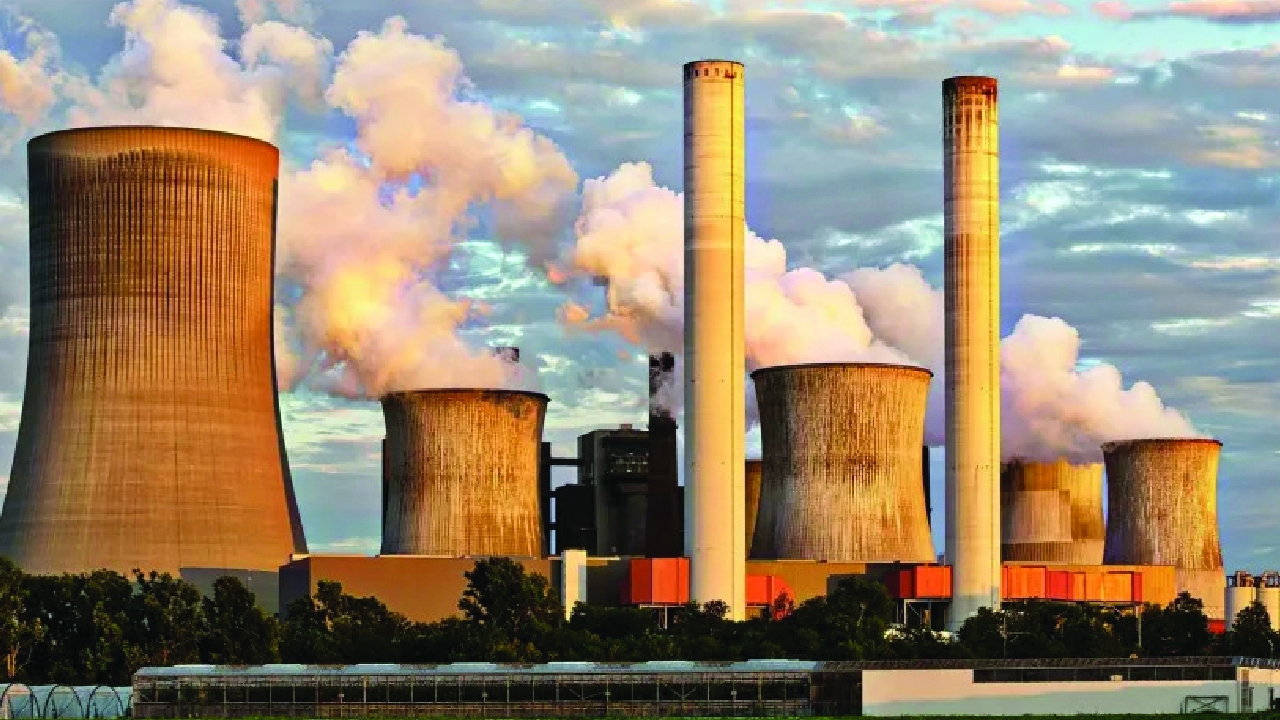
Nuclear energy stands at the intersection of scientific innovation, energy security, and environmental responsibility. As the world confronts the intertwined challenges of climate change, industrialisation, and rising energy demand, nations are rethinking their energy choices to balance growth with sustainability. The global push for decarbonisation under the Paris Agreement has further accelerated the development of renewables. Yet, the intermittency of solar and wind continues to challenge grid reliability and uninterrupted power supply.
In this context, nuclear power emerges as a dependable, large-scale source of electricity that complements renewables while enabling emission reductions.
Nuclear power is produced primarily through fission, in which a heavy atomic nucleus, such as uranium-235 (U-235), is split to release vast amounts of energy. A small quantity of U-235 can produce as much electricity as several thousand tonnes of coal, without the associated greenhouse gas (GHG) emissions. Furthermore, its ability to operate continuously for long periods provides a reliable source of baseload electricity, unlike other renewable sources. Additionally, nuclear power requires relatively less land and minimal fuel transport, while offering predictable generation costs over decades of operation. Fusion, though not yet commercially viable, is being pursued globally as a long-term ultra-clean energy source through major international research initiatives.
For India, this is not merely about identifying the optimal energy mix, but also about building strategic autonomy in an era where energy and technology dependencies translate directly into geopolitical vulnerabilities. As one of the world's fastest-growing economies-with an expanding manufacturing base, digital infrastructure, and clean mobility ambitions-nuclear energy will prove to be an integral part of India's long-term energy solution.
India's three-stage nuclear programme, conceived under Dr Homi J Bhabha in the 1950s, was designed to ensure long-term energy independence. The first stage, centred on Pressurised Heavy Water Reactors (PHWRs) fuelled by natural uranium, laid the foundation of the programme. The second stage focuses on Fast Breeder Reactors (FBRs) and is currently advancing through the Prototype Fast Breeder Reactor (PFBR) at Kalpakkam, Tamil Nadu, which breeds more fissile material than it consumes and generates the U-233 needed for the next stage. The third stage envisions a closed-fuel, thorium-based system, leveraging India's abundant thorium reserves to ensure a sustainable and indigenous long-term fuel supply.
Currently, India operates 25 nuclear reactors with a combined installed capacity of 8,780 megawatts (MW), with several additional units under construction or in various stages of planning. These reactors form the nucleus around which India's nuclear expansion is being shaped.Beyond electricity generation, nuclear science has played a quiet but transformative role in national development.
n Healthcare: Indigenous radiotherapy systems such as the Bhabhatron, medical isotopes, and nuclear imaging techniques have enhanced access to affordable cancer care.n Agriculture: Radiation-induced crop varieties, isotope hydrology, and soil management techniques are improving food productivity and resilience.
n Industry: Non-destructive testing, radiotracers, and irradiators enhance manufacturing quality and safety.Environment and Water: Nuclear desalination and pollution-tracing technologies support sustainable water and resource management.
These contributions demonstrate that nuclear technology is not merely a source of energy but a scientific capability that permeates multiple sectors of national advancement.
Recent policy developments reaffirm the pivotal role of nuclear power in India's clean energy strategy. The Union Budget 2025-26 placed nuclear energy at the core of national planning, launching the Nuclear Energy Mission with a target of 100 gigawatts (GW) of installed nuclear capacity by 2047. It also allocated ?20,000 crore for the design, development, and deployment of Small Modular Reactors (SMRs), which are compact, inherently safe, and suited for flexible deployment. Furthermore, to facilitate broader participation, the government has proposed amendments to the Atomic Energy Act and the Civil Liability for Nuclear Damage Act, enabling private sector participation while maintaining rigorous safety and security standards. Private sector participation is expected to strengthen the nuclear ecosystem by enabling research institutions, companies, and start-ups to contribute to the development and deployment of advanced nuclear technologies.
These policy initiatives are catalysing renewed momentum in India's nuclear research and development ecosystem, which continues to advance across multiple technological frontiers-from Generation III+ reactors, FBRs, and Light Water Reactors (LWRs) to Very High Temperature Gas-Cooled Reactors (VHTRs) and global fusion research initiatives such as ITER. A central focus lies in the development of indigenous SMRs, including the Bharat Small Modular Reactor (BSMR-200) and SMR-55. These next-generation designs integrate advanced materials, passive safety systems, and digital controls to deliver higher levels of efficiency, flexibility, and safety.
Yet, translating India's nuclear vision into reality requires overcoming a series of implementation challenges. Achieving the targeted increase in nuclear generation capacity will require substantial capital investment, streamlined licensing and permitting frameworks, and the development of a highly skilled workforce spanning reactor design, operations, safety management, cybersecurity, and waste handling.
Moreover, public perception remains one of the most persistent hurdles. Nuclear energy continues to be viewed with scepticism, shaped by fears of accidents and long-term waste management. Yet, when evaluated in terms of safety, nuclear power is remarkably low-risk: deaths per 10 TWh of electricity produced are reported at just 0.7, compared with 246 for coal, 184 for oil, and 46 for biomass. Addressing public concerns, therefore, requires a sustained commitment to transparency, stringent safety protocols, and continuous public engagement. Parallel emphasis on advanced waste management, reprocessing, and closed-loop fuel technologies will also be critical in addressing environmental concerns. Empowering communities through open communication and scientific outreach can transform apprehension into informed support for nuclear initiatives.
The promise of nuclear energy extends well beyond electricity generation-it embodies a commitment to responsible progress that balances present development needs with ecological and ethical responsibilities. Pursued with foresight and integrity, it can anchor India's journey towards a secure, sustainable, net carbon-zero, and developed economy by 2047.
The author is a distinguished scientist and Member, NITI Aayog, whose leadership in strategic technologies and energy systems has advanced India’s pursuit of self-reliance, sustainability, and energy security; views are personal