No Bail for ‘Ideological Drivers’ of Delhi Riots
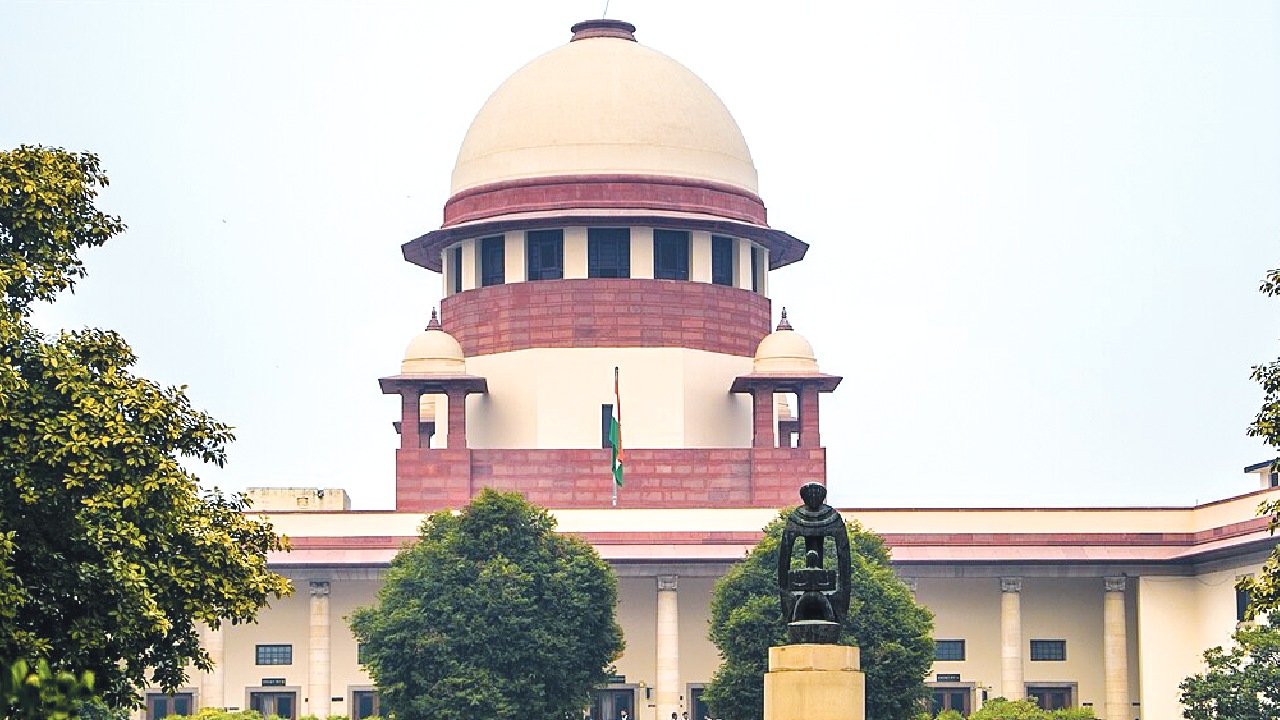
The Supreme Court’s recent decision to deny bail to Umar Khalid and Sharjeel Imam in the Delhi riots conspiracy case reaffirms a clear judicial stance: when a serious, systemic conspiracy affecting national security is prima facie made out under the Unlawful Activities (Prevention) Act, 1967 (UAPA).
It is a uniform principle in criminal law that, for bail to be granted, the accused must show they are not prima facie involved in the case. In contrast, the material on record disclosed prima facie involvement of Sharjeel Imam and Umar Khalid in a deep-rooted and well-orchestrated criminal conspiracy relating to the North-East Delhi riots of February 2020. Material relied upon against them, in the form of speeches, meetings, digital communications and alleged strategic deliberations commencing immediately after the passage of the CAB/CAA, predominantly showed that they were the ideological drivers of the alleged conspiracy by devising a protest strategy, shifting from normal dharnas to disruptive chakka jams, choosing sites and pushing a broader political objective.
It was urged that their continued imprisonment over a prolonged period, coupled with the pace at which the trial has progressed, warrants their enlargement on bail notwithstanding the statutory embargo contained in Section 43D(5) of the UAPA, as the right to a speedy trial is recognised as an essential facet under Article 21 of the Constitution of India.
The Supreme Court pointed out that the common counter-affidavit and the Trial Court’s order record that, at various stages, the prosecution expressed readiness to proceed, including preparedness to commence arguments on charge, while objections, requests for deferment and issues relating to arguments were raised on behalf of the accused. The Apex Court held that the record does not justify the claim that the accused are “innocently imprisoned” with no role in the delay, nor does it disclose a situation in which the delay is wholly unjustified, which would cancel the strict bar on bail under Section 43D(5) of the UAPA.
The correct constitutional answer is not to loosen the bail standard. Instead, courts must closely monitor and speed up the trial. The statutory threshold under Section 43D(5) of the UAPA therefore stands attracted to these accused.
Sharjeel Imam indicated that he was in contact with a radical communal group known as Students of Jamia. According to the charge-sheet, the group was engaged in distributing pamphlets in various mosques in Delhi against the verdict of this Court in the Babri Masjid matter, which pamphlets were allegedly aimed at mobilising students of Jamia Millia Islamia University to participate in a protest proposed to be held on 06.12.2019 at 4:30 pm at the Polytechnic Lawn, JMI, against the introduction of the CAB.
Umar Khalid, along with Nadeem Khan, is alleged to have directed one Amanullah to visit Muslim-dominated localities and mobilise residents for protests, while also encouraging greater participation of women and children, with the purported intent that their presence would deter the police from dismantling protest sites.
A central plank of the Court’s reasoning lies in the distinction between a conventional dharna and a chakka jam as stated in the speech by Umar Khalid. A dharna is treated as an expressive protest; a chakka jam, as alleged, is inherently disruptive. The narrative was to sustain choking of arterial roads, replicate blockade sites and move crowds from minority clusters into mixed-population areas — not accidental to dissent but intended to generate confrontation, overwhelm law enforcement, disrupt essential services such as milk and water, and incite violence.
The Court holds that the matter cannot be reduced to “mere public disorder”. The UAPA, it emphasises, is engaged when cumulative conduct threatens the unity, integrity, security or sovereignty of the nation.
The Constitution guarantees personal liberty, but it does not conceive liberty as an absolute entitlement detached from societal security. Sovereignty, integrity, security and public order are constitutional values Parliament may protect through law. Where a special statutory framework exists, courts must give effect to it, subject to constitutional discipline.
While rejecting bail to Imam and Khalid, the Court also held that, where liberty is restricted, prosecution must proceed meaningfully.
The Court therefore permitted a fresh bail application after examination of protected witnesses relied upon by the prosecution, or after one year from the order — whichever occurs first.
The other five accused were granted bail, subject to executing a personal bond of INR 2,00,000 with two local sureties of the like sum, to the satisfaction of the Trial Court.
Criminal law does not mandate identical outcomes merely because allegations arise from the same transaction. Those alleged to have conceived or directed unlawful or terrorist activity stand on a different legal footing from those whose involvement is confined to facilitation or participation at a different level.
The writer is an advocate; views are personal