NMC deal puts BoB exposure under lens
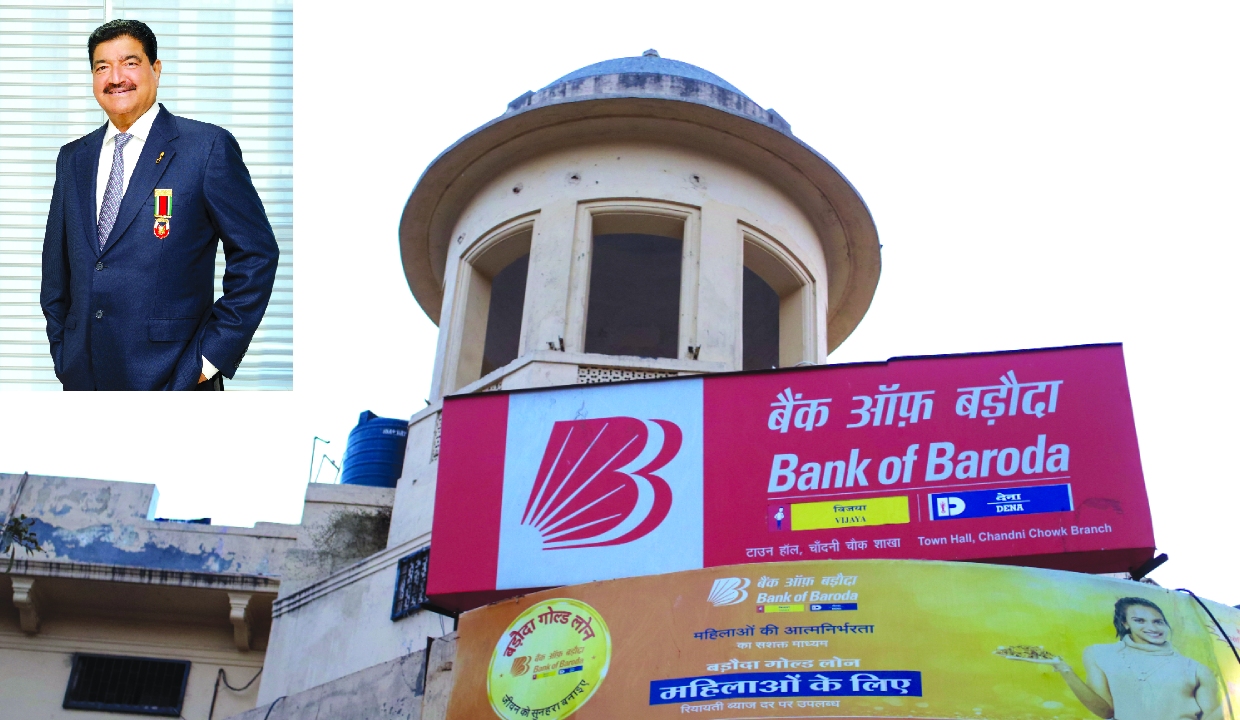
The payout exceeds quarterly profit, intensifying questions over governance and decision-making
Bank of Baroda’s (BoB) decision to pay $600 million, around Rs 5,700 crore, to settle litigation arising from the collapse and insolvency case of UAE-based NMC Healthcare raises a far larger question than the settlement itself: who decided that Indian public money should be used to close a dispute in a foreign jurisdiction without fully explaining the rationale to shareholders and citizens? BoB is a public sector bank with a large public shareholding.
The bank has maintained that the payment, disclosed to Indian stock exchanges on July 2, 2026, was made without admitting liability and was intended to avoid prolonged litigation, uncertainty and associated costs. However, the disclosure has left several critical questions unanswered about governance, accountability and the decision-making process behind one of the largest overseas settlements involving an Indian public sector bank.
These questions become particularly significant when the settlement amount is compared with BoB’s quarterly earnings. A payment of around Rs 5,700 crore is larger than the bank’s reported quarterly profit of approximately Rs 5,170 crore. Such a financial impact cannot be treated merely as an accounting entry. It directly affects shareholder value and raises questions about whether those responsible for the original exposure should also face institutional accountability.
The Pioneer, on August 3, 2026, reported that BoB was caught as a co-accused along with NMC Healthcare’s debt-sunk promoter BR Shetty and his CEO Prasanth Manghat for violation of anti-money laundering norms and connivance in hiding the huge debts of more than $5.4 dollars, based on a judgment dated March 25, 2025 from the Abu Dhabi Global Market Courts (ADGMC). Till date, the BoB has not given a convincing reply to the questions raised by The Pioneer.
The Administrators of Insolvency in ADGMC had alleged that BoB’s Abu Dhabi branch facilitated financing arrangements and banking transactions that allowed NMC Healthcare and related 37 entities to conceal their actual financial position.
They also claimed that the bank failed to carry out adequate anti-money laundering (AML), know-your-customer (KYC) and due diligence checks, contributing to the continuation of the alleged fraud.
The Administrators’ findings were upheld by the Court, rejecting BoB’s legal teams’ versions.
“Claims are brought against Bank of Baroda based on allegations that it acted fraudulently and without proper care in contract (under Article 246 of the Civil Code) and in tort (under Articles 282 and 285 of the Civil Code). Secondly, there are the so-called “insolvency claims”, which are made by the Joint Administrators under Section 251 of the ADGM Insolvency Regulations 2022 (the “IR 2022”) in fraudulent trading against Dr Shetty, Mr Manghat and Bank of Baroda, and under Section 252 of the IR 2022 in wrongful trading against Dr Shetty and Mr Manghat. For present purposes, the civil claims are relevant; it is common ground that they are all governed by UAE law. The insolvency claims are governed by ADGM law,” said the Judgment of Justice Sir Andrew Smith of Abu Dhabi Global Market Court (ADGMC) of First Instance Commercial and Civil Division, dated March 25, 2025.
The BoB quoted the number of this judgment to the Stock Exchanges without explaining why it paid Rs 5,700 crore in public money as a settlement.
At the heart of the controversy is the ADGMC litigation arising from NMC Healthcare’s multi-billion-dollar financial collapse. Court records contain allegations concerning BoB’s role in banking transactions connected with the NMC group, including allegations relating to fraudulent conduct, regulatory compliance, anti-money laundering procedures and the concealment of the group’s actual financial position. BoB has disputed the allegations and has maintained that the settlement does not constitute an admission of liability. Nevertheless, a fundamental question remains: if such serious allegations formed part of the litigation, why did the bank consider settlement preferable to exhausting every available legal remedy?
The first issue that requires a clear explanation is why Bank of Baroda chose to settle the matter overseas by paying around Rs 5,700 crore instead of pursuing every available legal remedy within the UAE judicial system. Did the bank file, or seriously consider filing, an appeal against the relevant ADGMC proceedings? If an appeal was legally available, what legal advice persuaded the management that paying such a massive amount was financially and legally preferable to continuing the litigation? Was an independent assessment of the chances of success conducted by lawyers who were not involved in the original decision-making process? And if the bank concluded that further litigation would expose it to even greater financial risk, what was the basis of that assessment?
The matter assumes greater significance because the money involved ultimately belongs to a public sector institution. BoB is a Government-controlled, listed bank, and therefore any extraordinary financial loss has implications not only for its management but also for the Government of India (GoI), minority shareholders and the broader banking system. Was the GoI consulted only in its capacity as the majority shareholder, or was the settlement independently examined from the perspective of protecting taxpayers’ money? Was the Union Ministry of Finance required to approve the settlement, and if so, what documents and legal opinions were placed before it before such approval was granted?
Another important question concerns whether any broader international legal or diplomatic recourse was examined before the matter was settled. The dispute involves an Indian public sector bank, Indian public money, borrowers and companies operating in the UAE, and judicial proceedings under a foreign legal framework. While the International Court of Justice ordinarily deals with disputes between sovereign States rather than commercial disputes involving banks and companies, did the BoB or the GoI obtain any legal opinion on whether any treaty-based, diplomatic or inter-Governmental mechanism was relevant to protecting Indian banking interests? If such options were considered and found legally unsuitable, why has the bank not disclosed that position to its shareholders?
The circumstances surrounding the approval of the Rs 5,700 crore settlement also raise serious corporate governance questions. Who actually approved the final settlement? Was the matter placed before the full Board of Directors of BoB? Were detailed minutes of the board meeting relating to the settlement made available to the relevant regulators, including SEBI, wherever disclosure was legally required? Did the audit committee, risk management committee and other relevant board-level mechanisms independently assess the financial and legal implications of the settlement? Did any independent director raise concerns or record dissent? If there were differences of opinion within the board, were those views documented?
Since BoB is a listed public sector bank with a large shareholder base, another question naturally arises: should a settlement of this extraordinary magnitude have been subjected to wider shareholder scrutiny? While the management may have acted within its statutory and regulatory powers, the size of the payment raises a larger principle of corporate governance. When a single decision results in an outflow greater than the bank’s quarterly profit, should shareholders not have been provided with a fuller explanation of the circumstances, alternatives considered and persons responsible for recommending the settlement?
There is also a question about the role of the GoI. Did the Union Ministry of Finance merely consider and approve a settlement proposal independently prepared by BoB, or did Government officials play any role in encouraging an early resolution of the dispute? Was there any pressure, formal or informal, to settle the matter amicably in order to avoid prolonged overseas litigation? If there was no such pressure, both the Union finance ministry and BoB can remove any ambiguity by explaining the precise process through which the decision was taken and whether any Government authority recommended, suggested or influenced the settlement.
The most important issue, however, is accountability for the original lending decisions. Every large banking loss is the culmination of a chain of decisions. Who sanctioned the loans and credit facilities extended to NMC Healthcare and its associated entities? Which officials and committees approved the exposure? Who monitored repayment? Who reviewed the financial position of the borrower when its liabilities allegedly expanded substantially? Were the bank’s internal audit, risk management, compliance and vigilance mechanisms functioning properly? Were warning signals ignored? If there were deficiencies in due diligence, KYC or anti-money laundering procedures, who was responsible for identifying and correcting them?
Another unresolved issue concerns the reporting of NMC Healthcare and its associated entities as large defaulters. During March-April 2026 series on major bank defaulters by The Pioneer, BoB’s large-defaulter list published on March 17 did not appear to include BR Shetty’s NMC Healthcare and its linked entities. Why were these borrowers absent from the list? Were the accounts classified under a different category? Were overseas exposures treated differently for reporting purposes? Were there regulatory or legal reasons for excluding them? If so, BoB should explain those reasons clearly. If not, the bank should clarify how such a significant exposure came to be omitted from a list intended to identify major defaulters.
The bank’s argument that the settlement was made without admission of liability addresses one specific legal issue, but it does not resolve the wider questions surrounding the payment. A settlement does not automatically establish guilt, just as a denial of liability does not by itself explain why thousands of crores of public money were required to close the dispute. The public deserves to know whether the settlement represented the best possible financial outcome after considering all legal and recovery options, or whether the bank could have pursued a more aggressive recovery strategy.
The NMC Healthcare episode is therefore no longer merely a dispute between a foreign corporate group, its promoters, administrators and lenders. For India, it has become a test of accountability within the public banking system. BoB is entrusted with public deposits and substantial public shareholding. Its management therefore has a responsibility to explain not merely what was paid, but why it was paid, who authorized it, what alternatives were examined and what action has been taken against anyone whose decisions may have contributed to the loss.
The role of the Union finance ministry, the Reserve Bank of India and other competent authorities must be examined independently, whether the entire chain of lending, monitoring, recovery, litigation and settlement was handled in accordance with the highest standards of public-sector banking governance. If no wrongdoing or negligence is found, the concerned authorities should say so clearly. If lapses are discovered, those responsible must be identified and held accountable.
Ultimately, the central issue is not whether BoB has legally admitted liability. The central issue is whether the bank obtained the best possible outcome for its shareholders and the Indian public after a prolonged overseas dispute involving thousands of crores. If Rs 5,700 crore of public money has effectively closed this chapter, the next chapter must be one of transparency and accountability.
Another important question is who represented BoB in the legal proceedings in Abu Dhabi and before the London courts, and who advised the bank to pursue a settlement through arbitration? Why were the judgments of the lower courts in the UAE not challenged before the higher courts? Could the dispute ultimately have been adjudicated before the International Court of Justice or another appropriate international forum? What were the legal and financial considerations that led BoB and the GoI to settle the matter by reportedly paying a substantial amount of Rs 5,700 crore in public funds? At the same time, BoB has yet to disclose the extent of its losses arising from the large loans extended to NKC Healthcare and its 37 linked entities.
The final question is therefore the simplest, and perhaps the most important: If Rs 5,700 crore of public money has been used to close this chapter, who will now open the chapter of accountability?