188 scientists warn of severe ecological risks from 2026-27 ‘super’ El Niño
As many as 188 scientists and ecologists have called on researchers and field practitioners across India to step up monitoring and research ahead of what they describe as a potentially “super” El Niño event, warning that extreme conditions could place the country’s natural ecosystems and climate-sensitive communities under severe stress.
The appeal, published on September 16 by the India Ecology Collective, urges ecologists to strengthen and expand research and monitoring to document how the extreme climate event affects India’s marine, freshwater and terrestrial ecosystems, as well as interconnected social systems.
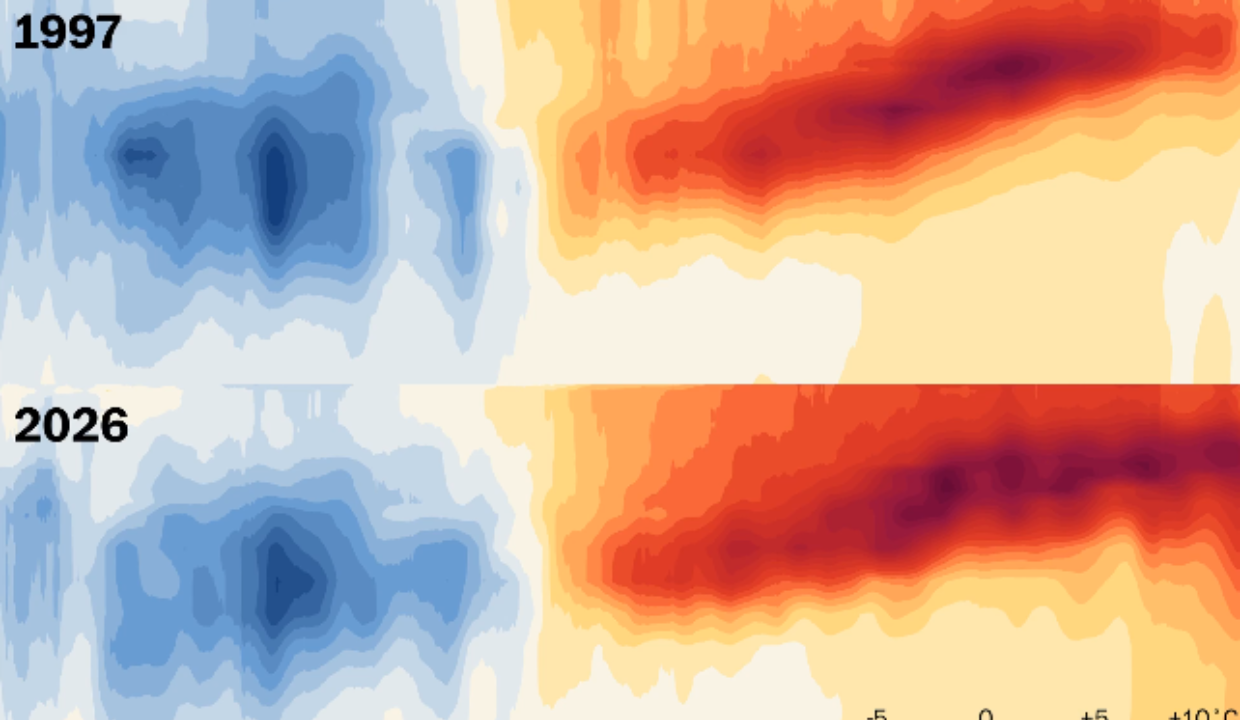
El Niño is a climate phenomenon associated with unusually warm sea-surface temperatures in the central and eastern tropical Pacific. The current event has already strengthened significantly. The World Meteorological Organization said on September 3 that El Niño is firmly established and is expected to intensify into a “very strong” event in the coming months, with a near-100 per cent likelihood of persisting through February 2027.
WMO data showed that Niño 3.4 sea-surface temperature anomalies rose to about 2.2°C to 2.6°C above average between late July and mid-August. Its September-November 2026 forecast puts the seasonal average anomaly at around 3.6°C, with the intensification expected to peak around November-December.
The scientists have warned that a strong El Niño could have wide-ranging consequences for India’s ecosystems, including coral bleaching and mortality, increased wildfire activity and the loss of large rainforest trees. Extreme heat and drought could also place additional pressure on farmers, fishermen and pastoral communities.
The ecological impacts may not always be immediately visible. Researchers have highlighted the possibility of changes such as delayed fruiting in plants and altered animal behaviour, which could go unnoticed without systematic field observations.
The scientists have therefore urged researchers to use the advance warning to mobilise across disciplines, document changes as they occur and build a stronger evidence base on how extreme climate events are affecting India’s natural systems.
Climate scientist Roxy Mathew Koll of the Indian Institute of Tropical Meteorology, one of the signatories, stressed the need to document changes while also protecting ecosystems already facing environmental pressures.
WMO has cautioned that the intensity of El Niño alone does not determine the severity of impacts in every region. Effects vary by location and season and can be influenced by other climate drivers, including conditions in the Indian and Atlantic oceans.
The latest forecasts nevertheless point to a heightened risk of significant shifts in rainfall and temperature patterns, making preparedness and early monitoring particularly important for India through late 2026 and into 2027.
with inputs from PTI