Nepal elections: Litmus test for Gen Z
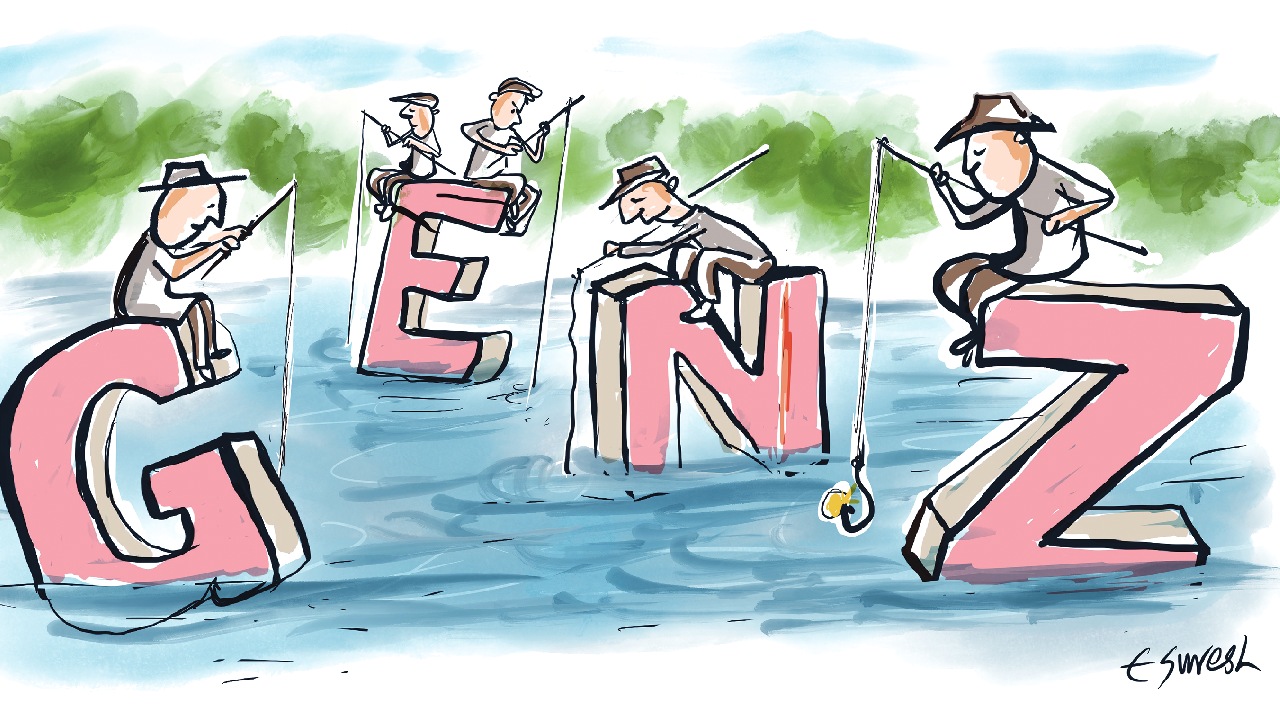
Nepal is moving full steam ahead towards the March 5, elections, which are a referendum on the performance of traditional parties and the key outcome of Nepal’s fifth revolution (Jan Andolan) last September. Elections are due a month earlier in Bangladesh after its fourth revolution, where violence is manifest between the old and new guard. In Nepal, too, cadres of the ousted KP Oli - CPN (UML) — government have clashed with Gen Z (Z) revolutionaries; 120 days on, graffiti across Nepal still reads ‘No to Oli.’
I spent all of December in Kathmandu, Pokhara, and villages near Pokhara, where people are asking how their lives will change after elections — especially after the arson and vandalism during the protests cost $5 billion (the government’s estimate is $572 million). On September 9, all state institutions had collapsed, forcing Oli to resign; in the prolonged vacuum that ensued, the Army was unable to protect government property. The Army, in its response to the government enquiry, has said it had to make a choice between protecting people (leaders and officials) and property. The Gen Z protests were “not all that spontaneous”, as initially reported; I found sufficient anecdotal information and documented evidence that the US stirred the pot — something Oli hinted at recently in a party convention speech. Further, some doubt lingers about the likelihood of elections being held on time, though interim PM Sushila Karki is confident there will be no delay.
Gen Z protests were ostensibly against the internet ban, which escalated after police firing killed 17 protestors. That figure rose to 77 martyrs. I saw damaged iconic buildings in the Kathmandu Valley being restored. The people’s uprising that piggybacked on the Gen Z protests expanded the latter’s demands from good governance, elimination of corruption, and job creation to constitutional amendments that would restore political stability and voting from abroad. Around 2,000 youth (7 lakh annually) leave the country every day for employment.
About the outcome of its Andolan, Gen Z says: “We’d gone to shoot a chicken but we killed a tiger.” Gen Z is a collective of 49 disparate groups, whose public face is Sudan Gurung, a rock band musician turned head of a humanitarian organisation. He has signed at least three significant agreements with Karki, most notably the Ten-Point Agreement (akin to the July Charter in Bangladesh) in December, which includes constitutional amendments that, according to Nepali advocate Radhesham Adhikari, will be difficult to implement and may become a hurdle to timely elections.
After the agreement, Karki said: “My government was formed to address issues that arose from the Gen Z uprising; all political parties (126) must take a view that elections will be held on time. We are not enemies of political parties, though we are the result of the Gen Z uprising and their issues.” Although the two biggest parties, Nepali Congress and CPN (UML), have filed writ petitions for restoration of Parliament, they will fight the elections. While Gen Z has not formed a political party, some members are joining Bibeksheel, Ujjyalo Nepal and Rashtriya Swatantra Party, the election symbols of the last two being the Bulb and Bell. Further, the enigmatic RSP President Rabi Lamichhane, jailed for fraud cases, has been released. Ujjyalo Nepal was formed by former Chairman of Nepal Electricity Board and serving minister, the dynamic Kulman Ghising, who rid Kathmandu of 18 hours of load-shedding. Bulb and Balen — the effervescent Mayor of Kathmandu, Balen Shah — struck the mother of mergers with Bell, with Shah as the PM face of RSP. Gen Z leaders such as Gurung and Purushottam Yadav are backing RSP, which will become formidable. Pre-poll alliances and mergers are the new normal, which even older parties (NC and UML) are reconsidering after the boost to RSP — precisely the virus of political instability Gen Z wanted to remove.
Despite being ousted from government, four-time PM Oli won a landslide third-term chairmanship of UML. Given his party’s strong grassroots organisation and most government officials being his appointees, Oli could spring a surprise. While five-time PM and NC leader Deuba will step down as party president, he will fight elections an unprecedented eighth time. The party is divided: India-backed Shekhar Koirala; US-supported Gagan Thapa; and the Bimalendra Nidhi/KP Sitaula groups. Thapa has unilaterally ordered a special NC convention on 8 January to be elected President.
Four-time PM Prachanda, minus the Maoist tag, remains the great survivor and coordinator of the reminted Nepal Communist Party, consisting of ten Left parties. Except for the RSP, the new crop of parties will not make a significant dent in older parties, which are likely to return but with smaller vote-share and seats in Parliament. The royalist Rashtra Prajatantra Party, while saying the failed democratic system led to the Gen Z revolution, has not sought a referendum on restoration of monarchy but decided to wait until there is “broad political consensus”. Yogi Adityanath’s name resonates perennially over formation of a Hindu Rashtra and revival of monarchy. The outgoing Chinese Ambassador Chen Song met Karki and made the unusual diplomatic request to keep the Chinese company that built the USD 216 million Pokhara International Airport out of the commission investigating corruption. Oli’s fall was a big setback for Beijing, given his nationalism (anti-Indianism) that resulted in his signing the BRI, the Transit Agreement, authenticating the One China policy, attending the last SCO summit, attending the PLA victory parade, calling Tibet Xizang, and endorsing the Global Security Initiative and Xi Jinping Thought. Still, the Left’s 60 per cent majority in Parliament is expected to reduce to less than 50 per cent post-elections.
India has been quietly proactive, backing elections and providing assistance in electoral logistics. China’s likely waning influence in Parliament is good for Delhi. Instead of the usual anti-India sentiment, China is bearing the brunt for encroachments in the North. Elections will be held on March 5, which could run in phases, otherwise the unknowns of a constitutional void will kick in. Koirala has said that if elections are not held, Parliament must be restored. Either way, nothing may change for ordinary Nepalis without constitutional amendments. It is unlikely to be a happy new year for Nepal.
The writer, a retired Major General, served as Commander, IPKF (South), Sri Lanka, and was a founder member of the Defence Planning Staff, now the Integrated Defence Staff; views are personal