Maritime security: Need to have proactive doctrine
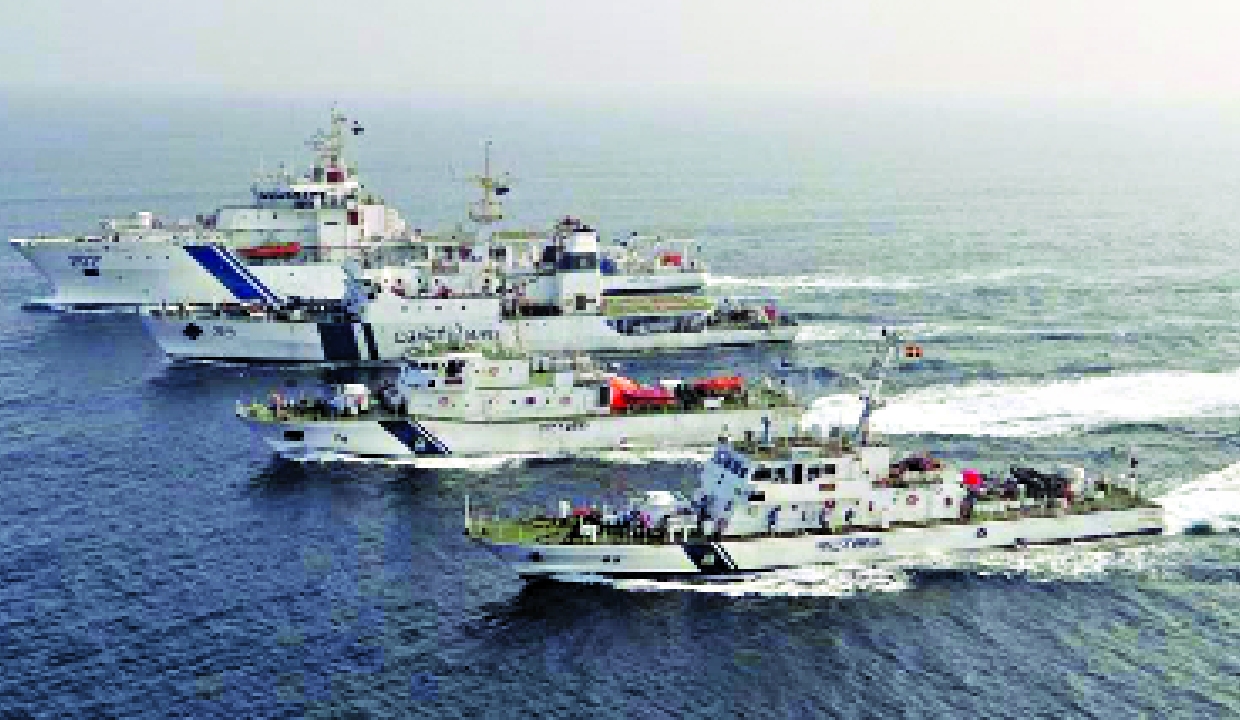
The ongoing tensions in the Gulf and the looming spectre of a blockade in the Strait of Hormuz serve as a stark reminder that global sea lanes are neither inviolable nor immune to disruption. For India, a nation whose economic lifelines are inextricably tied to the seas, this is not a distant geopolitical abstraction but an immediate strategic concern. With a coastline stretching over 11,000 kilometres, an expansive Exclusive Economic Zone, and a vast network of islands, India’s maritime geography is both an asset and a vulnerability.
Over the decades, the country has painstakingly built a credible coastal security architecture. Yet, credibility alone is no longer sufficient. The emerging security environment demands a decisive doctrinal shift—from a reactive posture to a proactive, preventive, and integrated maritime strategy. India’s coastal security framework has evolved less through anticipation and more through adversity. The establishment of the Coast Guard in 1978 marked the beginning of a structured maritime law enforcement presence. The absence of an integrated, multi-agency security grid became painfully evident in 1993, when the Mumbai serial blasts were facilitated by the clandestine landing of arms and explosives along the Maharashtra coast. This incident forced policymakers to acknowledge the coastline as a critical security frontier, leading to enhanced patrolling efforts. However, these measures, while important, were incremental and insufficient to address systemic vulnerabilities. The Kargil conflict in 1999 triggered a broader reassessment of national security, including maritime dimensions, but it was the attacks of 26/11 that exposed the full extent of India’s coastal security lapses. The response in the aftermath was substantial and transformative. Initiatives such as the Coastal Security Scheme, the establishment of Joint Operations Centres, the National Command Control Communication and Intelligence (NC3I) network, and the National Maritime Domain Awareness project significantly strengthened India’s maritime security infrastructure.
The integration of marine police forces, the deployment of coastal radar chains, and the expansion of surveillance capabilities further enhanced situational awareness. In recent years, India has continued to build upon this foundation. Investments in offshore patrol vessels, maritime reconnaissance aircraft, and information-sharing platforms such as the Information Fusion Centre for the Indian Ocean Region have improved operational readiness.
Agreements with multiple countries to share white shipping information have expanded India’s maritime reach beyond its immediate waters. Collectively, these measures have created a system that is both robust and credible. Yet, despite these advancements, the fundamental orientation of India’s coastal security remains reactive. The current model measures success primarily through enforcement metrics—patrol hours logged, distances covered, and quantities of contraband seized. While these indicators are important, they reflect a focus on intercepting threats after they have materialised rather than preventing their emergence. A purely interdiction-based approach, no matter how efficient, cannot achieve lasting security outcomes. A proactive maritime security strategy requires a fundamental redefinition of both objectives and metrics. Instead of focusing solely on immediate enforcement outcomes, success must be evaluated in terms of sustained reductions in illegal maritime activities, disruption of criminal networks, and resilience of coastal ecosystems. This approach recognises that security threats at sea are often rooted in economic, social, and governance deficits on land.
Central to this shift is the need to transform coastal communities from passive subjects of security measures into active partners. Fishermen, harbour workers, and coastal traders possess granular, real-time knowledge of local maritime activity that no technological system can fully replicate. A fisherman noticing an unfamiliar vessel lingering offshore or unusual patterns in maritime movement can provide critical early warnings. Institutionalising such community-based intelligence through formal reporting mechanisms, legal protections, and prompt response systems is not a peripheral initiative—it is a strategic imperative. Depleting fish stocks, rising operational costs, limited access to credit, and lack of insurance push many in coastal communities towards smuggling or other illegal enterprises. By investing in marine insurance schemes, cooperative credit structures, and alternative livelihoods such as aquaculture and coastal tourism, the state can reduce the incentive base for criminal recruitment. In this sense, ministries dealing with fisheries, finance, and labour become as critical to maritime security as traditional defence and law enforcement agencies.
Governance of littoral spaces also requires urgent attention. Corruption within port and harbour ecosystems represents a significant security vulnerability. Illicit consignments that pass through compromised administrative systems pose risks equivalent to those that evade detection at sea. Strengthening regulatory oversight through measures such as biometric crew identification, universal vessel tracking systems, and independent audits of port authorities is essential.While joint exercises involving the Navy, Coast Guard, intelligence agencies, and other stakeholders are valuable, their effectiveness depends on the institutionalisation of lessons learned into everyday operations. India’s vision of regional cooperation, articulated through initiatives like SAGAR (Security and Growth for All in the Region), provides a strong conceptual framework. However, translating this vision into operational reality requires deeper collaboration with neighbouring countries, including joint surveillance, coordinated enforcement actions, and shared intelligence mechanisms. Without such cooperation, enforcement efforts risk merely displacing criminal activities across maritime borders rather than eliminating them. Ultimately, the imperative for India is clear. The seas surrounding the country are becoming increasingly contested and complex, shaped by geopolitical tensions, economic competition, and transnational threats. A reactive approach, however sophisticated, will always remain one step behind evolving challenges. India stands at a juncture where it can either continue to refine its reactive systems or embrace a transformative approach that anticipates and mitigates threats before they materialise. The choice will determine not only the security of its coastline but also the resilience of its broader strategic and economic future.
The Author is a defence and strategic expert and an alumnus of the United States Naval War College. He is a retired Additional Director General of the Indian Coast Guard; Views presented are personal.
Leave a Comment
Comments (1)
Sir, very well articulated column. 🫡