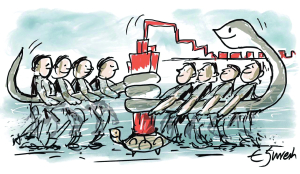
Justice delayed leaves truth unanswered still
Justice is an elusive and often ambiguous idea. It does not always arrive where one expects it to, nor does it consistently side with those who have been grievously wronged. At times, it appears to favour individuals widely perceived as guilty in the court of public opinion, yet declared “not guilty” within the strict confines of the law.
This uneasy tension between moral certainty and legal outcome came sharply into focus in Kerala this week, when a prominent actor was acquitted of criminal conspiracy in the 2017 abduction and rape case involving another actor. The verdict triggered an outpouring of anger across social media and public forums in the state. Many viewed the acquittal as a stain on the country’s judicial system, a moment that seemed to reaffirm public cynicism about the ability of institutions to deliver justice in cases involving wealth, influence, and power. Accusations flew thick and fast — some openly asserting that money and clout had tilted the scales, quietly seeping into the crevices of a system meant to safeguard truth and fairness. Enough rage has been vented over what many see as the irony of the judgment, and it will likely remain one of the most telling examples of how a high-profile case can unravel over time. For eight long years, the matter lingered in court.
While it is true that truth, in law, must be established through evidence alone — and, viewed strictly through that prism, the acquittal followed established legal principles — the larger question cannot be ignored. When justice is delayed for nearly a decade, it ceases to be justice in any meaningful sense. In such cases, delay itself becomes a denial of the victim’s fundamental right.
Memories fade, narratives shift, and pressure — subtle or otherwise — begins to reshape testimony. In this case, several witnesses who once provided critical statements later turned hostile. Of the 261 witnesses examined, 28 reversed their earlier accounts. How much truth was lost in that erosion is impossible to measure, but its impact on the outcome is undeniable. Such reversals are not uncommon in trials involving influential accused persons, and they point to a systemic vulnerability that the justice system has yet to adequately address. While there may be no legal proof establishing intimidation or directly implicating the accused as a conspirator, the manner in which the crime was executed and subsequently handled makes it difficult to accept that it was a random act. The precision of the crime and the subsequent disintegration of the prosecution’s case suggest manipulation so thorough that it left the state with little to sustain a conviction.
For the public — largely excluded from the complexities of legal procedure and the unseen forces that can shape a trial — the only option is reluctant acceptance of the verdict. There is some consolation in knowing that higher courts remain open should the survivor choose to pursue the matter further, with the hope that proceedings there may be swifter and more resolute. Yet a deep unease lingers. When crimes appear to be softened by power and privilege, it breeds fear and insecurity. It sends a chilling message that truth can be weakened by neglect, delay, or influence, and that the law may not always protect the vulnerable. The anger provoked by the Ernakulam court’s verdict may eventually fade, but the questions it raises will endure. At the heart of this legal and moral dilemma stands a woman whose struggle for justice and dignity remains painfully unresolved.
The writer is a Dubai-based author, columnist, independent journalist and children’s writing coach; views are personal