IPKF honoured: A long-delayed correction
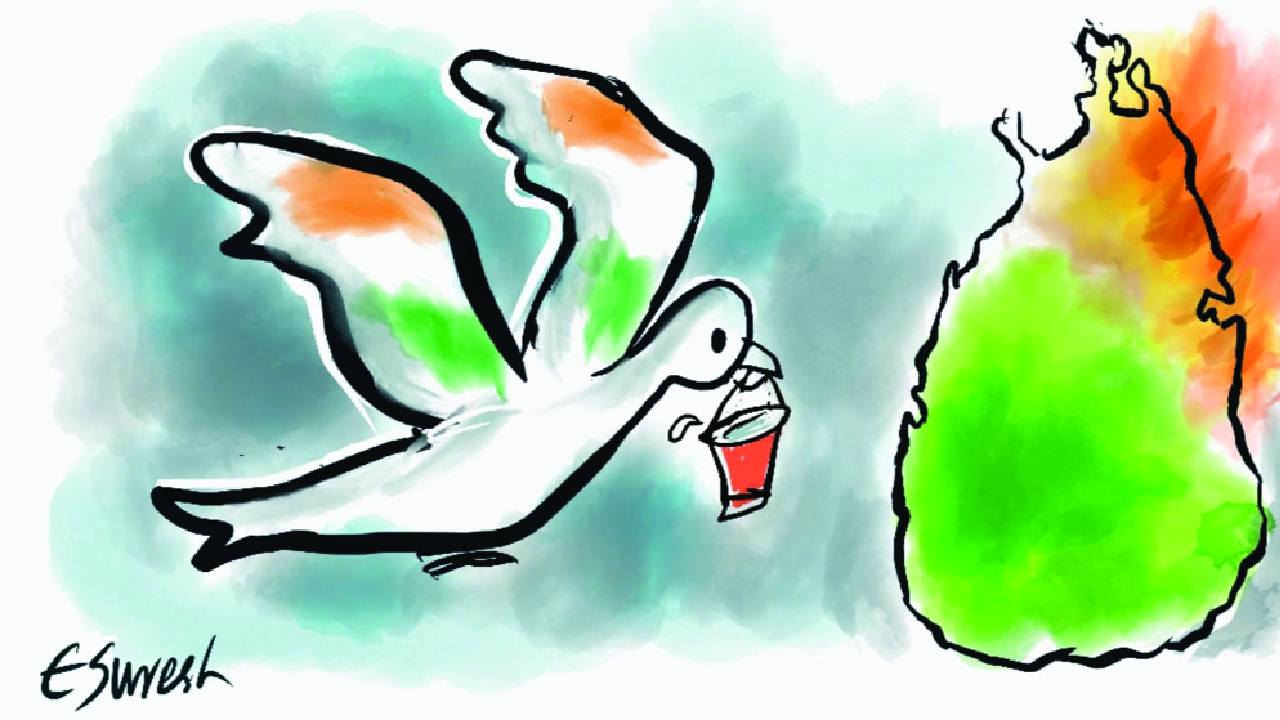
The Indian Peace Keeping Force (IPKF)’s belated official recognition by Defence Minister Rajnath Singh on Veterans Day, January 14, is welcome. He scored a political point without naming the Congress government which sent the IPKF to Sri Lanka in 1987, without explaining why his government granted the honour only in its third term. Come to think of it, the 1971 war in East Pakistan and Kargil (1999), which was just a skirmish, are the only two officially recognised. Other wars and campaigns are not commemorated at the National War Memorial (NWM). Uri surgical strikes, Balakot air strikes, the Galwan clash, and beyond visual range, Op Sindoor, are hailed as muscular achievements of BJP-led governments. Especially Op Sindoor, which will have eternal shelf life as it is on pause. It last figured in the International Kite Festival this month in Gujarat. Social media mainly has helped recall the forgotten campaigns-recapture of Portuguese and Dutch enclaves, the first Kashmir India-Pakistan war, liberation of Hyderabad and some face-saving battles of the 1962 war.
A gallant and unrelenting band of IPKF veterans have tenaciously waged their non-kinetic battles with Army bureaucracy for commemorating their 1,171 martyrs at the NWM with wreath laying and sounding the Last Post and Rouse, the ultimate honour for the fallen. For five years since veterans launched their recognition campaign, silent wreath-laying sans bugles was permitted. Veterans tried multi-level efforts including three former Army Chiefs, two of whom served with the IPKF. But nothing worked. They were allowed to continue with ‘silent commemoration’, even bringing their own wreaths. The Adjutant General’s office, which deals with ceremonial and welfare matters, would say that IPKF recognition is a ‘political’ issue-the BJP was attempting to secure a toehold in Tamil Nadu and IPKF operations in Sri Lanka’s Tamil-majority North and East had left unhealed wounds. It turns out this was a misreading of the political picture, though IPKF recognition is politics.
The IPKF had made a clear distinction between LTTE insurgents and other Tamils who were shackled by the LTTE. Further, sympathy for the LTTE had evaporated in Tamil Nadu following Rajiv Gandhi’s assassination. Tamil Nadu’s support for Sri Lankan Tamils also dried up after the LTTE was annihilated in 2009. The ruling government’s appeals to Sri Lanka have also shrunk from implementation of the 13th Amendment in full to urging Colombo to honour ‘Tamil aspirations within the Sri Lankan constitution’. No mention of 13A. PM Narendra Modi has visited Sri Lanka twice (2015 and 2025) and called the IPKF ‘a source of inspiration and courage’. Further, for the BJP, Tamil Nadu’s 39 seats in Parliament are ‘a bridge too far’ and for the first time no Tamil from the North East is a minister in the JVP-majority NPP government in Sri Lanka. President Anura Dissanayake has an unprecedented two-thirds majority and while India has been the first responder during all its recent crises-economic meltdown, floods, and cyclone Ditwah-little reciprocity has been shown.
CDS Gen Anil Chouhan had the temerity to tell IPKF veterans recently in Dehradun that “we have fought hundreds of operations. Op Pawan (Sri Lanka) was only a minor operation”. It earned one UYSM, one PVC, three MVCs, 98 VrCs, and 250 other gallantry awards. Which other ‘minor’ operation won as many gallantry medals? The government has lavished the highest per capita gallantry awards on Op Sindoor. Politics! Mercifully, it was on November 25, last that COAS Gen Dwivedi joined IPKF veterans to honour IPKF martyrs and initiate a historical correction and became the driver for political recognition. This will translate into deployment of buglers during wreath-laying on a date to be determined by the Army-25 November when Maj P Rameswaran was awarded the PVC; July 30, the date the IPKF was inducted; March 24, when the IPKF withdrew from Sri Lanka. It is also appropriate to recall parts of the untold IPKF story as I recorded as a member of the newly created Defence Planning Staff to the Chiefs of Staff Committee in 1987. The flawed ISLA that enabled IPKF induction was, according to grapevine, designed to mask the Bofors scandal where Gen K Sundarji played a key role in flaunting the virtues of the Bofors gun. He also assured Prime Minister Rajiv Gandhi that the LTTE would be disarmed in 72 hours but it refused to surrender weapons for ‘local autonomy’ instead of Eelam because it was not part of the ISLA. A separate agreement between LTTE supremo Prabhakaran and India on disarming was broken. Gandhi was most annoyed and said that the Army should wear saris; that is when all hell broke loose and war broke out in Jaffna. And the rest is history.
The turning point of the campaign was when a new President, Premadasa, was elected in Sri Lanka who had opposed the ISLA; a new PM, VP Singh, was elected in India who wanted the IPKF withdrawn; and a new mild ambassador, Lakhan Mehrotra, replaced the steely J N Dixit. Premadasa, as supreme commander, told Mehrotra that the IPKF had come for a week, it had overstayed and should go back by October 29, 1989. “LTTE is our internal affair.” He told him he would talk to the LTTE and was flown for talks in an IPKF helicopter. Premadasa signed a deal with the LTTE to evict the IPKF from Sri Lanka. Later, ironically, the LTTE assassinated Premadasa. On July 29, 2012, in a programme DefenceWatch on Doordarshan anchored by me, GoC IPKF, Gen Kalkat, said his mandate was to create a security environment in the north east so that elections-provincial, parliamentary and presidential-could be held in the north east. These were held for the first time with more than 65 per cent turnout. There were many other achievements by the IPKF.
On March 24, 1990, after 32 months, the IPKF quietly exited Sri Lanka. Scholars on coercive diplomacy and intervention, Martha Crenshaw and Brendan O’Duffy, have differently classified India’s intervention as no failure of the counter-insurgency campaign but a breakdown of political and diplomatic strategies of coercive diplomacy that adversely affected military operations. But the IPKF erred too due to lack of intelligence and preparation. Still, the IPKF was made the scapegoat for policy failures. Now the IPKF’s redemption has removed the scar.
The writer, a retired Major General, served as Commander, IPKF (South), Sri Lanka, and was a founder member of the Defence Planning Staff, now the Integrated Defence Staff; views are personal