Intentional discomfort is the fastest route to strength

There was a time when survival demanded discomfort. Our ancestors walked miles for food, endured harsh climates, and faced real danger. Today, comfort arrives at our doorstep—literally. Food, entertainment, validation, distraction—everything is one click away. Convenience has become our new normal. But here’s the uncomfortable truth: growth does not live in comfort.
We live in a world that encourages ease. “Take it easy.” “Don’t stress.” “You deserve a break.” And while rest is sacred, avoidance is not. Somewhere along the way, we confused peace with passivity and comfort with contentment. The result? We are increasingly fragile in a world that demands resilience. Doing hard things on purpose is not about self-punishment. It is about self-construction. When you wake up before sunrise to exercise, when you choose to have the difficult conversation instead of suppressing it, when you say no to immediate pleasure in favor of long-term goals—you are not merely performing tasks. You are building identity. You are telling yourself, “I can trust me.”
Intentional discomfort rewires the mind. Cold showers, disciplined routines, public speaking, learning a new skill, setting boundaries—each act of voluntary hardship strengthens your psychological muscle. It teaches you that discomfort is temporary, but pride is lasting. It shifts you from reacting to life to designing it. Most people wait for crisis to become strong. They wait for heartbreak to learn boundaries, for failure to build discipline, for illness to value health. But what if we chose strength before life forced it upon us? Clarity is born in challenge. When you push your limits—physically, mentally, emotionally—you begin to understand who you are under pressure. You discover your thresholds, your fears, your excuses. And in facing them, you dilute their power. The voice that says “I can’t” becomes quieter. The voice that says “Try again” grows louder.
There is also a spiritual elegance to doing hard things. It humbles you. It strips away entitlement. It reminds you that mastery is not inherited; it is earned in the quiet, unseen hours. No applause. No validation. Just you versus your resistance.
Intentional discomfort sharpens decision-making. It strengthens discipline, which is far more reliable than motivation. Motivation fluctuates with mood; discipline survives it. And discipline is the bridge between who you are and who you wish to become.
Perhaps the greatest gift of doing hard things is self-respect. When you keep promises to yourself, you build internal credibility. You walk taller. You speak with conviction. You no longer need external reassurance because you have evidence—proof—that you can endure, adapt, and overcome. In a culture obsessed with comfort, choosing difficulty is rebellion. It is leadership. It is maturity.
Start small. Take the stairs. Finish the book. Make the call. Have the conversation. Train your body. Guard your focus. Stretch beyond convenience.
Each deliberate challenge compounds over time. Strength compounds. Confidence compounds. Character compounds. Life will inevitably bring hardship. That is guaranteed. The question is not whether you will face difficulty, but whether difficulty will meet a prepared version of you. Do hard things on purpose—not because life is cruel, but because you are capable. And in choosing discomfort, you choose evolution.
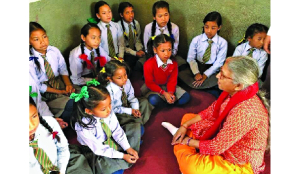
The writer is a freelance writer. She writes on development, social and ecnomics issues; views are personal