Indore: Water woes and a broken promise
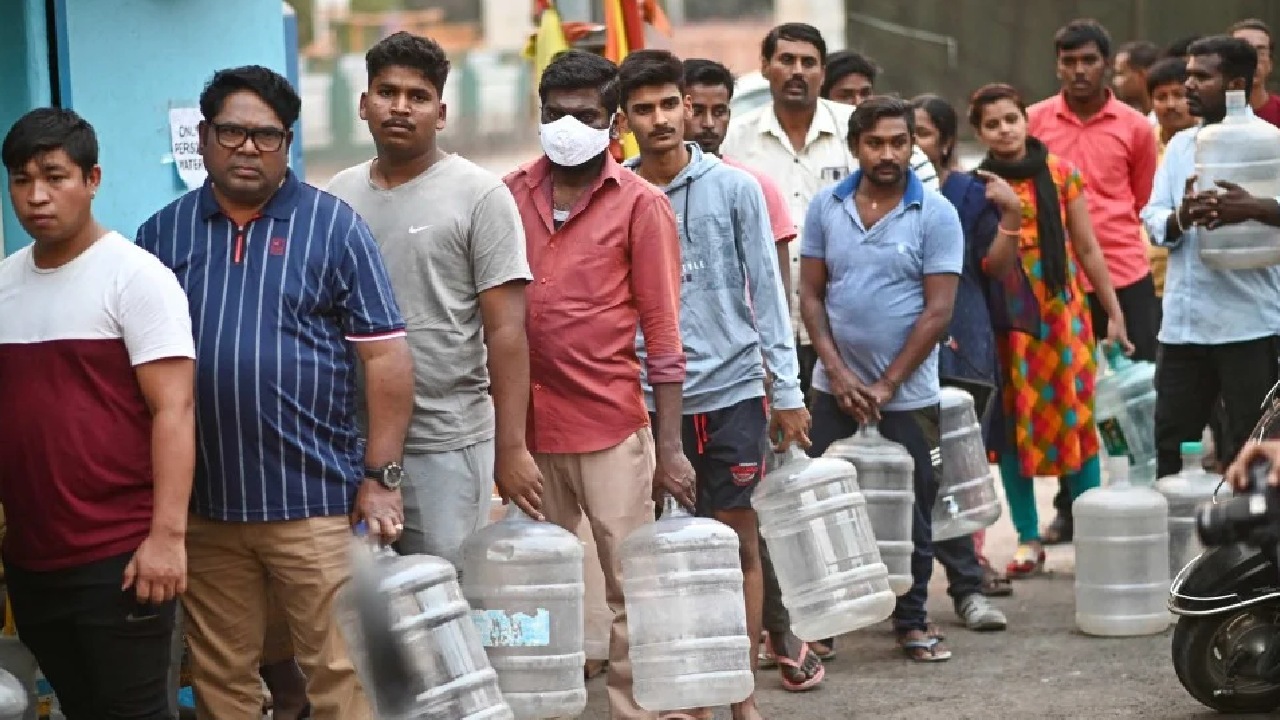
It is as shocking as it is tragic that contaminated water supplied by the Indore Municipal Corporation has claimed sixteen innocent lives, while more than 1,400 people continue to battle for survival. The water contamination tragedy in Indore’s Bhagirathpura is neither a minor oversight nor the result of administrative laxity; it represents criminal negligence and a systemic failure at the highest levels. That such a catastrophe unfolded in a city branded as India’s ‘cleanest’ makes it all the more disturbing. Indore’s much-celebrated ranking now rings hollow against the grim reality of poisoned taps and overcrowded hospitals, raising serious questions about how cleanliness awards are conceived and conferred. What began as a diarrhoeal outbreak has exposed a far graver truth. The emergence of suspected cases of Guillain-Barré syndrome (GBS) suggests that the contamination may have caused neurological and immunological damage, making the tragedy even more alarming. Medical experts warn that such acute nerve injuries are often linked to infections or toxins. If contaminated water is indeed the trigger, it indicates exposure far more severe than routine sewage leakage or bacterial contamination. Preliminary accounts point to a collapse of basic safeguards: compromised pipelines, the unsafe mixing of treated and untreated water, reliance on unregulated borewells and tankers, and a glaring absence of regular water-quality testing. Ironically, the cleanliness tag itself may have bred this complacency. Indore’s cleanliness narrative has obsessively focused on visible hygiene - swept streets and segregated rubbish — while invisible yet life-critical systems such as drinking-water safety were allowed to decay. Cleanliness is not cosmetic; it is fundamentally about safe water, sanitation, and disease prevention. What is truly unpardonable is that warnings contained in the 2019 Comptroller and Auditor General (CAG) report — highlighting over five lakh cases of waterborne diseases in Bhopal and Indore - were ignored, with no corrective action taken. Instead, such data was effectively buried. Unfortunately, this tragedy may be only the tip of the iceberg. Health experts warn that similar outbreaks have already occurred across Madhya Pradesh, including in Barwani, and many more may yet follow. Responsibility lies squarely with governance. Municipal authorities failed to ensure pipeline integrity and routine water testing. The state government appears to have disregarded mandatory conditions attached to a $200 million Asian Development Bank loan, including the requirement for fortnightly water audits.
The way forward demands honesty and structural reform, not denial. First, there must be an independent judicial or scientific inquiry into the contamination, its sources, and its health impacts. Second, real-time water-quality data and district-wise records of waterborne diseases must be made public under the Public Health Act. Finally, India must redefine the idea of "clean cities" to include invisible infrastructure - safe drinking water, robust sewage systems, and preventive healthcare - not merely tidy streets.