India-Sri Lanka celebrate 78 year of friendship
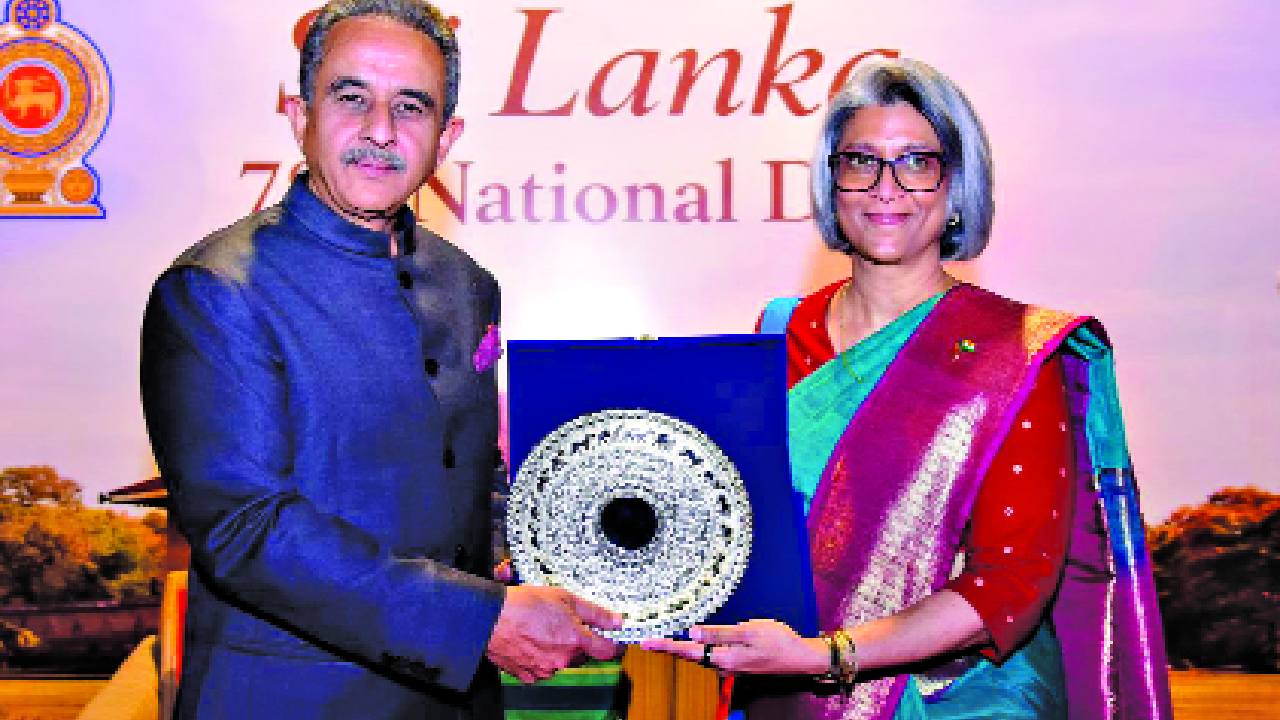
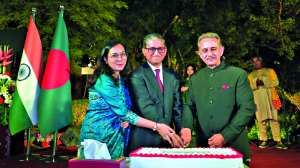
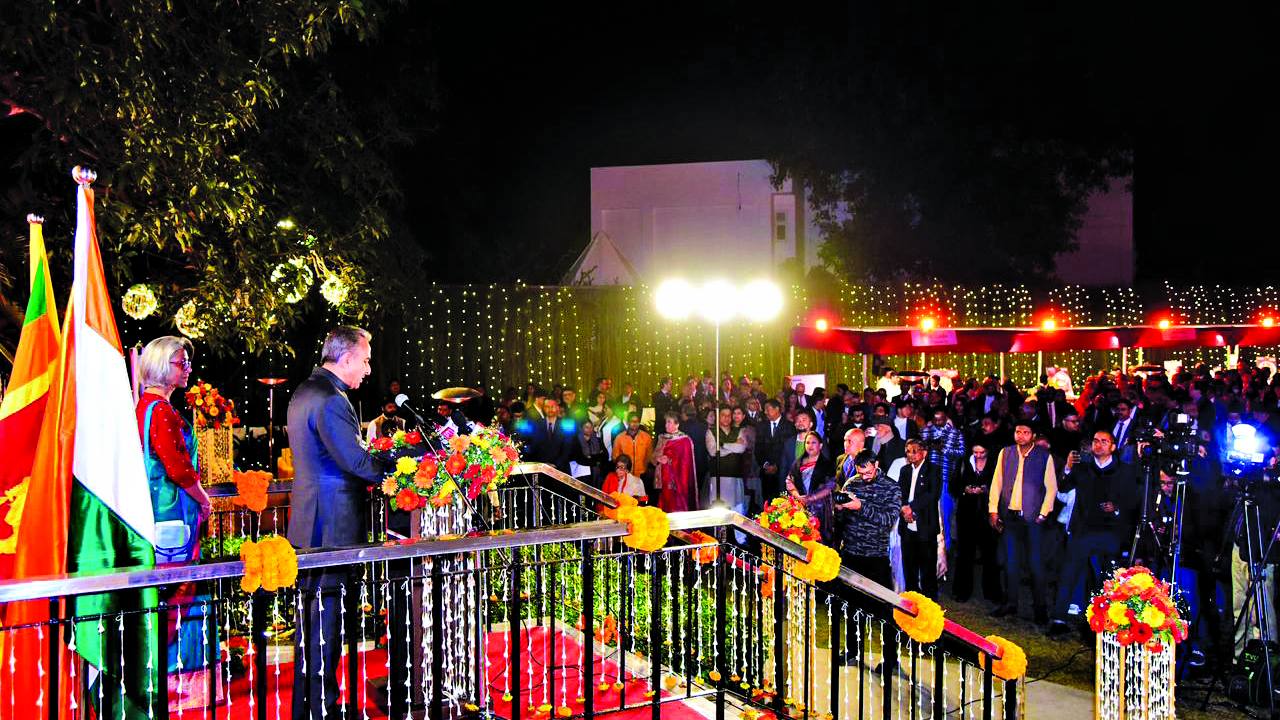
The High Commission of Sri Lanka to India marked the 78th National Day of the Democratic Socialist Republic of Sri Lanka with a grand ceremonial reception in New Delhi, reaffirming the enduring friendship and strategic partnership between the two neighboring nations. The event, held at the High Commission premises in Chanakyapuri, brought together senior Indian government officials, diplomats, policymakers, scholars, business leaders, and members of the Sri Lankan diaspora.
Hon. Union Minister of State for External Affairs, Kirti Vardhan Singh, graced the occasion as the Chief Guest, underscoring the importance India attaches to its relations with Sri Lanka. The evening was marked by warm exchanges, reflections on shared history, and renewed commitments to future cooperation.
Addressing the distinguished gathering, Shri Kirti Vardhan Singh described India-Sri Lanka relations as “rooted not merely in geographical proximity, but in a shared civilizational heritage, common cultural traditions, and deep people-to-people ties that have evolved over centuries.”
“India’s support for Sri Lanka has always been unconditional and guided by the belief that a stable and prosperous Sri Lanka contributes to regional security and shared growth,” the Minister said, reiterating New Delhi’s commitment to Colombo under India’s ‘Neighbourhood First’ policy and the MAHASAGAR vision for the Indian Ocean region.
A Partnership Anchored in History and Trust
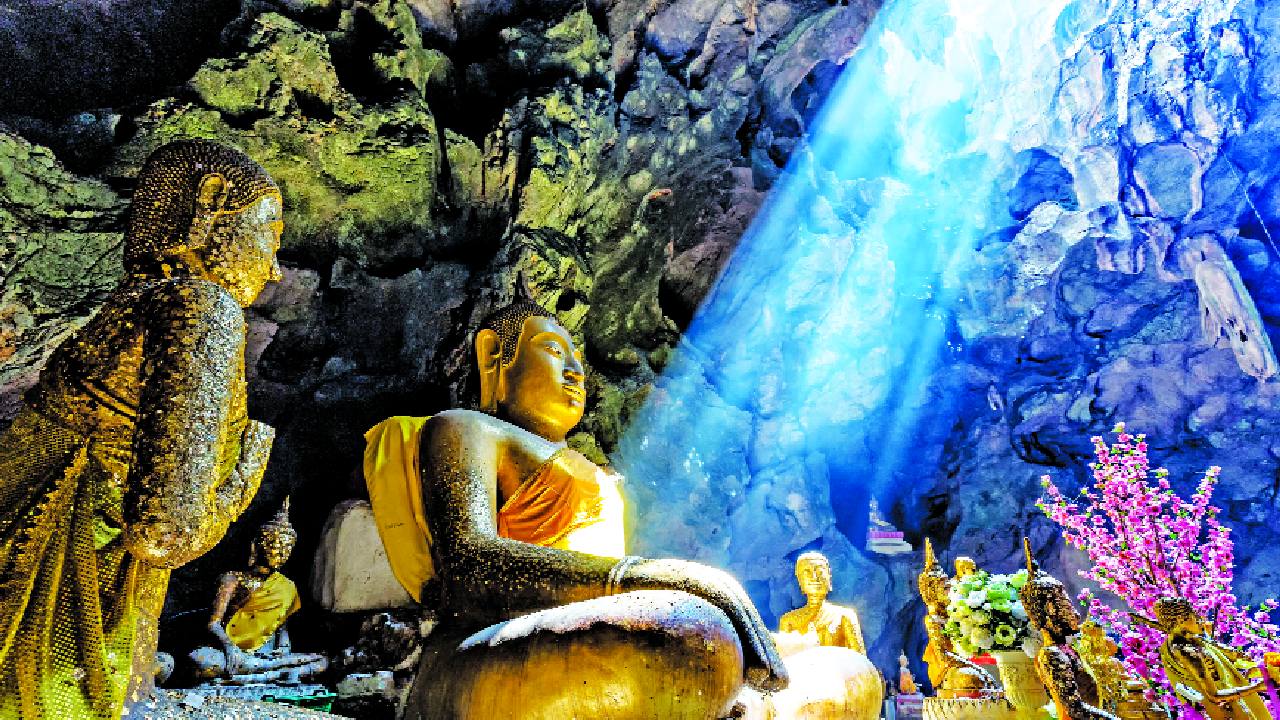
The relationship between India and Sri Lanka is among the most multifaceted in South Asia, shaped by centuries of cultural, religious, and economic interaction. Buddhism, trade routes across the Indian Ocean, and linguistic and artistic exchanges have created bonds that predate modern nation-states.
In recent decades, these ties have been reinforced by structured political dialogue, expanding economic engagement, and close cooperation during times of crisis. Speakers at the event emphasized that trust and goodwill form the bedrock of bilateral relations, enabling both countries to navigate challenges while exploring new opportunities.
Shri Singh highlighted that bilateral ties have entered a phase of renewed momentum following high-level exchanges, including the visit of Prime Minister Shri Narendra Modi to Sri Lanka in 2025 and the visit of Sri Lankan President Anura Kumara Disanayaka to India in 2024. According to the Minister, these visits laid a strong foundation for long-term collaboration based on synergy, complementarity, and mutual benefit.
Sri Lanka’s Appreciation of India’s Support in Difficult Times
A recurring theme throughout the evening was Sri Lanka’s deep appreciation of India’s role as a reliable and compassionate partner, particularly during moments of national crisis.
Sri Lankan officials and diplomats recalled India’s swift and decisive assistance following the devastating Indian Ocean tsunami of December 2004, one of the darkest chapters in Sri Lanka’s modern history. Within hours of the disaster, India launched Operation Rainbow, deploying naval ships, aircraft, medical teams, and relief supplies to Sri Lanka. Indian forces played a critical role in search and rescue operations, medical relief, and the restoration of basic services along Sri Lanka’s battered coastline.Senior Sri Lankan representatives noted that India’s response during the tsunami was not merely humanitarian but deeply symbolic of the bond between the two nations. “India stood with Sri Lanka as a friend, a neighbor, and a family member,” one diplomat remarked, reflecting a sentiment widely shared across Sri Lankan society.This spirit of solidarity, speakers emphasized, has continued over the years. India has consistently been the first responder to Sri Lanka’s needs-during the COVID-19 pandemic, the economic crisis of 2022, and in the aftermath of recent natural disasters, including Cyclone Ditwah.
Development Partnership and Economic Cooperation
In his remarks, Shri Kirti Vardhan Singh outlined the scale and scope of India’s development partnership with Sri Lanka, describing it as one of India’s most comprehensive and people-centric overseas engagements.
“India’s overall assistance to Sri Lanka now exceeds USD 7.5 billion, including grants of over USD 850 million,” the Minister noted. These projects span critical sectors such as housing, railways, transport, health, education, agriculture, renewable energy, and digital infrastructure, and are implemented across all provinces of Sri Lanka.
Particular attention has been given to post-disaster reconstruction and livelihood support. Following Cyclone Ditwah, India swiftly deployed naval assets for humanitarian assistance and announced a USD 450 million relief package, under which the restoration of bridges, railway lines, houses, and hospitals is already underway.
Economic ties between the two countries also continue to grow steadily. India remains Sri Lanka’s largest trading partner, with bilateral trade reaching USD 5.8 billion in the financial year 2024-25. Indian investments now account for nearly 50 percent of total foreign direct investment in Sri Lanka, reflecting strong confidence in the island nation’s economic potential.
Digital Transformation
Highlighting the future-oriented dimension of bilateral cooperation, Shri Singh emphasized India’s support for Sri Lanka’s digital transformation journey. Drawing on India’s own experience with large-scale digital public infrastructure, the Minister said India was pleased to support the Sri Lanka Unique Digital Identity (SLUDI) project, which is expected to enhance governance, service delivery, and financial inclusion.
Equally important, he said, is cooperation in capacity building and human resource development. Thousands of Sri Lankan professionals, civil servants, and students have benefited from Indian training programs and scholarships over the years. The Indian Council for Cultural Relations (ICCR) continues to play a key role in fostering educational and cultural exchanges.
Cultural Bonds
Beyond official engagements, the heart of India-Sri Lanka relations lies in vibrant people-to-people connections. Religious tourism, particularly linked to Buddhist pilgrimage sites, remains a powerful connector. The ongoing exposition of the Sacred Buddha Relics from Devni Mori in Colombo was cited as a powerful symbol of shared spiritual heritage.Tourism flows further reinforce these ties. In 2025, India emerged once again as the largest source of tourists to Sri Lanka, with over five lakh Indian visitors, contributing significantly to Sri Lanka’s tourism-driven economic recovery.
Looking Ahead with Confidence
As the evening drew to a close, the overarching message was one of optimism and shared purpose. “India-Sri Lanka relations are clearly on an upward trajectory, marked by renewed political engagement, growing economic cooperation, and deeper mutual trust,” Kirti Vardhan Singh said. Extending warm wishes to the Government and people of Sri Lanka on their National Day, the Minister reaffirmed India’s commitment to working closely with Sri Lanka to advance peace, prosperity, and stability in the region.The 78th National Day reception thus served not only as a celebration of Sri Lanka’s independence, but also as a powerful reminder of a friendship that has endured crises, evolved with time, and continues to look confidently toward the future.
The writer is an Associate Editor (Foreign Affairs) at The Pioneer; views are personal