India–Brazil reset: A strategic step
The digital is the future, and rare earths are its main ingredients. Any country that seeks to dominate the digital and AI age must have ample resources and a supply chain to feed its digital revolution. So far, India has heavily depended on China for its rare earths and other critical minerals. But given the volatility of Indo-China relations, China can always use it as a lever to subdue India in trying times.
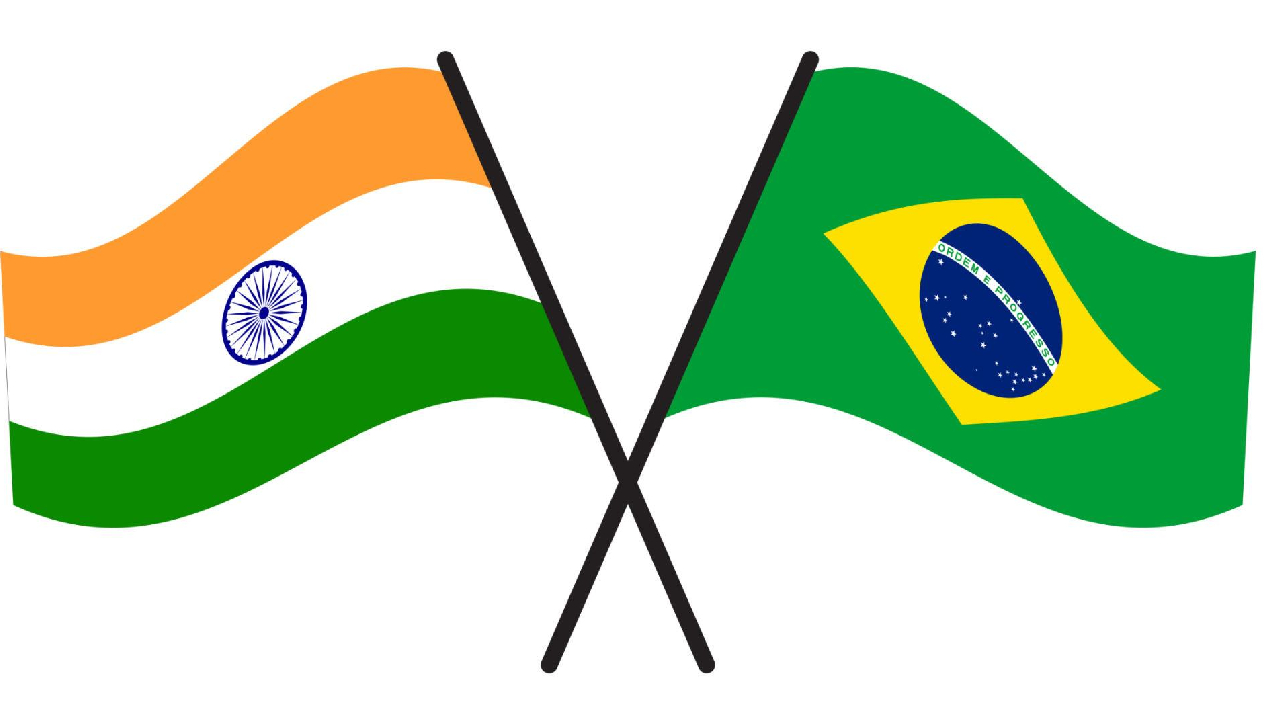
In this context, the visit of Brazilian President Luiz Inácio Lula da Silva to India marks more than a ceremonial reaffirmation of ties. Brazil and India are two major nations of the Global South and have always had good relations, but with the shifting geopolitics, this friendship needs to be strategic and mutually supportive. The Brazilian President’s Delhi visit signals a strategic recalibration at a time when global supply chains are under stress and geopolitical alignments are in flux. For India, the takeaways are significant-not merely in terms of expanding trade, but in gradually loosening structural dependence on China across critical sectors.
The exchange of ten agreements spanning critical minerals, digital cooperation, health, MSMEs, entrepreneurship and mass communication underscores the importance India assigns to Brazil. However, the most significant is the pact on critical minerals and rare earths. Brazil, endowed with vast reserves of lithium, niobium, graphite and rare earth elements, offers India a viable alternative source. By factoring in Brazil, India can hedge against disruptions and build resilient supply chains-particularly vital for not only its growing IT industry but also for electric vehicles and renewable energy systems.
The production of semiconductors heavily depends upon rare earths. They are the fundamental components in virtually all modern electronics, serving as the brains, memory, and power controllers in all modern electronic devices. Besides, the emphasis on technology collaboration is equally compelling. The proposed Centre of Excellence for Digital Public Infrastructure in Brazil extends India’s successful DPI model beyond its borders. Yet another vital sector that is important to any powerful nation is energy. Brazil’s global leadership in biofuels complements India’s push for energy transition and reduced fossil fuel import dependence. Joint initiatives under platforms such as the Global Biofuel Alliance can reduce reliance on energy supply chains influenced by Beijing.
Similarly, in agriculture, both nations-major food producers-can collaborate on research, climate-resilient crops and food security frameworks, thereby creating South-South models independent of dominant global players. By deepening bilateral trade-targeted to exceed $20 billion within five years-they strengthen a South-South economic axis. India- Brazil synergy will reflect geopolitics as well. Both nations are commitment to a multipolar world order and urgent reform of the United Nations Security Council. Both have prominent place within BRICS, G20 and IBSA, India and Brazil seek to amplify the voice of the Global South. This visit may well be remembered as a decisive step in India’s long-term effort to build resilient supply chains and finding a likeminded partner.