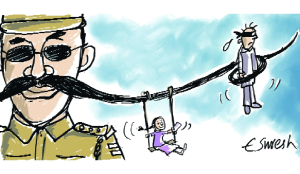
How Indian school education is quietly collapsing
If irony ever needed a permanent address, it would find one not in a grand boulevard or a government bungalow, but in an Indian school staff room. It would sit between a fraying attendance register and a biometric machine that fails to recognise the fingerprints that keep the system alive. In a country that worships knowledge and calls teachers nation-builders, the Indian schoolteacher has been quietly reinvented as the world’s most expensive clerk.
Why burden a trained educator with the inconvenience of teaching when they can be “productively” deployed filling forms, feeding portals, chasing signatures, uploading data, supervising mid-day meals, managing elections and conducting surveys? As the old proverb reminds us, when the axe forgets, the tree remembers-and Indian teachers remember everything.
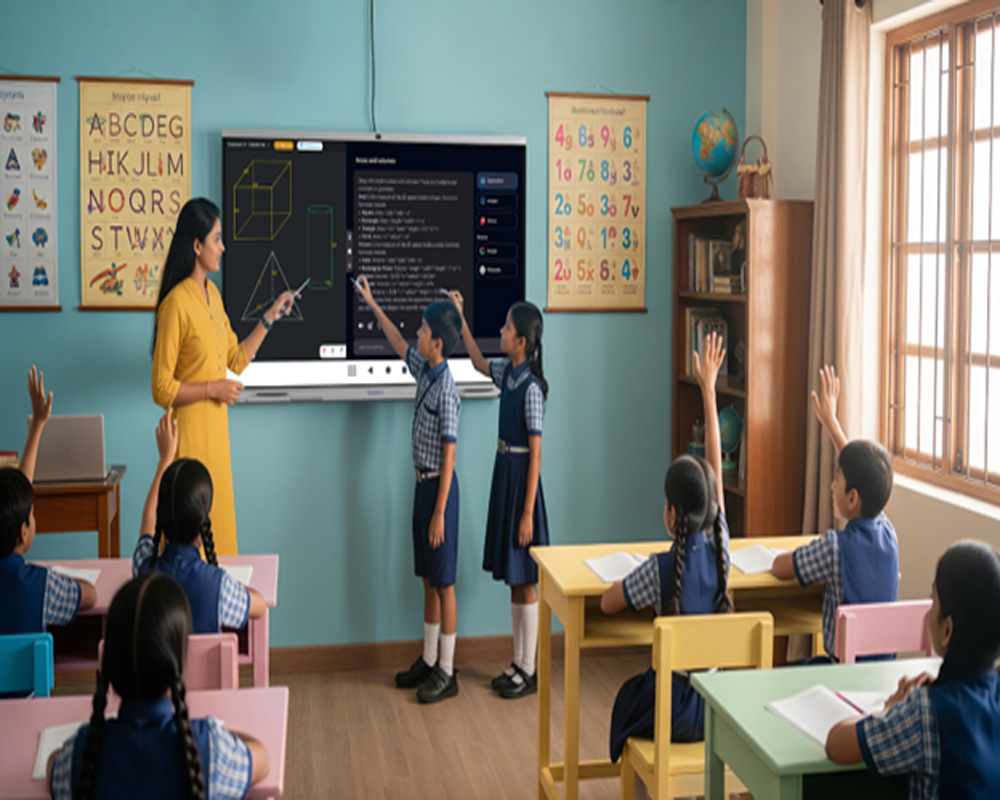
There was a time when a teacher’s professional toolkit consisted of chalk, books and an enquiring mind. Today, it resembles that of a junior bureaucrat: spreadsheets, dashboards, compliance formats, OTPs and passwords that expire with urgency. Teachers are expected to multitask with the efficiency of corporate executives and the docility of clerical staff, while being compensated and respected like replaceable accessories. This is not negligence; it is design. We entrust teachers with shaping future citizens, yet deny them the time, autonomy and dignity required to engage meaningfully with students.
Unsurprisingly, the classroom has suffered a quiet demotion. Once a space of dialogue and discovery, it is now an interruption in a day of administrative survival. Teachers spend more time validating data than nurturing ideas, more time formatting reports than forming values. From census duty to election deployment, teachers have become the state’s instrument. When you pay a professional salary for clerical obedience, you have not reformed education; you have built an overqualified filing cabinet.
What turns this farce into tragedy is the sermon that accompanies it. Teachers are repeatedly reminded that theirs is a “noble profession”, a phrase deployed whenever salaries stagnate and workloads swell. Nobility here functions less as honour and more as anaesthesia. But nobility does not pay EMIs, cure burnout or conjure lesson plans after hours of drudgery.
Predictably, when students falter, accountability travels in one direction. Workshops proliferate and inspections intensify, while the structural reality remains untouched. You cannot expect pedagogical miracles from professionals fragmented across clerical obligations.
And still, teachers endure. They innovate in overcrowded classrooms, mentor beyond official hours and shoulder emotional labour no portal can upload. They persist not because the system is kind, but because conscience refuses surrender.
The solution is simple. Clerical work must be done by clerks. Technology must reduce workload, not multiply it. Policymakers must step into classrooms before drafting reforms. Most of all, teachers must be trusted to teach. For if education is truly the nation’s backbone, its teachers cannot remain its exploited administrative resource. When the lamp is forced to count shadows instead of spreading light, darkness becomes policy.
The writer is an educator; views are personal
Leave a Comment
Comments (1)
Thank you.