How India is recalibrating its China policy
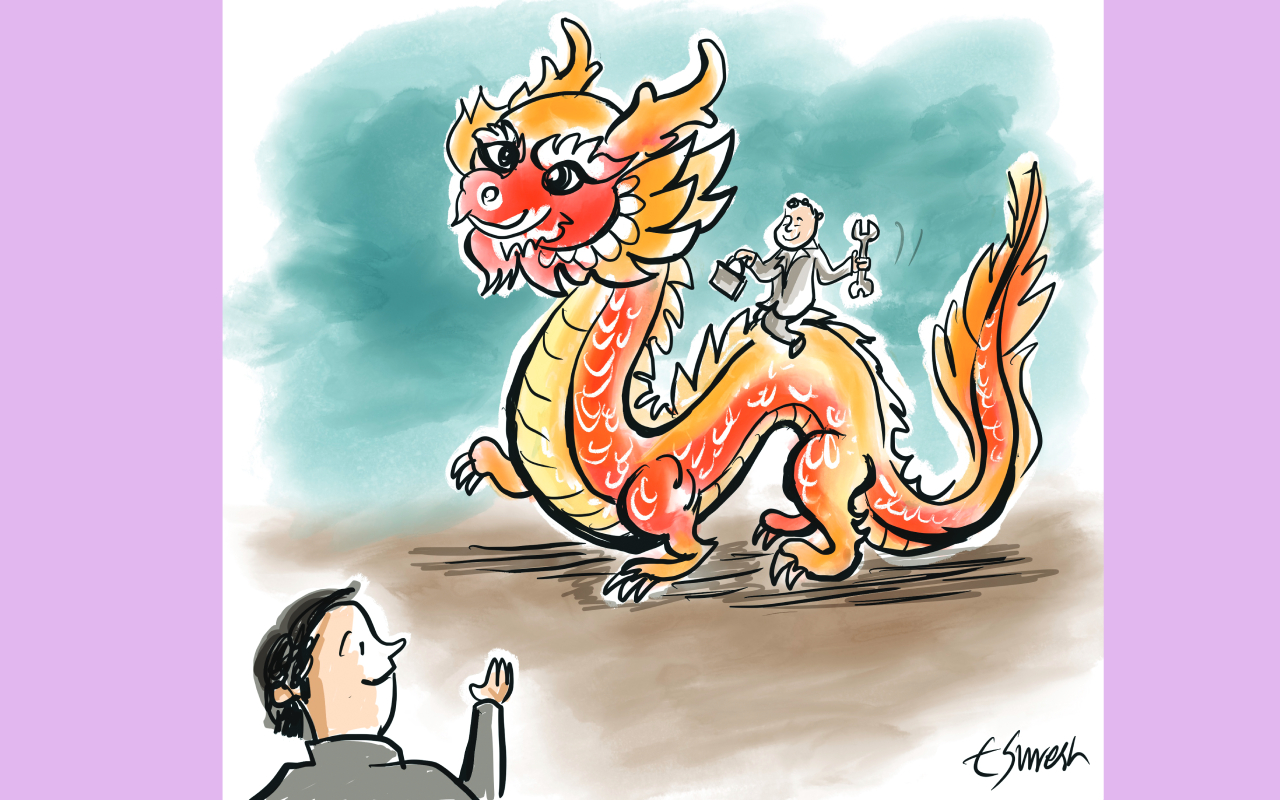
For a decade, India’s foreign-policy discourse has hung on a paradox: the simultaneous insistence on strategic autonomy and an ever-deeper entanglement in global economic networks. That paradox is now being managed not through doctrinal rigidity but through calibrated pragmatism. New Delhi’s recent decision to streamline business visas for Chinese professionals is precisely that sort of pragmatic, low-flash policy: a narrowly targeted operational reform that signals a rebalancing of priorities without amounting to a grand strategic pivot. The move matters because it illuminates how a posture of multialignment can be instrumentally deployed to protect India’s economic and technological ambitions while hedging geopolitical risks.
New Delhi has now moved to remove an extra layer of administrative vetting and is processing Chinese business visas within a four-week window, effectively easing the stringent controls that had been in place since the 2020 border clashes. The decision, driven by a high-level committee and welcomed by industry groups, is intended to resolve chronic delays that have impeded the flow of Chinese technicians and specialist personnel crucial to manufacturing lines, particularly in electronics, causing production slowdowns and significant losses for Indian manufacturers. Viewed through the narrow lens of supply—chain management, the policy is self-evident: India’s ambitions to scale high-value manufacturing, from mobile phones to solar equipment, collide with an acute shortage of technicians who understand Chinese-supplied machinery and production processes. When the absence of a few dozen technicians can stall entire assembly lines or delay commissioning, the macroeconomic stakes become visceral on factory floors.
Accelerating visa approvals is, therefore, a pragmatic fix to an operational bottleneck; it is not the same as revoking the security scrutiny that underpinned the restrictions in the first place. The distinction matters because it illustrates New Delhi’s intent to separate commercial facilitation from hard strategic choices.
Yet the policy cannot be divorced from the larger geopolitical context. The development is best understood within a broader diplomatic recalibration shaped in part by external shocks, notably the punitive tariffs imposed by the United States, which have encouraged India to diversify both its commercial partnerships and its geopolitical alignments. Whether described as “multialignment” or “strategic autonomy”, the concept at work is the same: preserving freedom of manoeuvre by keeping multiple partners engaged rather than subordinating India’s choices to a single power axis. The visa easing aligns with this logic, reducing frictions with Beijing while preserving India’s room to work with other powers and advance its economic goals. This is not a simple return to pre-2020 normalcy. New Delhi remains acutely conscious of the strategic sensitivities that underpinned the stricter vetting: border frictions, critical-technology vulnerabilities, and concerns over data and investment security.
The current policy appears to be both surgical and conditional: expedited visas for defined categories of professionals, accompanied by continued oversight and, where necessary, case-by-case investment clearances. For policymakers, this reflects a recognition that the costs of keeping China wholly at arm’s length are themselves strategic-stunted industrial capacity, higher production costs, and a less attractive investment climate for global capital that prizes predictable supply chains.
For foreign investors, the signals are significant. The restoration of smoother mobility for technicians and managers reduces one category of operational risk that multinationals weigh when deciding where to site higher-value manufacturing. Investors do not make decisions based on geopolitical loyalty alone; they base them on a calculus of predictable regulation, access to skills, and the ability to run integrated cross-border operations. By addressing a concrete and recurrent pain point-delays that can run for months and halt production lines-New Delhi lowers the frictional cost of doing business in India. Over time, this should translate into stronger investor confidence, particularly in sectors where Chinese suppliers and partners are already embedded.
However, constraints and trade-offs remain. Domestic industrial champions wary of competition and national-security agencies legitimately concerned about technology transfer will continue to keep New Delhi cautious about how far and how fast it widens this opening. Furthermore, the optics of any perceived “softening” towards Beijing can be weaponised by rival powers or domestic political actors. The challenge for India’s political economy will be to combine facilitation with robust safeguards: clearer rules governing where and how Chinese professionals can operate, enhanced transparency requirements for critical-sector investments, and stronger enforcement of export-control and data-localisation norms where national security is implicated.
A second, subtler dimension is reputational. India’s ability to project itself as a reliable, rule-bound destination depends on the predictability and transparency of such reforms. If visa facilitation is accompanied by opaque exemptions or ad hoc approvals, the benefits for investor sentiment will be muted. Conversely, tying facilitation to clear guidelines and predictable timeframes will produce a compound advantage: operational ease for industry and defensive clarity for policymakers who must answer questions about strategic vulnerability.
Finally, the move speaks to the contemporary grammar of “strategic autonomy” itself. In the twenty-first century, autonomy rarely means isolation. It means the capacity to engage selectively, to decouple where necessary, and to re-couple where it serves national ends. That posture is multialigned by design: India will work with the United States, Japan, the European Union, ASEAN, and China as circumstances demand, calibrating economic and security linkages to preserve decision-making space. Visa facilitation for Chinese professionals exemplifies this approach-a tactical step to bolster economic resilience and technological capacity.
New Delhi must ensure that the reforms are institutionalised rather than episodic. Clear, sector-specific guidelines, sunset clauses subject to periodic review, and parliamentary scrutiny can make the policy both durable and defensible. Equally important is public communication: an explanation that links facilitation to national objectives-jobs, manufacturing, and technological upgrading-will help inoculate the policy against facile politicisation.
In sum, India’s easing of visa rules for Chinese professionals is not a signal of strategic capitulation; it is a demonstration of strategic agency. By aligning practical fixes to industrial bottlenecks with a wider posture of multialignment, New Delhi is staking a claim to the middle ground of global geopolitics-neither subsumed by any single power nor sealed off from commercial realities. If managed transparently and paired with credible safeguards, the reform could strengthen India’s value proposition to investors while protecting the sovereign prerogatives that strategic autonomy demands. That is the delicate but necessary work of foreign policy in an era in which geopolitics and global value chains are inseparably entangled.
The writer is an author, political analyst, and columnist; views are personal