EU-India: Mother of all trade pacts
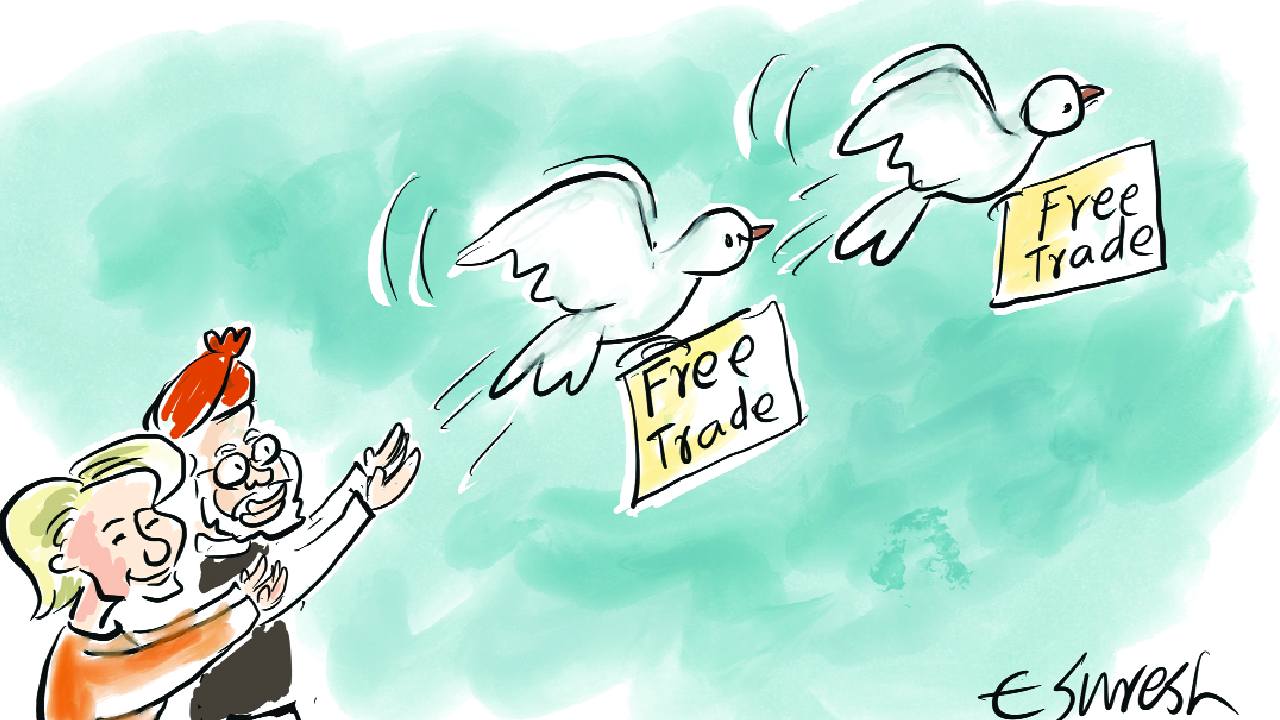
As New Delhi hosted the top leadership of the European Union as the chief guests for this year’s Republic Day celebrations and the upcoming summit, the signals from Brussels are increasingly positive. India and the EU will soon have a free trade agreement, a defence partnership, and a mobility framework for Indian professionals. The summit was held in a positive environment and was very fruitful for both sides.
A military contingent from the EU, featuring the military staff flag and the flags of the naval operations Atalanta and Aspides, participated in the Republic Day parade. It was the EU’s first participation in such an event outside Europe. The agreement could take at least a year to be ratified, but it might significantly expand trade and boost Indian exports, especially textiles and jewellery, which face 50 per cent US tariffs. Negotiations on investment protection and geographical indications are separate, allowing the FTA to focus on goods, services, and trade rules. EU chief Ursula von der Leyen said at Davos: “We are on the cusp of a historic trade agreement.”
The FTA will lower or eliminate customs duties in sectors such as technology, pharmaceuticals, automobiles, textiles, steel, and electrical machinery. Labour-intensive industries like garments and leather should gain a competitive advantage in EU markets. India’s service exports in telecommunications and transport are also expected to grow. The EU’s imports from India comprise mainly machinery and appliances, chemicals, base metals, mineral products, and textiles. The EU’s main exports to India consist of machinery and appliances, transport equipment, and chemicals.
India has recently signed trade pacts with the UK, Oman, and New Zealand, and is committed to boosting trade with the UAE to over $200 billion by 2032. This will be India’s ninth trade deal in four years, showing a strategy to secure market access amid mounting global protectionism. Some 6,000 European companies are in India. The FTA allows the EU to diversify supply chains, reduce reliance on China, and engage with India’s $4.2 trillion economy. The EU will benefit from tariff reductions on wine, automobiles, and chemicals. Both sides excluded agriculture and dairy products to address India’s concerns about 700 million farmers. Trade discussions resumed in 2022 after a nine-year hiatus and gained urgency after U.S. President Donald Trump doubled tariffs on Indian goods to 50% in August 2025, prompting India to seek alternative export markets.
The European Union (EU) is one of India’s main trading partners, along with the United States and China. In 2024/25, total trade between India and the EU exceeded $190 billion. During this time, India exported about $76 billion in goods and $30 billion in services to EU member countries.
The average EU tariff on Indian products is 3.8 per cent, but labour-intensive sectors face 10 per cent duties.The agreement could create a market of 2 billion people, nearly equal to the combined populations of India and China. This vast consumer base accounts for almost a quarter of global GDP.
India’s main concerns are the EU’s carbon border levy and non-tariff barriers, for example, regulatory delays and stringent standards. To better understand the potential impact of the carbon border levy, scenario planning could be useful. A best-case scenario might see only minimal cost increases for Indian exporters, while a worst-case scenario might involve significant financial burdens, making Indian goods less competitive in the EU market. By examining these scenarios, India could formulate actionable strategies to mitigate risks associated with the levy. Indian markets may see cheaper European cars and wines. The two sides will also sign a mobility agreement covering high-skilled workers and students.
There has been progress on issues related to the agriculture sector, as both sides have “marked and mapped each other’s red lines” on it.
According to Reuters, “Once signed and ratified by the European Parliament-a process that could take at least a year-the agreement could significantly expand bilateral trade and boost Indian exports, notably textiles and jewellery, which have faced US tariffs of up to 50 per cent since late August.”
Currently, negotiations on investment protection and geographical indications (GIs) are being conducted separately, allowing the FTA to focus primarily on goods, services, and trade rules. Trade discussions between India and the EU resumed in 2022 after a nine-year hiatus, following US President Donald Trump’s decision in August 2025 to double tariffs on Indian goods to as high as 50per cent. Alongside the trade agreement, India and the EU are also expecting a security and defence agreement, marking Europe’s third such pact in Asia, following similar agreements with Japan and South Korea.
The EU is one of India’s top trading partners, with total bilateral trade in goods and services surpassing $190 billion in 2024/25. India exported approximately $76 billion in goods and $30 billion in services to the EU’s 27 member states.
The FTA will likely open India’s market to the EU. It will also give a boost to Indian goods abroad. Both India and the EU have seized the opportunity to gain access to each other’s markets. Well done, New Delhi.
The writer is a popular Columnist; views are personal