Criminal negligence costs lives
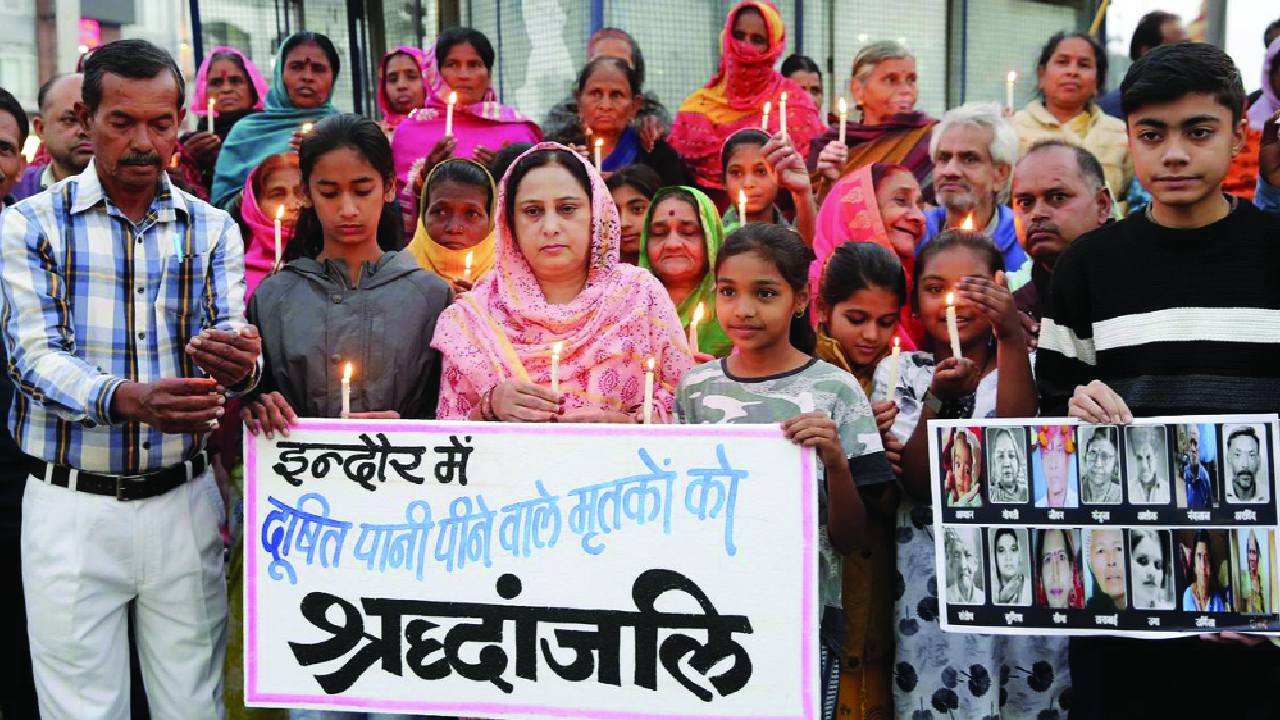
Imagine a father standing in the cold and watching his young son die, for two hours. Not suddenly. Not instantly, but slowly, minute by minute, while his voice echoed in the dark. “Papa, please save me.” The death of a bright young software engineer, 27-year-old Yuvraj Mehta, who met a preventable death-not on a battlefield, not in an unpredictable natural calamity, but on a road we travel every day without even a second thought-reminds us of the callous attitude of civic and development authorities (Indore and Noida both are victims of poor management by development authorities). Similarly, in another incident in seemingly pristine Indore-a city the nation has applauded as among its cleanest-a wholly different hazard struck: contaminated drinking water in Bhagirathpura that led to dozens of deaths, hundreds of illnesses, and widespread anguish. These two tragedies-one of infrastructure negligence, another of civic system failure-are stark reminders that the safety of our citizens is not merely an administrative accountability but a moral obligation of one and all, including political and administrative executives and the public at large.
Both incidents have rightly captured public outrage and temporarily become headlines, but allow me to assert, as a former police officer who has seen the best and worst of our systems: these are not isolated events. They are symptoms of deeper, systemic inertia. Incidents like Noida and Indore may be the ones that caught the limelight, but they are not one-offs. Such incidents keep occurring across the country, in different forms, every single day. The overall scenario is that we, as a society, are not bothered enough-until tragedy strikes our doorstep.
A Disturbing Pattern: Government Agencies and Public Safety
When we talk of tragedy, we must look not only at the moment it occurs but at the long stretch of policy, practice, and inaction that preceded it. In the Noida case, the ditch into which Yuvraj’s car fell was part of an open excavation associated with construction work. Despite warnings raised in the past about the danger of water accumulation and road edge erosion at the site, no effective corrective action was taken. There were no reflectors, no warning signs, no barricades, and minimal lighting to alert even a cautious driver navigating dense winter fog. The boundary wall was damaged, the excavation remained open, and a death was waiting silently. Our government agencies-be they urban development authorities, municipal bodies, public works departments, or other construction wings-often display a careless attitude towards safety norms. Open drains, uncovered sewage lines, and roadside excavations without protective barriers have become routine sights. Deep potholes on roads act as open invitations for accidents. Construction material lying on roads further narrows carriageways, creating chaos for commuters and lethal conditions at night.
The situation becomes more alarming when one observes how the PWD, municipal corporations, and other agencies carry out construction work. Roads are dug up for laying sewage or utility pipelines and left open for weeks. Heavy material lies scattered without reflectors. Suddenly, large boulders or concrete blocks appear on poorly lit roads, offering no warning to oncoming vehicles. These are not minor oversights; they are systemic failures. We as a society, on both the administrative and public sides, do not take serious note of such administrative lapses or safety hazards unless tragedy strikes deeply.
Private Negligence and Administrative Silence
Government agencies alone are not responsible. Private players are equally culpable. Builders frequently violate safety standards. Mining mafias destroy roads with overloaded vehicles. Even small truck owners overload vehicles without caring for braking limits or road safety. Profit is prioritised over safety, and accountability is treated as an inconvenience.
What makes the situation worse is that the administration often keeps its eyes closed. The reasons are many-general apathy, public pressure, corruption, political influence, and the strong nexus between builders, contractors, mining lobbies, and political and administrative executives. These influential forces silence enforcement. As a result, violations continue unchecked.
I recall lodging an FIR against the Public Works Department in Udham Singh Nagar, Uttarakhand, for dangerous road conditions. Instead of rectifying the mistake, the entire department closed ranks against the action. The system protected itself rather than the public. This mindset remains deeply entrenched.
The problem is deeply rooted. Our tolerance level-whether as administrators or citizens-is dangerously high. We accept negligence as normal. Perpetrators walk free because punishments are mild, delayed, or diluted.
What Went Wrong in Noida
The Noida tragedy was intentional negligence; it was negligence. A 27-year-old techie navigating a familiar road should never encounter a deep, water-filled pit without warning. Fog reduced visibility, but fog is predictable during winter and cannot be used as an excuse for unsafe infrastructure. The Noida authority ignored safety norms, as a similar accident happened at the same spot a few days back. The disaster management force felt like a disaster itself. Imagine Yuvraj begging for his life in front of his father. The system failed him when we needed it the most. The fire department, SDRF, NDRF, and police were on the spot for hours without equipment, kits, or swimmers. Yuvraj Mehta was alive. He was standing on the roof of his car, trapped in a water-filled pit in Noida. He had survived the accident. He was making all efforts alone to survive. He was calling his father, and the father came running. What he saw when he reached the spot will haunt him for the rest of his life: a car sinking, cold black water rising. His son was visible. Shivering. Calling out. Officials were there. Rescue forces were informed, and yet, for two hours, nothing happened. The father begging. The son begging. The car kept sinking because the pit-a massive construction hole left open without barricades, lights, or warnings-had been waiting there like a death trap. Low visibility did the rest. Yuvraj had not driven recklessly. He had driven into the authorities’ negligence. The authorities refused to help because the “water was too cold” and they were scared of iron objects in the water. They did not have proper equipment. The location had all the characteristics of a high-risk black spot-poor lighting, a blind turn, accumulated water, and open excavation. Yet no protective wall, railing, or barrier was installed. Reflective paint and warning signage were absent. These measures are mandatory in road engineering to reduce impact and save lives.
Our roads have many such black spots where accident frequency is high. Recently, authorities have begun identifying them, acknowledging that many require engineering solutions. To save human life, these solutions must be implemented urgently, not merely documented.
The emergency response in this case also raises serious questions. When systems like 112, police, SDRF, and fire services exist, something bigger and better should have been done. Response time, equipment readiness, and coordination were inadequate. Emergency systems cannot be considered effective if they fail at the most critical moment.
What Could Have Been Done
Several measures could have prevented this tragedy. Hazard identification should have flagged the location long ago. Any excavation near a roadway must be barricaded with reflective barriers, warning lights, and strong railings. Blind turns must never open into unprotected water bodies.
Construction agencies should not be allowed to leave worksites unsecured overnight. Safety audits must be compulsory. Complaints by citizens and drivers should trigger immediate inspections and corrective action.
It is beyond comprehension that when the fire brigade team arrived, the police could not be called in time, while the SDRF teams-who are better trained and well equipped-could not be mobilised early. It has been learned that the fire services did not enter the water because they felt it was too cold. If this is true, it is highly condemnable, as fire services are equipped with safety suits and are well trained for such operations.
Emergency response teams must be trained and equipped for water rescue operations. Preparedness saves lives; delay costs them. Even on the midnight of the incident, the fire officer and SDRF should have informed the control room. The Collector and District Police Chief could have informed the NDRF and Army. A request letter could have been sent on WhatsApp. If rescue becomes too dangerous, then what are emergency services for?
Indore’s Water Contamination Crisis: A Different Failure, Same Negligence
While Noida reflected infrastructure failure, Indore exposed a breakdown in civic health safeguards. Residents of Bhagirathpura began reporting foul-smelling, discoloured drinking water. Soon, hundreds fell ill with waterborne diseases, and dozens lost their lives.
Investigations revealed sewage contamination of the drinking water supply, caused by faulty pipelines and inadequate oversight. This occurred in a city celebrated for cleanliness-highlighting that cosmetic achievements cannot replace core public health vigilance.
Citizens continued consuming contaminated water for days due to lack of information and alternatives. Complaints were either delayed or inadequately addressed.
What Is Required Overall
What we need is a fundamental shift in attitude. Public safety must become non-negotiable.This requires: What we need is a fundamental shift in attitude. Public safety must become non-negotiable.This requires:
- Identification and correction of accident-prone black spots
- Mandatory safety barriers, reflectors, and signage
- Regular audits of construction and excavation sites
- Strict punishment for negligence including lodging of FIR for criminal negligence
- Efficient grievance redressal systems which must be time bound and should be monitored digitally and the complainant must be informed of the remedies
- Well-equipped and trained emergency response units. In Uttarakhand, we boasted a maximum response time of 15 minutes by our Dial 112 teams during emergency calls
- Continuous monitoring of essential utilities like water supply Above all, complacency must end.
Conclusion: From Mourning to Action
As I reflect on Yuvraj Mehta’s final moments and the silent suffering of families in Indore, one truth stands out starkly: development without safety is not progress-it is deception. Infrastructure is meant to protect human life, not gamble with it. When roads turn into death traps and drinking water becomes poison, governance loses its very legitimacy.
Lives should not matter only after they are lost. Every preventable death is not merely an accident; it is an indictment-of systems that ignored warnings, of officials who chose convenience over duty, and of a society that tolerated negligence until it struck close to home. Safety failures are not acts of fate; they are acts of omission.
If we can launch satellites, build expressways, and boast of global rankings, we can certainly ensure barricades around excavations, safe drinking water, and responsive emergency systems. What is missing is not capacity, but will-political, administrative, and societal.
Unless accountability is fixed clearly and enforced relentlessly, unless negligence is treated as criminal rather than routine, and unless public safety becomes non-negotiable, tragedies like Noida and Indore will keep repeating themselves under different names and in different cities.
Until we move from ritual mourning to real reform, from temporary outrage to permanent responsibility, we are not preventing disasters-we are merely counting down to the next one.
The writer is former DGP Uttarakhand; views are personal
Leave a Comment
Comments (2)
Have.... Typo
Strangely, all organs of society has kept mum on this tragedy. This is a case when there is such a orchestration by self serving people / agencies, the Human rights commission Which is the beacon can not keep quiet. Citizen looks for help, when it is not rendered even when he Cries from his death moments,..... We deserve hell, for our Apathy, and indifference! Human life is so cheap 1/120 crs......!