Character building: A national imperative
Over the last decade, under the dynamic leadership of Hon’ble Prime Minister Shri Narendra Modi, India has witnessed remarkable progress across multiple dimensions. We have seen significant improvements in infrastructure, defence capabilities, healthcare, the “Make in India” initiative, and many other fields. These efforts have propelled our nation towards the goal of becoming a developed country in the foreseeable future. India’s economic growth has been robust, placing us as the fifth-largest economy in the world. With this momentum, it is only a matter of time before India attains the status of a fully developed nation.
However, alongside this impressive progress lies a pressing challenge-one that threatens to undermine the national vision. This challenge is corruption, and it demands urgent attention. Despite rapid modernisation, corruption has permeated deep into the social fabric of our nation. Recent Enforcement Directorate (ED) raids across various sectors have revealed shocking amounts of unaccounted cash, jewellery, and incriminating documents. These findings indicate that earning beyond known means has, unfortunately, become normalised. More alarming is the audacity with which some individuals demand bribes openly-over the table-without fear or hesitation.
This scenario calls for national introspection. At the heart of the problem lies not merely policy or governance, but a more fundamental requirement: character building. For India to truly advance, every citizen must embrace integrity, honesty, and responsibility. Character building is not a short-term project; it is a generational effort. The current generation may take time to understand its importance, but unless this foundational change is initiated now, future progress may be compromised.
This change must be embraced by every segment of society, cutting across economic classes, social groups, and political affiliations. All political parties, irrespective of ideology, must recognise that inculcating strong values and civic sense in citizens is not optional-it is a national imperative. Only when character becomes central to our collective identity can India aspire to be counted among the best nations in the world.
An equally urgent requirement is the development of civic sense, a quality that appears to be diminishing rapidly across both urban and rural landscapes. It is unfortunate to witness widespread disregard for basic public hygiene and civic responsibility. From littering streets to spitting paan indiscriminately, from ignoring traffic rules to erecting illegal billboards, the examples are endless. Municipal workers often neglect their duties, while many citizens fail to respect shared spaces. These behaviours reflect a lack of sensitivity towards others and a casual acceptance of disorder.
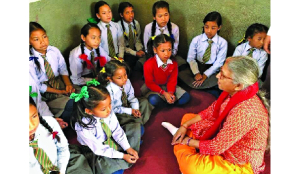
For this reason, the cultivation of civic sense must begin early-in play schools, primary schools, secondary schools, and universities. Civic education should be an integral part of the curriculum, taught consistently at daily, weekly, or monthly intervals. Teachers, too, must be trained and sensitised to this responsibility. Both private and public institutions must incorporate structured programmes that nurture discipline, cleanliness, empathy, and responsibility from a young age.
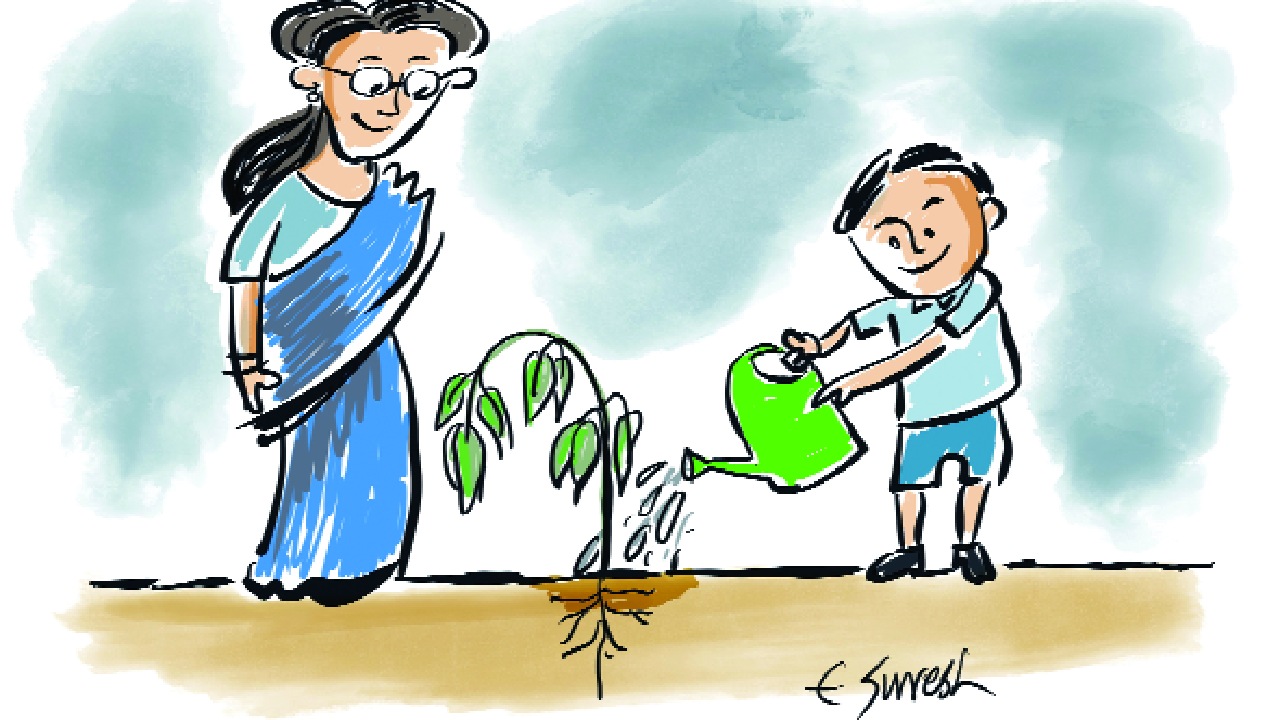
A child’s learning begins at birth. The environment in which a child grows-what they see, hear, experience, and observe-shapes their personality. Children possess immense observational skills and adaptability. If they are nurtured in an environment that emphasises good habits, civic responsibility, and ethical behaviour, these qualities will remain with them for life. The seeds of good character must be sown early; once rooted, they will guide the individual throughout adulthood.
If citizens are well educated in civic values, we would see an immediate transformation. People would refrain from throwing garbage from moving vehicles, stop littering pavements, and avoid spitting paan in public spaces. Such simple changes would create cleaner streets, healthier neighbourhoods, and a more pleasant environment. The physical transformation of our surroundings can trigger a psychological and cultural shift as well.
Consider cities like Mumbai, where despite heavy monsoons, flooding is relatively controlled compared to other major cities such as Delhi. In Delhi, even a single heavy downpour often results in waterlogging, especially in low-lying areas, causing massive traffic jams. These jams frequently escalate into road rage incidents, arguments, and even physical altercations. Much of this chaos stems from poor civic habits-blocked drains due to garbage, reckless driving, and a lack of traffic discipline.
Countries such as Japan and Singapore offer valuable lessons in civic education. From a young age, children are trained to be responsible citizens. They clean their classrooms, respect public spaces, stand in queues, and speak politely. These early lessons create adults who are respectful, considerate, and deeply civic-minded. Their societies function smoothly because people value order, discipline, and the collective good.
If India begins such efforts today, it may take a decade or more to see tangible results. However, when today’s newborns grow into teenagers and young adults, they will naturally recognise what is right and wrong. They will make better choices for themselves, their families, and society. This is the only sustainable path towards building a strong, progressive nation.
At the administrative level, governments must also take proactive steps. Every state should introduce competitive programmes to encourage clean and well-managed cities. From ministers to municipal workers, accountability must be enforced. All officials should be stakeholders in this transformation, ensuring that cleanliness, discipline, and civic responsibility are upheld at every level.
India’s large population is often seen as a challenge, but it can also be our greatest strength. Once we collectively decide to bring about positive change, the impact will be extraordinary. As examples from Singapore and Japan demonstrate, disciplined citizens can completely transform a nation’s image and functioning.
The journey towards a more responsible society begins with the first step. If each individual takes responsibility for their surroundings, others will naturally follow. After all, who does not want to live in a clean, bright, and beautiful environment?
Starting today, with commitment and consistency, India can build a future generation grounded in strong character and enriched by civic values-ushering in a more ethical, orderly, and prosperous nation.
The writer is Rear Admiral (Retired); views are personal