Behind Closed Doors: A murder mystery rooted in fear, memory and human frailty
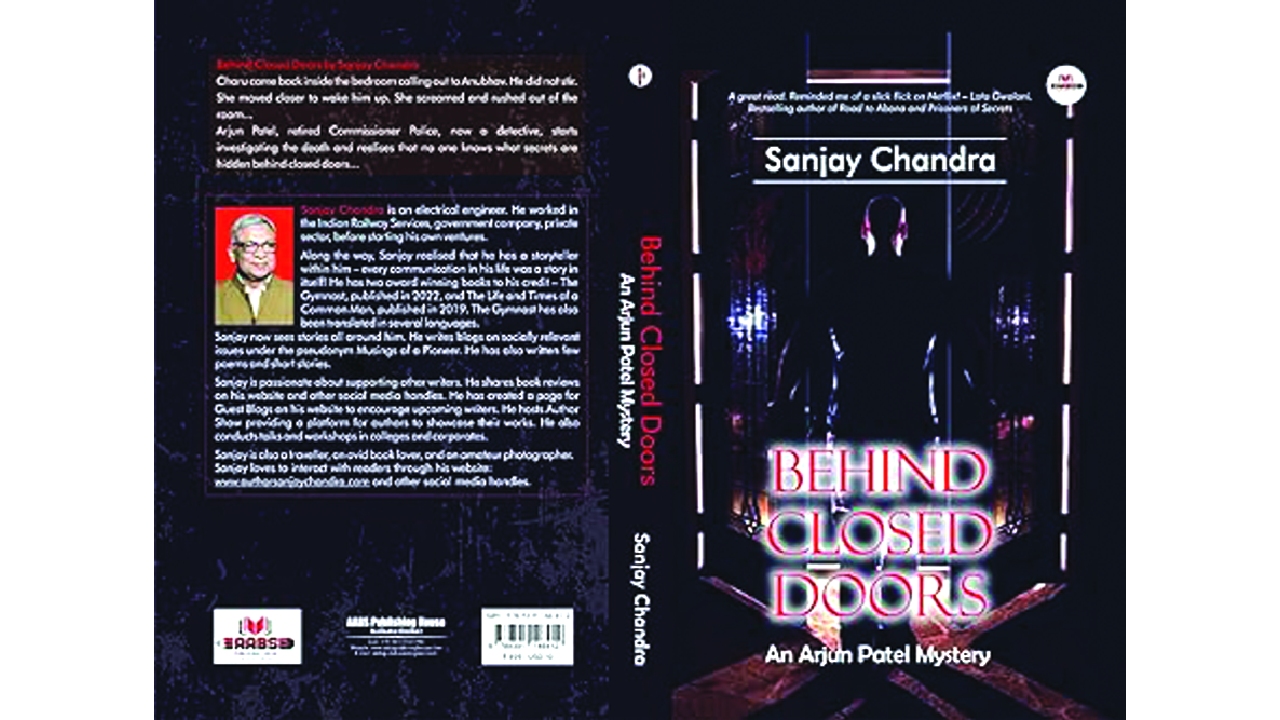
In Behind Closed Doors, Sanjay Chandra places a classic murder mystery within a setting that feels immediately recognisable to contemporary readers: a gated residential complex in Gurgaon in the uneasy days preceding the Covid lockdown. What begins as an apparently sealed-room death gradually opens into a wider narrative about family secrets, buried emotions and the uneasy social hierarchies that shape modern urban life.
The story begins with the sudden death of Anubhav, found lifeless in his apartment while his wife Charu sleeps beside him. The doors and windows appear locked from within, and the initial assumption is that illness may have caused the death. But the post-mortem points elsewhere, and the mystery begins to deepen. Enter Arjun Patel, a retired Mumbai Police Commissioner with a reputation for solving complex cases. His presence gives the narrative its investigative momentum, but the novel’s deeper interest lies not merely in identifying the killer, but in exploring the emotional fault lines hidden beneath apparently orderly lives.
One of the book’s strengths lies in its setting. The high-rise condominium becomes more than a backdrop; it functions as a social microcosm where class, ambition, reputation and quiet resentment coexist. Residents, security guards, delivery workers and office-bearers of the Residents’ Welfare Association all inhabit the same physical space while moving through sharply different social realities.
Author captures the rhythms of this environment with familiarity, allowing the setting itself to contribute to the tension, as proximity does not necessarily translate into trust, and privacy often coexists with constant observation.
Importantly, the environment Chandra depicts is one that readers will instantly recognise. The gated condominium, with its security protocols, resident committees, domestic staff, delivery personnel and carefully maintained appearances, has become a defining feature of the modern Indian urban landscape. By situating the mystery within such a familiar setting, the novel acquires an added layer of immediacy: the crime does not occur in some distant or exotic environment but within the everyday spaces that many urban readers inhabit.
The investigation gradually draws attention to several possible suspects, each with a plausible motive or unresolved history with the victim. A disgruntled former guard, an ethically compromised RWA secretary, figures from Charu’s past and members of the extended family all emerge as potential players in the unfolding drama.
Suspicion shifts across this network as Patel methodically examines the relationships and circumstances surrounding the death. Interviews, recollections and fragments of personal history slowly assemble into a pattern that reveals how ordinary lives may conceal extraordinary tensions.
Arjun Patel himself is one of the novel’s steadier elements. Rather than presenting him as an eccentric detective, Chandra shapes him as a seasoned investigator marked by personal loss and professional discipline.
His backstory adds emotional gravity to the narrative and gives his pursuit of truth a moral urgency. Patel’s investigative style relies less on theatrical deduction and more on patient observation and careful reading of human behaviour. This measured approach allows the narrative to unfold gradually, building suspense through accumulation rather than sudden revelation.
The novel also attempts to move beyond the mechanics of the murder. Through the lives of its characters, it touches upon themes of loneliness, suppressed desire, ambition and the quiet fractures within domestic relationships. In this sense, the title Behind Closed Doors resonates on two levels: the literal mystery of the locked room and the hidden emotional worlds people carry within their lives. The narrative suggests that significant conflicts often remain concealed beneath surfaces of normalcy and routine.
Chandra’s prose is clear and direct, prioritising narrative movement over stylistic flourish. This approach suits the genre well, allowing the reader to follow the progression of clues and revelations without distraction. The final resolution arrives in the classic detective tradition, with the investigator assembling the pieces of the puzzle and revealing the logic behind the crime.
What ultimately gives the novel its resonance is the suggestion that violence rarely emerges in isolation. Beneath the surface of ordinary lives lie unresolved tensions, private disappointments and quiet obsessions. Behind Closed Doors reminds readers that the most unsettling mysteries often unfold not in distant or unfamiliar places, but within spaces that feel disarmingly familiar.