Bangladesh: India braces for a delicate reset
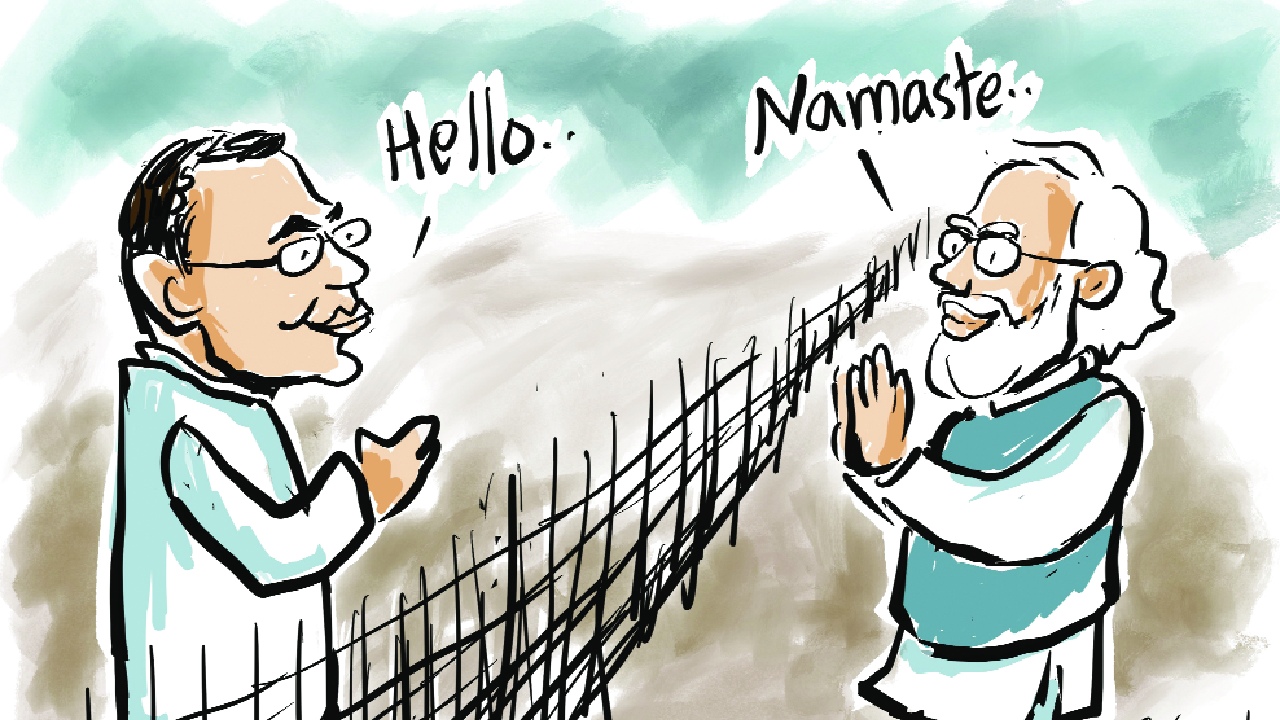
With the newly elected government led by Tarique Rahman now in place in Bangladesh, an anxious India will be hoping for stability both within its neighbouring country as well as in its bilateral relations with Dhaka.
A restive Bangladesh, where radical elements have been gaining ground, spells trouble for India’s security, more so as the two nations share a long and porous 4,096-km border. Worryingly for India, insurgent groups from the northeast can also take advantage of the instability to again use Bangladesh as a safe haven.
While Prime Minister Narendra Modi could not attend Rahman’s swearing-in owing to prior commitments, he has written to him inviting him to visit India. Signalling the inclination on both sides for a rapprochement, the PM’s missive expressed India’s willingness to strengthen bilateral ties.
Having faced a rough time during the tenure of the Muhammad Yunus-led interim government following Sheikh Hasina’s August 2024 ouster, New Delhi is clearly keen to mend its frayed ties with Dhaka.
Pragmatism, New Delhi knows, is the better part of valour. Towards this end, India made swift overtures to the Bangladesh National Party (BNP) leader, with PM Modi wasting no time in calling Rahman to congratulate him on his party’s win, promising India’s support for “a democratic, progressive and inclusive Bangladesh”.
This, even though New Delhi has had to swallow the bitter pill of its staunch ally, former PM Sheikh Hasina, being forced into political exile in India and her party, the Awami League, being excluded from the electoral process. While the Sheikh Hasina government was mindful of Indian strategic interests, it was accused of authoritarianism and significant backsliding of democracy within Bangladesh.
New Delhi’s unabashed tango with the deeply unpopular Sheikh Hasina regime, and the sway it had over Dhaka until she was unseated by the July 2024 uprising, helped fan the strong anti-India sentiment currently prevalent in Bangladesh.
Putting all its eggs in one basket, as has been New Delhi’s approach when dealing with favourable regimes in the neighbourhood, has often worked to its detriment, leaving it out in the cold when an anti-India government sweeps into power.
With the BNP winning a thumping two-thirds majority in the Jatiya Sangsad (Parliament) elections, New Delhi knows it has no option but to work with a party that has been traditionally anti-India in its stance. The BNP, on its part, has indicated its willingness to engage constructively with India in ties “guided by mutual respect, sensitivity to each other’s concerns, and a shared commitment to peace, stability, and prosperity in our region.”
But the road ahead for a reset in ties will be difficult and challenging. For one, the Yunus-led interim government, with its marked anti-India stance, has already queered the pitch for New Delhi, stepping up ties with China and embracing Pakistan, a nation that was kept at arm’s length by Sheikh Hasina. The outreach to Islamabad is particularly worrisome for New Delhi given the BNP’s close links to Pakistan.
Pakistan can foment trouble for India in Bangladesh by stoking extremism in a country where there is growing radicalisation. While it is a matter of relief for India that the Jamaat-e-Islami has not come to power, it is noteworthy that the Islamist outfit has won 68 seats, its highest tally ever. While nationalism may have trumped radical elements, the BNP itself is not known for its secular credentials.
The youth-led National Citizen Party (NCP), formed in the wake of the July uprising and part of the 11-party alliance led by the Jamaat, has won only 6 of the 30 seats it contested. Even if realpolitik impels Dhaka to have cordial ties with New Delhi, it will have to deftly handle criticism such a move may evoke from these two outfits with deep animosity towards India.
Despite the positive signals emanating from both New Delhi and Dhaka, bilateral ties will be framed by a new paradigm. Rahman has already indicated that his government will pursue a foreign policy that will have the interests of his country in mind and not align with any nation. New Delhi will have to use deft diplomacy and redouble efforts to ensure its interests are protected and strategic space is not ceded to China or Pakistan.
However, unlike Sheikh Hasina, who was willing to take a soft stance on New Delhi’s failure to deliver on the Teesta waters-sharing agreement, it is unlikely that the new government in Dhaka will adopt a similar stand. Rahman, in whom the people of Bangladesh have pinned a lot of hope for good governance, will be under pressure to deliver.
A fragile economy makes this task all the more difficult. While India has often assisted neighbours in dire straits, it will need assurance from Dhaka that its security interests will not be compromised while playing the role of its foremost important development partner.
As the bigger neighbour, India will also need to address the issue of trade imbalance, skewed in its favour, that remains a sticking point with Dhaka. As for connectivity, New Delhi will need to frame it in a manner that Bangladesh sees itself gaining from these projects too.
Dhaka’s ties with New Delhi under the BNP government are expected to be more transactional. Be that as it may, New Delhi will just have to deal with the new reality — be hard-nosed in its approach without alienating the new regime in Dhaka.
The writer is senior journalist and writes on strategic affairs; views are personal