Balbir Punj: The passing of a visionary thinker
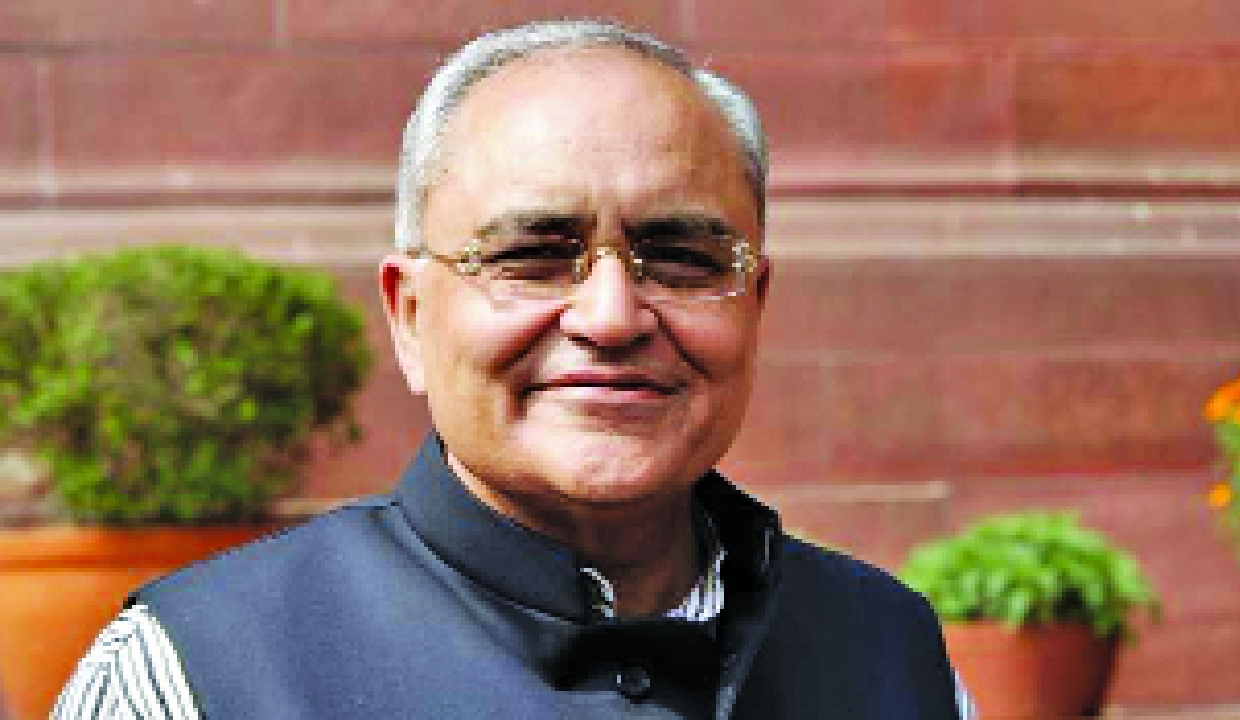
The noted thinker, writer, columnist, and former Member of Parliament, Balbir Punj, is no more. Even if the mind comes to accept this reality, the heart refuses to do so. It is extremely difficult to decide what to write, how to write, where to begin, and where to end. At times, the departure of a towering personality creates such a void that it may perhaps never be filled. The passing of Balbir Punj evokes a similar sense of profound emptiness.
He was a personality who constantly inspired and encouraged those engaged in reading and writing. Whenever a writer, columnist, or journalist associated with national discourse produced a noteworthy article, he would offer his comments on it, share it with his acquaintances for wider readership, and often personally call the author to discuss its strengths, areas requiring improvement, and suggest which thinkers should be read to develop a deeper understanding of the subject.
This was indeed a rare quality, especially in a person who himself was an established thinker, a two-time Member of Parliament in the Rajya Sabha, a key intellectual strategist of the Bharatiya Janata Party, and someone who had held significant organisational responsibilities. His simplicity, humility, accessibility, and absence of ego not only impressed but at times appeared almost unbelievable. If any writer, journalist, or columnist was going through health-related or other personal difficulties, he never failed to enquire about their well-being. Even when contact details were not readily available, he would obtain them through acquaintances, reach out, and stand by them in moments of distress. In today’s time, when relationships are increasingly becoming formal and distant, such warmth and personal concern are truly rare.
Even in his eighth decade, his level of activity was remarkable. He remained continuously engaged in writing, reflection, and intellectual discourse. Across numerous WhatsApp groups, he not only shared his own articles but also read others’ writings and comments with great attention, offering thoughtful and substantive responses.
At times, he would share other important articles and encourage everyone to read them. His writing continued until just three or four days before his passing, which stands as a testament to his discipline and commitment. For him, writing was not merely a medium of expressing ideas but a form of spiritual discipline. He often said that if Ram Ji had bestowed the power of the pen, it must be used for the service of the nation, dharma, and culture. In this, he believed, lay the true fulfilment and purpose of life. He would inspire writers, journalists, and editors to treat writing as their most powerful instrument. Compared to events and gatherings, writing leaves a more enduring impact. A disciplined and refined pen alone can leave an indelible imprint on the tablet of time. In this context, he would often speak of drawing inspiration from Sita Ram Goel, Ram Swarup, and Dharampal, noting that the world came to truly understand the depth and significance of their writings after their time.
His understanding of any subject was remarkably deep and expansive. He did not remain confined to the surface of events but went to their roots and analysed them in depth. His grasp of Indian discourse and narratives was exceptional. In this context, his book Narratives ka Mayajaal, published by Prabhat Prakashan, is of great significance. His writings left no room for shallow or sentimental emotionalism. He presented arguments with clarity and facts with authenticity. This is precisely why it was not easy even for his critics to refute his ideas. He had undertaken a deep study of Indian civilisation, Sanatan culture, and its history.
At the same time, he had carried out a nuanced analysis of Abrahamic civilisations. As a result, he was able to present a realistic picture of the civilisational conflicts unfolding at the global level. He recognised the liberal, plural, and coexistent nature of Hindutva, yet remained equally alert to the present and potential challenges confronting it. Through his writings, he repeatedly cautioned society about these challenges and emerging threats. He believed that a fragmented society cannot effectively face any ideological or social challenge. Therefore, throughout his life, he emphasised the importance of an organised society. He was convinced that an unorganised Hindu society cannot withstand the combined pressures of leftist, jihadist, and Eurocentric forces. He dedicated his entire life to making society aware of the need for unity and organisation.
In personal conversations, he pointed out areas for organisational improvement, yet in public, he upheld discipline and dignity above all. He believed larger goals require commitment, discipline, and sacrifice. Closely aligned with the Rashtriya Swayamsevak Sangh, he regarded its volunteers as spiritual practitioners and credited them with fostering pride in nation, dharma, and culture. He remained concerned about the persistence of leftist and colonial mindsets in intellectual spaces and stressed that the key battle of the twenty-first century would be over narratives.
He consistently encouraged the youth to read and write. He was also deeply concerned about changing demographic patterns and their social implications. He was working on a comprehensive book on this subject and had studied hundreds of texts for it. His thinking was not abstract but grounded in reality and supported by facts. The pain of the Partition of India repeatedly found expression in his writings and reflections. He was troubled by the fact that society had not drawn the necessary lessons from that historical and tragic experience. He would often say that if a society fails to learn from its past, it is bound to repeat the same mistakes in the future. He regarded changing demographic structures, religious conversions, infiltration, and proportional imbalances in population as serious concerns, and urged society to remain vigilant about them. According to him, self-complacency or a refusal to face reality could prove detrimental to society. Therefore, he wanted Hindu society to overcome distortions arising from misplaced virtues at the earliest.
Today, when Balbir Punj Ji is no longer among us, the realisation becomes even more profound that the nation has lost a vigilant, fearless, truth-seeking, and deeply committed ideological sentinel. His life will continue to remind us that unwavering dedication to a higher purpose, along with complete commitment to dharma, culture, and the nation, alone gives true meaning to life.
At a time when writing in favour of Hindutva, national thought, and Sanatan culture was not easily accepted, he chose the path of conviction, stood firmly for the nation, and remained steadfast throughout his life. Undoubtedly, his memories and writings will continue to inspire future generations with commitment, courage, and a deeply rooted national consciousness.
The writer is an educationist and senior columnist; Views presented are personal.