Atal Bihari Vajpayee at 101: The making of a Parliamentarian
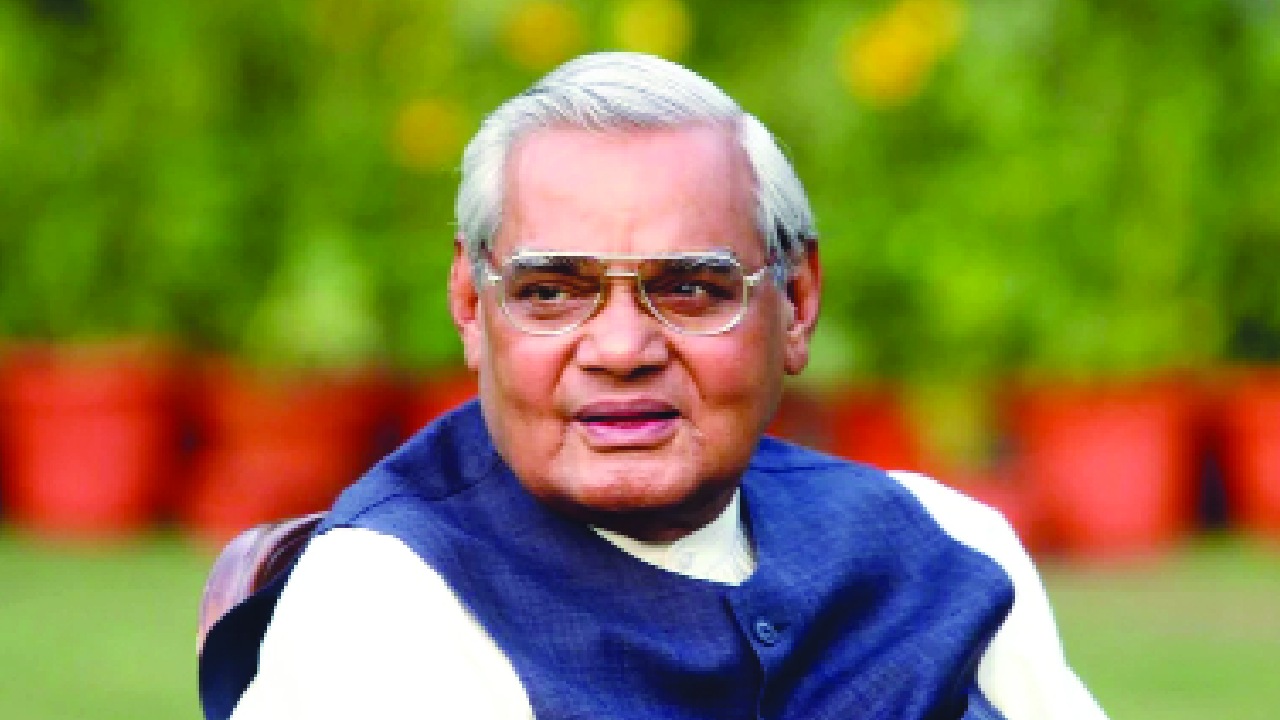
Christmas Day this year marks the 101st birth anniversary of Atal Bihari Vajpayee. In contemporary political memory, Vajpayee is recalled primarily as a prime minister, a statesman who reached out to Pakistan, conducted nuclear tests, and led India through a decisive coalition era. Yet, long before he became the face of governance, Vajpayee was first and foremost a parliamentarian. His formative years in the Lok Sabha, beginning with his debut in 1957, shaped not only his own political temperament but also the future trajectory of the All India Bhartiya Jan Sangh (BJS) and, eventually, the Bhartiya Janata Party.
Vajpayee entered Parliament at the young age of 33 as one of the four BJS members elected to the Second Lok Sabha. It was an era when Parliament was adorned by towering figures. The Opposition included seasoned socialists and conservatives who believed deeply in parliamentary debate. For a first-time Member of Parliament (MP) from a marginal party, it was not an easy chamber to navigate. Yet Vajpayee spoke freely and fearlessly from the very beginning.
He blossomed quickly as a keen debater and gifted orator. His interventions were marked by clarity, wit, and a striking confidence that belied his political marginality. He was not overawed by seniority or stature. Instead, he enriched parliamentary proceedings with arguments that demanded attention, even when they provoked disagreement.
As documented, the Second Lok Sabha’s (1957-62) speaking record offers a revealing picture of parliamentary engagement. At one extreme was Thakar Dass Bhargava, the outspoken Congressman from Hissar, whose speeches and interventions exceeded 56 hours, closely matching Prime Minister Jawaharlal Nehru. On the Opposition benches, Brij Raj Singh, an independent MP, from Firozabad spoke for over 29 hours, with Vajpayee not far behind.
This was an impressive achievement for a first-time MP from one of the smallest parties in the Lower House. It underlined not only Vajpayee’s energy and preparation but also his instinctive understanding of Parliament as the central arena of politics. Being part of a small Opposition had one unexpected advantage. It was easier to get time to speak. Vajpayee made full use of this opportunity and, in doing so, began the slow process of legitimising the Jan Sangh within India’s parliamentary system.
The party needed acceptance. Vajpayee, eloquent, and sociable, was ideally suited for this task. He formed friendships across parties and ideological divides, relationships that would bear fruit decades later in the Janata government and, eventually, in the coalition politics that brought the BJP to power.
In his early interventions, Vajpayee consistently raised questions of national identity that resonated with the Rashtriya Swayamsevak Sangh worldview, often injecting them into debates where they were not immediately central. During a July 1957 debate on whether India’s armed forces were prepared for a war with Pakistan, Vajpayee argued the inherited British practice of naming Army regiments after communities. “All regiments were Indian,” he argued, insisting that names like Dogra, Rajput, Jat and Sikh regiments should be given up. It was a symbolic intervention, designed to provoke thought and signal a larger ideological concern.
Language was another early battleground. In November 1957, when the deputy minister for food, A.M. Thomas replied in English to a question asked in Hindi, Vajpayee raised an objection. The Speaker curtly reminded him that Parliament was not a Hindi class. In hindsight, the exchange reads as an early warning of the language debates of the 1960s, when Vajpayee would become a fervent advocate of ending the use of English in official proceedings. Yet it would be misleading to view Vajpayee merely as a cultural nationalist. Many debates show him engaging deeply with economic and governance issues. He struck a notable intellectual alliance with Minoo Masani, the Jharkhand Party MP from Ranchi, who would later co-found the Swatantra Party. Masani opposed the Nehru government’s leftward economic shift and warned against Soviet-style policies. When the government proposed promoting cooperative farming, Masani attacked it as a step towards collectivisation. Vajpayee supported him vigorously. In a March 1959 debate, Vajpayee argued that such policies “would lead to a weakening of democracy in India,” capturing his early scepticism of state overreach.
Parliament also broadened Vajpayee’s engagement with the world beyond India. He followed developments in Eastern Europe, Southeast Asia, and particularly Tibet with growing concern. Along with Masani, he repeatedly pressed Nehru to support the Tibetans against China. This was not only an ideological position but also a strategic one, tied to anxieties about communism and India’s border security.
Nowhere was Vajpayee’s questioning sharper than in matters of foreign policy and secrecy. On 30 November 1960, during the Lok Sabha debate on the Indus Waters Treaty, he challenged the government’s opacity. “Why should they be so shy and so secretive about it?” he asked. Earlier, during discussions on the Indo-Pakistan rail-link agreement signed at Rawalpindi, he had pressed Jagjivan Ram, the railway minister, with a pointed question: “May I know how any agreement can be reached without the details being discussed? … Are we to understand that Government have formulated their policy without discussing the details?”
His concern extended to India’s position in Tibet following the 1954 Sino-Indian Agreement. Indian traders faced restrictions, taxes, and curbs on movement. Raising both economic and security issues, Vajpayee asked whether the government even knew how many traders were crossing through various border passes. “Are we to understand that we do not have our men at the passes?” he demanded, exposing gaps in state capacity and intelligence.
These interventions reveal a Vajpayee already grappling with questions that would shape India’s future, from transparency in governance and national security to economic freedom and India’s place in a changing world. They also show a parliamentarian who believed deeply in questioning authority from within the system.
Revisiting Atal Bihari Vajpayee’s early parliamentary years offers instructive insights. Long before he became a consensual prime minister, he was shaped by debate, dissent, and dialogue. At a time when Parliament often appears diminished, his example affirms an enduring truth. Democracy is strengthened not by power alone, but by persuasion exercised through words.
The author is a Senior Fellow at the Manohar Parrikar Institute for Defence Studies and Analyses, New Delhi; views are personal