Aravallis: A hill too far
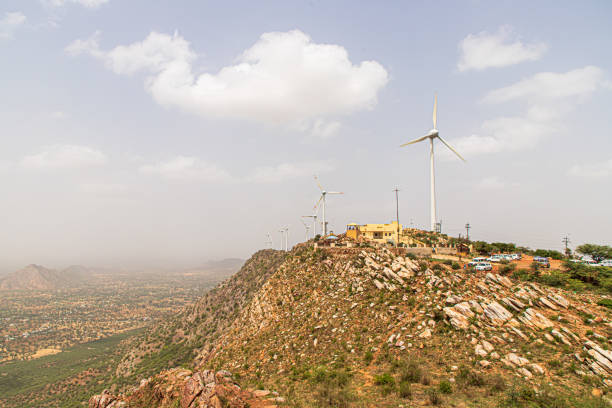
Albert Einstein once famously said, “Two things are infinite: the universe and human stupidity; and I’m not sure about the universe.” Few lines capture our collective thinking and behaviour more aptly. Have we not inflicted enough environmental damage already that we now seem determined to wound ourselves further-by decimating the Aravallis, a landform that has existed for eons, long before the first human ever walked this earth? The Supreme Court approved redefinition of the Aravalli Hills has ignited a serious environmental controversy, with implications that extend far beyond cartographic precision. By adopting a new benchmark that recognises only landforms rising at least 100 metres above their local relief as “Aravalli”, the official footprint of one of India’s oldest mountain ranges risks being drastically shrunk.
Opening vast tracts to mining, real estate, and infrastructure pressures might well kill the Aravallis. The Aravallis may not be the highest, but they are not just another small hill system. Stretching across Gujarat, Rajasthan, Haryana, and Delhi, they act as a natural barrier against desertification, regulate groundwater recharge, moderate the local climate, and serve as a biodiversity refuge in arid land. In the Delhi-NCR region especially, they function as a critical green lung, absorbing pollution and checking unrestrained urban sprawl.
To weaken their protection is to tamper with an already fragile ecological balance. The government has sought to reassure critics, arguing that mining is permitted in only 0.19 per cent of the Aravallis. It has also paused new mining leases pending further study. However, this assurance rings hollow when scrutinised closely. The cited figure is based on the total area of 34 districts loosely associated with the Aravallis, not the actual hill range. As per the Forest Survey of India, the Aravallis cover about 40,483 sq km in Rajasthan alone. By contrast, applying the new 100-metre local relief definition would exclude over 99 per cent of these identified hills, dramatically reducing the officially recognised range. More troubling is the use of “local profile” as the baseline for measuring elevation, rather than sea level. Entire districts with significant ecological and cultural value-such as Sawai Madhopur, Chittorgarh, and Nagaur-have disappeared from the updated list submitted to the court. This raises legitimate concerns that exclusion, rather than inclusion, has become the guiding principle. It is not only about mining alone. While mining remains a visible threat-particularly illegal and incremental expansion larger danger lies in what follows de-recognition. Once an area is no longer officially designated as ‘hill’ Aravalli, it becomes more vulnerable to real estate projects, highways, and urban expansion. What should be done? The ongoing court-mandated study must be transparent and scientific and include independent geological and ecological experts. Aravalli conservation requires a holistic approach, factoring in its ecological importance rather than narrow topographical details. The need of the hour is to have an Aravalli protection law to ensure the Aravallis stay the way they are.