An imaginary letter from Karl Marx to Indian Communist Parties
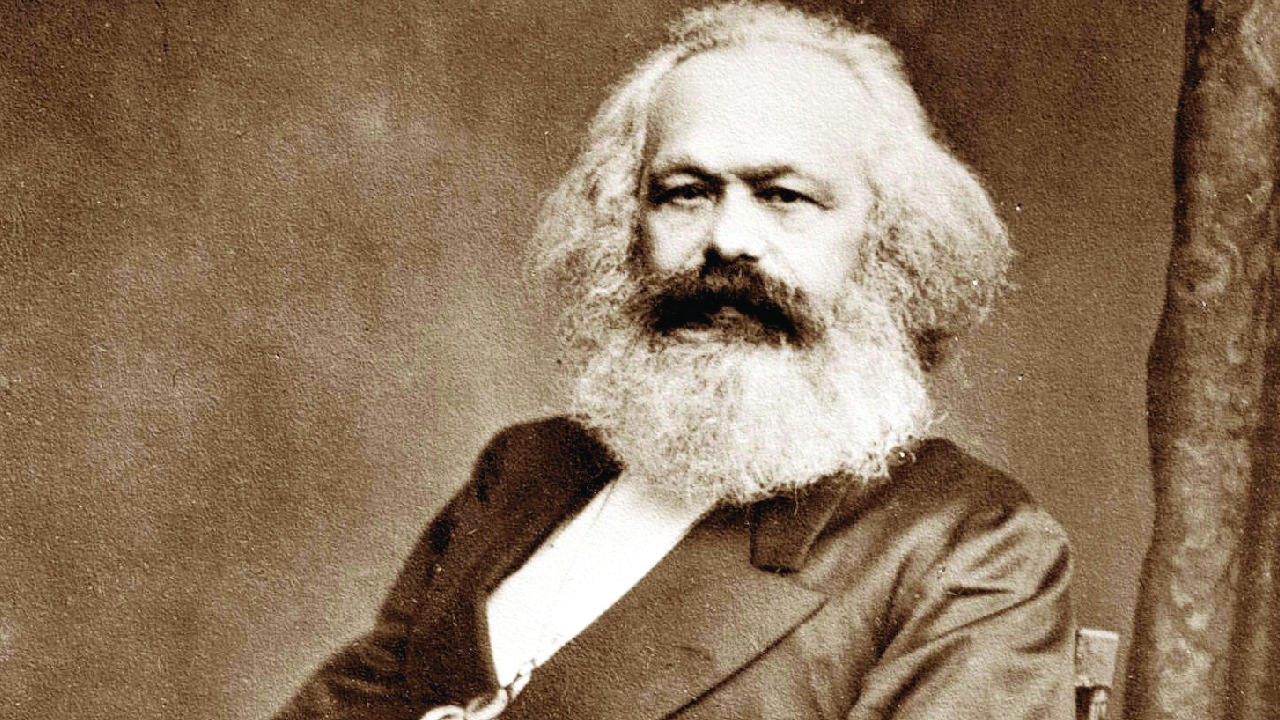
Dear Comrades,
I have watched, from a distance of time and circumstance, the trajectory of communist politics in your land. What troubles me is not that Marxism has lost relevance in India, but that it has lost its ability to translate itself into the language of lived life. The words you speak are right out of my lexicon - class, labour, surplus, exploitation - but I often do not recognise the society they are meant to describe.
Allow me to remind you of something you already know but either seem to forget or ignore: Marxism was never meant to be doctrine. It was meant to be a method and a lamp. If that lamp has dimmed, it is not because the night has ended, but because the flame has not been fed by the realities around it.
Your task, therefore, is not reinvention for its own sake or in the manner of reinventing the wheel. I shall also not advise you to abandon the fundamentals. What you require is an organic renewal - one that grows from the soil of Indian society rather than being imported wholesale from other histories and societies. And in undertaking this renewal, you must reject a false and debilitating opposition that has haunted your politics for decades: the separation of class from caste.
Caste, comrades, is not a cultural residue floating outside the political economy. It is a material system of graded inequality that long predates capitalism and has been remarkably compatible with it. Capitalism in India did not abolish caste; it learned to operate through it. To imagine otherwise is to misunderstand both capitalism and caste. It misplaces priorities for people's struggle as well.
Who owns land? Who performs the most degrading labour? Who bears the greatest risk and precarity? Who is denied dignity even when wages are paid? These questions cannot be answered without confronting caste directly. Dalit and Adivasi communities remain disproportionately trapped in dangerous, insecure and dehumanising work. Informality, which is so central to Indian capitalism, is structured by caste. Class formation itself bears the imprint of caste hierarchy.
A Marxism that fails to place this at its centre ends up speaking about the oppressed rather than from within their lived experience. Dismissing caste as a "secondary contradiction" or postponing it to a future after revolution would amount to abandoning both moral clarity and political ground. You would invariably end up leaving space for forces that mobilise caste identities without challenging exploitation, while at the same time alienating those for whom caste is not an abstraction but a daily injury.
Yet I must also warn against the opposite error. When caste politics detaches itself from political economy, it may secure representation without transformation. Power changes hands, but exploitation remains intact. The annihilation of caste and the abolition of exploitation are not parallel struggles; they are intertwined. To separate them is to weaken both. India does not need borrowed manifestos. It needs one that speaks in the idiom of its social realities.
You must also confront the transformations of capitalism itself. Inequality in your country has reached obscene levels. But this inequality does not produce a simple divide between bourgeoisie and proletariat. It fragments labour internally - formal and informal, salaried and gig, urban and migrant, visible and erased. Social security, legal protection and political voice are unevenly distributed across these layers. Do not imagine that these developments lie outside classical class struggle. This is class struggle today. The platform worker, the migrant labourer, the feminised care worker and the informal labourer are not marginal figures; they are central to accumulation in your time.
As I have learnt, your response to this new architecture has been episodic rather than sustained, rhetorical rather than organisational. If your image of the working class remains frozen in older industrial forms, it is not the working class that has vanished; it is your lens that has grown outdated, and you need to change it urgently.
Ask yourselves harder questions. How is surplus extracted in an economy where growth coexists with hunger and joblessness? How do profits soar while labour participation declines? Why is the experience of citizenship so uneven? Why are some considered bearers of rights while others are considered disposable? In such conditions, humiliation and everyday violence cannot be considered mere social pathologies; they are mechanisms through which economic power reproduces itself.
Some among you revile grounding Marxism in such realities as diluting its radical edge. I assure you it does the opposite. It restores its sharpness. Especially in a time when religion and politics are fused into a dangerous and intoxicating mixture, critique must be rooted in everyday life if it is to matter at all.
This brings me to another critical concern which you have often treated with misgiving: your Constitution. I have heard some of you dismiss it as a bourgeois compromise, useful only as a transitional instrument. History has proven this view to be shallow and even dangerous. Your Constitution was born not only of liberal ideals but of anti-colonial struggle, anti-caste resistance and democratic aspiration. Its promises — liberty, equality, fraternity, justice — were made to a society scarred by hierarchy. That they remain unfulfilled is not an argument against them; it is an argument for struggle. To defend constitutional rights is not to abandon class politics. In India, it is one of its primary terrains. Rights, representation and institutional accountability are not distractions; they are battlegrounds. To fight on them is to fight for "We, the People of India" in material terms.
And to work along these lines requires an intellectual humility that I urge you to embrace. Read me, sure - but read me alongside Ambedkar, Gandhi and Nehru. Not tactically only, not ceremonially only, but seriously. Ambedkar's insistence on dignity, caste annihilation and constitutional morality does not weaken Marxism; it completes what your context demands of it. Together, these traditions offer a framework capable of grasping exploitation in its economic, social and cultural forms.
Finally, comrades, reinvention must not be limited to being merely theoretical. The time calls for it to be ethical. It demands a shift from certainty to listening, from vanguardism to solidarity, from imported templates to grounded struggle. It requires the courage to acknowledge past failures without defensiveness and the openness to learn from movements that did not originate within your party structures. Above all, it requires the willingness to be transformed by the struggles you claim to lead.
Marxism can still speak powerfully in India, but only if it learns to speak with society rather than at it. Treat Marxism as a method, not a mantra. Sharpen class through caste. Anchor equality in constitutionalism. Do this, and your politics may once again resonate. It would not be just an echo in an ideological chamber. Comradely yours,Karl Marx
The writer is MP (Rajya Sabha), Rashtriya Janata Dal; views are personal
Leave a Comment
Comments (5)
Thought provoking article.All left parties must discuss it. Sometimes change is inevitable.
This is one of the best articles published in recent times and deserves to be a key document for discussion at the party conference. What has the party truly been saying since 1925? Which of its policies still resonate with today’s youth? Comrades have turned the party into a rigid dogma—religious in form, though without God. Claiming allegiance to Darwinian theory, they themselves resist change. As a result, they are becoming obsolete and drifting out of public life, instead of renewing themselves to serve the poor effectively. Their inability to view new problems through new lenses has become a tragedy for the working class in India.
Yes. It is a wake up call.
Find every word,every sentence so sincerely integral to left politics in our country, I whole heartedly support the essay.
काश ! केंद्रीय कम्युनिस्ट नेतृत्व ‘समाजवादी या सेंट्रिस्ट विचारधारा’ की बातें, पर निजी, पूंजीवादी व सामाजिक विभाजनकारी हितों को संरक्षित व वाम राजनीति की कब्र खोदने वाली पार्टियों को ऐसी नसीहतों का पाठ पढ़ाने की आजादी दे देता; तो शायद आज मर्सिया पाठ की जगह चरणवंदना हो रही होती।