A vote that will echo beyond Bangladesh
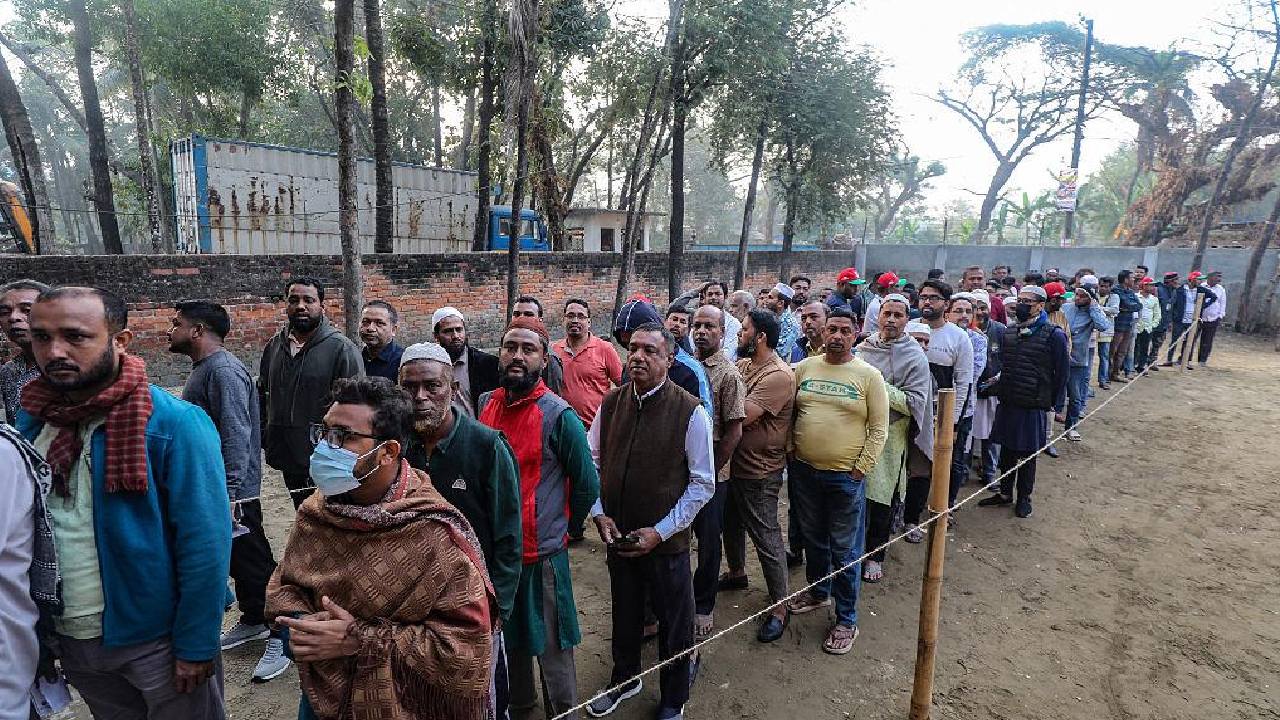
Bangladesh is at a defining moment in its history. The last year and a half has been the most tumultuous period in its history since Sheikh Mujibur Rehman was assassinated and the army took control in 1975. The ouster of Sheikh Hasina and the handing over of the interim government to Mohammad Yunus could not restore law and order, and things went from bad to worse as there was arson, violence on the streets, and an economic downslide — wiping away the progress the country had made all these years — and worse, ripping the social fabric of the nation to shreds. The February 12 election thus is not merely to choose a parliament, but to decide what kind of republic will emerge from the ashes of its Gen-Z uprising. The February 12 election is the first since mass student-led protests forced Sheikh Hasina from power and brought Nobel laureate Muhammad Yunus to head an interim caretaker government.
This is, in a way, a litmus test for Gen-Z uprisings that are now happening in different parts of the world — whether such an uprising can mature into responsible governance, and if youthful rebellion is merely a momentary phase that ultimately leads to the collapse of a political system without providing an alternative. Muhammad Yunus’s caretaker government was supposed to stabilise the country and prepare a neutral ground for elections. Instead, it has failed to put a semblance of order in place. Police authority has weakened, political violence has risen, and Islamist groups have become more assertive on the streets. Attacks on minorities and ideological intimidation have created a climate of fear. Besides, what has happened before the elections was not in the best interest of democracy. The Awami League was banned and fundamentalist forces - especially Jamaat-e-Islami — have gained influence far beyond their traditional base. Yunus had to restore not only order at home but also position itself as a mature player in the international arena. It chose to go closer to China and alienate a long-term ally — India. This has geopolitical consequences that go far beyond its borders and rewrite South Asian politics. Hasina had struck a fine balance. She leaned towards India while also taking Chinese investment.
Now Beijing has moved swiftly to deepen its presence. China is patiently building economic and political capital in Bangladesh. For India, already anxious about China’s presence in its neighbourhood, this election is a moment of reckoning. A victory for the Bangladesh Nationalist Party (BNP), even if imperfect, would be the most reassuring outcome for New Delhi. The BNP understands the hard realities of geography and trade: Bangladesh’s prosperity depends on stability with India. But if the BNP is forced into a coalition with Jamaat-e-Islami, its room for manoeuvre will shrink. For the Bangladeshi people, the promise of a centrist, youth-driven alternative has withered amid factionalism and opportunism. The risk is that Bangladesh, instead of moving from uprising to renewal, slides into a new cycle of instability. The Gen-Z revolt was all about resurrecting a political system. Whether this election can do that remains to be seen.