A dispute written in stone
The year 2025 has been turbulent throughout. From the war in Ukraine to the Gaza conflict and renewed hostilities along the Pakistan-Afghanistan frontier, the year has witnessed conflict on multiple fronts. Even in its final month, unrest persists, with unexpected clashes erupting between Cambodia and Thailand — two otherwise peaceful neighbours bound by shared borders and intertwined histories.
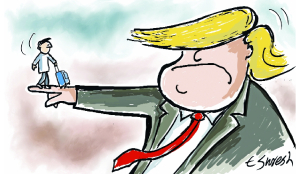
The latest flare-up along the Thailand-Cambodia border is a grim reminder that unresolved issues have a habit of erupting into armed conflict. Sporadic skirmishes on the border escalated into air strikes and artillery exchanges, leading to large-scale evacuations on both sides and leaving at least 20 dead. If there is a conflict anywhere in the world, US President Donald Trump has an uncanny urge to get involved and become a self-appointed peace broker, often with detrimental effect. This time too, US President Donald Trump announced that both sides had “agreed to cease all shooting”, a statement that proved rather premature, as neither side appeared very keen on it.
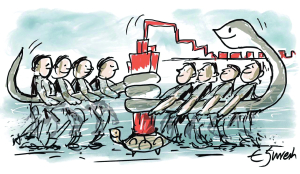
At the heart of the confrontation lies the long-disputed border region surrounding the 11th-century Preah Vihear temple complex. Though the International Court of Justice awarded the temple to Cambodia decades ago, divergent interpretations of boundary lines and provocative statements on both sides have fuelled public anger. Periodic flare-ups, including violent clashes in 2008–11 and again earlier this year, demonstrate how fragile past ceasefires have been.
This week’s violence followed the collapse of October talks, after Thailand accused Cambodian forces of laying landmines in the region. What is clear is that deep mistrust, militarised borders, and domestic political pressures in both countries continue to fuel this conflict, which is more emotive than real. The involvement of Donald Trump as a self-styled mediator adds another dimension to the problem. Announcing the ceasefire on his Truth Social platform, Trump cast himself as an indispensable power broker, positioning himself as the principal mediator. His eagerness to insert himself into every global conflict often appears driven less by a commitment to peace than by the pursuit of personal legacy. By sidelining regional diplomacy and framing himself as a Nobel Peace Prize contender, Trump ultimately does more harm than good to the cause of peace. For India, the conflict is not a distant Southeast Asian squabble but a matter of tangible concern. New Delhi’s immediate worry has been the reported damage to conservation facilities at the Preah Vihear temple, a UNESCO World Heritage Site where the Archaeological Survey of India has been leading a $5.5 million restoration project since 2022. Beyond heritage, India has strategic stakes in regional stability under its Act East policy. Prolonged instability between two ASEAN members threatens trade routes, economic integration, and the broader balance in a region already under pressure from great-power rivalry. For India and the wider region, the lesson is stark: history ignored does not fade — it flares up, often with consequences far beyond the battlefield.