A culturally rooted gift, a modern global supply chain
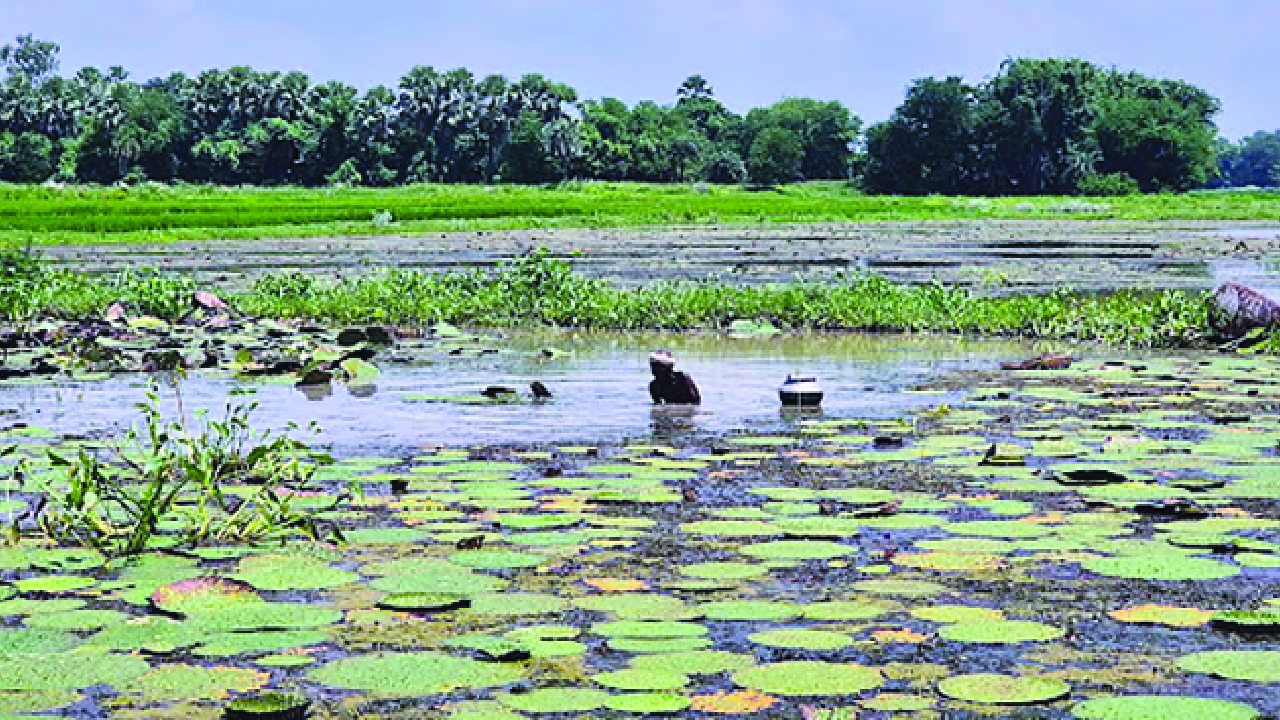
In Mithila, makhana is not merely a snack; it is memory. It lives in our ponds, our rituals, our kitchens, and the quiet pride of families who have tended wetlands for generations. Today, that same ‘satvik’ tradition is also a modern answer to a changing world-clean, nutritious, plant-based food at a time when global consumers are shifting away from ultra-processed choices.
“From Mithila’s ponds to the world’s platters-Bihar’s makhana can carry India’s values with India’s quality.” We are living through turbulent geopolitics and fragile supply chains. Conflicts and chokepoints have disrupted shipping routes, increased freight costs, and forced buyers to rethink where their food comes from. In such a world, the countries that can supply safe, traceable, climate-smart food reliably will shape the next decade of trade. This is where Bihar’s makhana can step up-not as a commodity, but as a trusted category.
The government’s core intent: prosperity for farmers, dignity for workers
Let me state the fundamental intent of our policy in one line: makhana must make farmers prosperous, not just make markets excited. The current value chain is still too dependent on hazardous manual work, seasonal gluts, and uneven quality. Our mission is to modernise the entire makhana economy-from pond governance to processing, science to standards, and local clusters to global shelves-so that the farmer captures a fair share of value.
Modernisation means three things: machines, markets, and trust
First, mechanisation as a special lever. Mechanisation will not replace labour; it will replace hardship. Harvesting and seed collection are among the most physically demanding tasks in Indian agriculture. Our 5-year plan commits to field-validated harvesting solutions, delivered through Custom Hiring Centres, with trained operators, technicians, and service entrepreneurs-creating safer jobs for youth and women. Second, markets that reward quality, not just volume. We will strengthen grading, moisture discipline, and hygienic storage so that farmers are not forced to sell in a narrow harvest window. When storage improves, the farmer gains bargaining power; when quality improves, Bihar earns a premium.
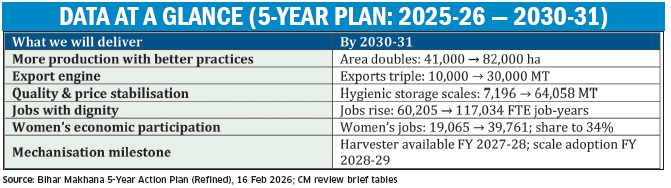
Third, trust at global standards. Global buyers do not buy intentions-they buy compliance. We will expand lab access, residue and moisture testing, lot-wise traceability, and retail-ready packaging. The National Makhana Board-launched by the Government of India-will act as mission control, aligning research, standards, and market promotion; and APEDA’s Patna office brings export facilitation close to the clusters.
Innovation: Turning a traditional crop into a future-ready industry
Modernisation is not only about machines; it is also about ideas. We will back innovation across the chain: improved varieties and seed systems; safer, energy-efficient popping and processing; new ready-to-eat and ready-to-cook products; sustainable packaging; and circular use of by-products.
The goal is to move from selling ‘loose makhana’ to selling ‘Bihar-branded makhana’-a product with provenance, performance, and pride.
Women forward by design, not as an afterthought
Makhana’s next growth phase must be inclusive. Mechanisation reduces hazardous manual drudgery; storage and processing create year-round work; and compliance jobs-grading, lab handling, documentation, packaging, and e-commerce-are sectors where women’s SHGs can lead. Our approach is to formalise these roles with training, certification, and credit-so that women are not ‘helpers’ in the value chain, but owners of enterprises within it. “If Bihar wants a stronger makhana economy, it must build a stronger place for women in it.”
Why the world’s turbulence can become Bihar’s opportunity
Geopolitical uncertainty is reshaping food supply chains. Retailers want diversified sourcing, shorter lead-time risk, and credible compliance. India’s trade engagement is also opening new doors. India and the EU have concluded negotiations for a Free Trade Agreement, with implementation steps ahead; India and the UK have signed a trade agreement with implementation expected soon. With the US too, trade talks for an interim package have been in motion to reduce friction and stabilise market access. These pathways can expand demand for compliant, packaged, branded agri-products-and makhana, with its health profile, is well positioned to ride that wave.
India as Vishwaguru: sharing a healthy, culturally rooted gift
The idea of India as Vishwaguru is not only about technology or geopolitics; it is also about what we give to humanity. Makhana is a gift of our wetlands-rooted in culture, aligned with wellness, and respectful of nature. When Bihar supplies the world with clean, traceable makhana, we carry a message that development can be modern yet culturally grounded, export-driven yet farmer-first.
The pledge
- Make mechanisation and safety non-negotiable: reduce drudgery, injuries, and post-harvest losses.
- Build ‘trust infrastructure’: labs, traceability, grading, hygienic storage, and compliant packaging.
- Move value addition to Bihar: FPO and SHG-led processing, branding, and e-commerce.
- Use the National Makhana Board and APEDA Patna to connect clusters to global buyers-faster, closer, and fairer.
“Makhana is not a snack story. It is Bihar’s next farmer prosperity and jobs story.” To our farmers: your knowledge built this sector; our policy will ensure you capture its future. To our youth and women: the makhana economy will need your skills, your entrepreneurship, and your leadership. To buyers: Bihar is ready to supply not just volume, but verified quality. And to every Indian: when we send makhana to the world, we send a piece of Bihar-and a piece of India’s soul.
The writer is the Minister for Agriculture, Government of Bihar; views are personal