Why human history is a story of mass movement
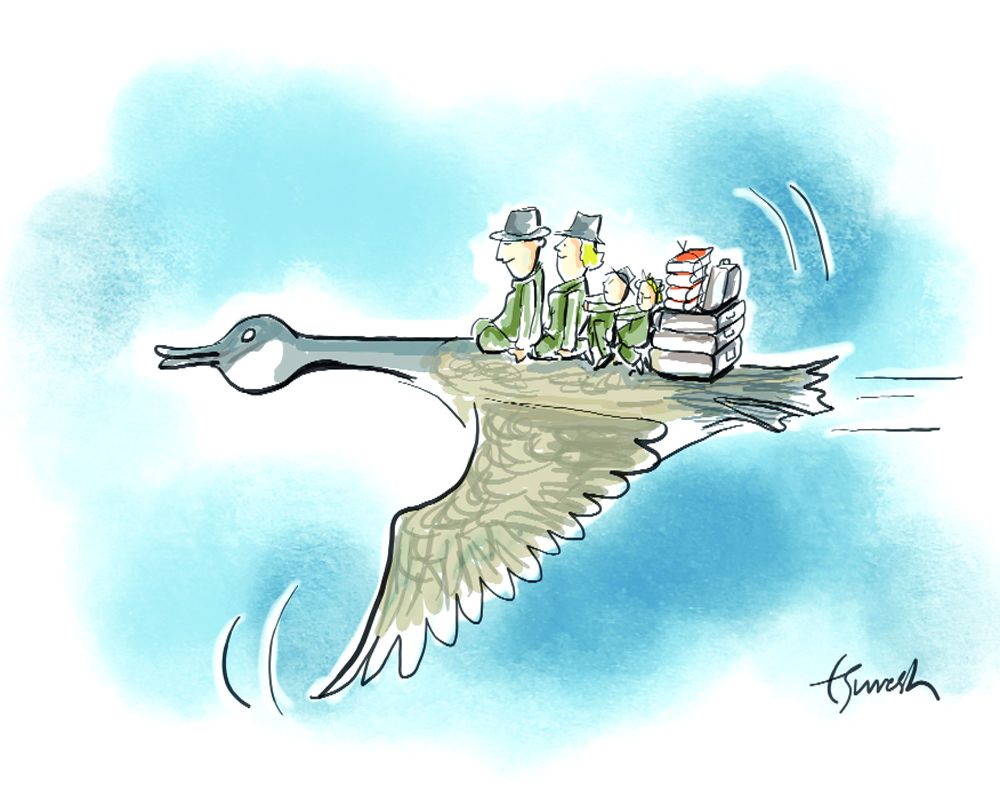
Migration is often seen as a crisis, with headlines on “refugee floods” and tightened borders. But without it, continents would be empty, cultures stagnant, food bland, and cities lifeless
Migration is often treated as a crisis of the present. The newspaper headlines warn of refugee “floods”, debates rage about borders, governments tighten visas. But take a step back and ask yourself: What if the migration had never happened at all? What if the people, crops and ideas had stayed rooted forever in their places of origin? The answer is both unthinkable and strangely illuminating.
Empty Continents
Without migration, humans would never have left Africa. The Americas, Europe, Asia and Australia would remain silent landscapes, totally untouched by human footsteps. Imagine world vast forests sans any cities, rivers flowing without bridges, mountains rising without names. History textbooks would shrink to the size of a pamphlet. Humanity would be a local species, not a global one.
Civilisations in Isolation
If migration froze, cultures would grow like plants in sealed jars. China would never have received Buddhism. Europe would never have inherited mathematics or paper from elsewhere. India would never have tasted chili that now defines our cuisine. Civilisations would be closed worlds. They would be static, predictable and dull. The great highways of history, like the Silk Road or the Indian Ocean routes, would never have existed.
Empires That Never Were
Think of the Romans without their roads, the Mongols without their horsemen sweeping across Eurasia, no Spanish ships in the Americas or no British Empire in India. Power itself would look different. Without mobility empires collapse into small kingdoms, cut off from the currents that made them mighty.
A Science of Stagnation
Every big leap in science has been a border-crosser. The numbers we use today began in India, traveled through the Arab world, and found a home in Europe. Greek philosophy survived because it was translated in Baghdad and carried west. Astronomy in the Islamic world sharpened tools that later guided European navigators. Even inventions like the printing press or telescope mattered only because they spread beyond their birthplace. Knowledge that does not travel remains a local trick; knowledge that moves reshapes the world.
Food Without Fusion
Our plates are museums of migration. Tomatoes from the Americas define Italian cuisine; chilies from Mexico light up Indian curries; coffee from Ethiopia fuels the Middle East and beyond. A no-migration world would serve unimaginably bland food. There would be no sushi outside Japan, no tacos outside Mexico, no curry outside India. National cuisines would shrink to the point of monotony. Our taste buds, like our minds, would be starved of diversity.
No Cosmopolitan Cities
What is Paris without Algerians, New York without Italians and Jews, London without South Asians, Dubai without South Asians again? Migration built the great cities of the world. Without it, cities would be provincial towns, inward-looking and uniform. The buzz of languages on subways, the collision of styles on streets, the entire grammar of urban life would vanish. Cities would cease to be engines of creativity, reduced to oversized villages.
A More Equal or More Unequal World?
Here lies the paradox! Would a world without migration be more equal, since no empire could extract wealth through settlers and slaves? Or would it be more unequal, since regions rich in resources or favorable climates would hoard prosperity without sharing? Perhaps Africa, cradle of humanity, would remain dominant. Or perhaps isolation would condemn all societies to mediocrity. Either way, the dynamism that comes from contact would be absent.
The Great Stillness
Most of all, a no-migration world would be still. History would not be a drama of encounters and collisions, but a long monotony of sameness.
The very idea of identity, so often defined through difference, would vanish. Who are “we” if there is no “they”? Migration, with all its anxieties and conflicts, has been the maker of history. Without it, the human story would be not just different; it would scarcely be a story at all.
Why Thought Experiment Matters
This is not an idle fantasy. At a time when migration is cast as a “problem,” it helps to imagine its absence. A world without migration would not simply be poorer; it would be unrecognisable.
Our food, our cities, our nations, even our sense of humanity, all rest on the restless movement of people across frontiers. So, the next time we hear anxious talk of borders and bans, we should remember: migration is not a threat to history. It is history.
The writer is a freelance journalist