When Truth Becomes a Target
As the information ecosystem grows more distorted, the threats facing journalism have become both physical and existential, the question is no longer just about protecting press freedom—it is about preserving the very possibility of truth.
On World Press Freedom Day, the world will once again speak of freedom of expression as a universal value-something to be defended, celebrated, and upheld. But for many journalists, this day no longer represents an ideal. It represents a contradiction.
I do not speak about press freedom as an abstract principle. I speak about it as someone who has lived its cost.
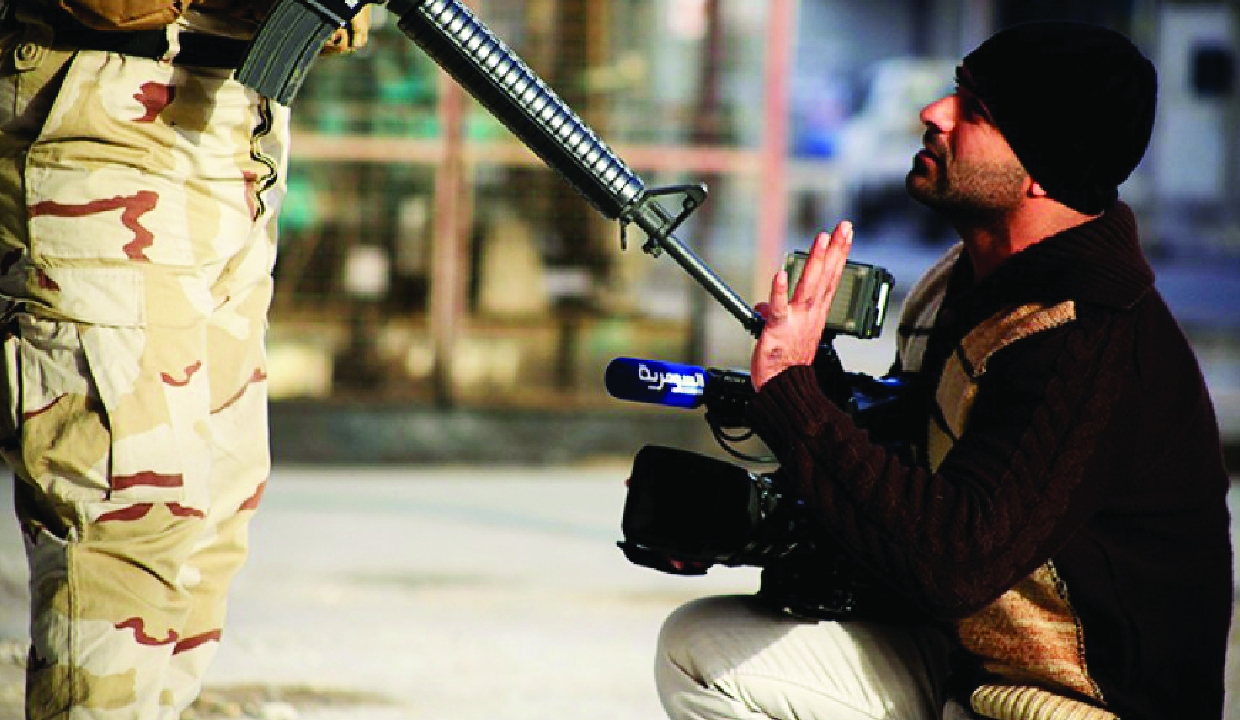
The memory of covering the Iraq war in 2003 as an embedded journalist-and the captivity that followed-has never left me. It remains present in every conversation I have about the role of the media in conflict. I survived Iraq. I survived Afghanistan. I survived Kargil, where I was fired upon, detained, and held under the threat of execution.
Many of my colleagues did not survive.
This is the reality we must confront: journalists today are not merely covering wars. Increasingly, they are part of them not by choice, but by design.
The language we use often masks this truth. We speak of "casualties," of "crossfire," of "unintended consequences." But the reality on the ground tells a different story. Journalists are not only at risk; they are being deliberately targeted by both state and non-state actors.
This is not a marginal trend. It is a structural shift.
In conflict zones across the Middle East and beyond, the targeting of journalists has become a tactic of war. Silencing the messenger is often seen as a strategic advantage. When the narrative can be controlled, the cost of violence becomes easier to obscure.
But the threat no longer ends at the battlefield.
We are entering an era where truth itself is under sustained assault. Artificial intelligence, deep fakes, and algorithmic amplification are no longer distant concerns. They are active forces reshaping how information is produced, distributed, and consumed. They blur the line between fact and fabrication, making it harder for audiences to distinguish reality from manipulation.
In this environment, the risks faced by journalists are both physical and existential.
To be a journalist today is to operate under a dual threat: the danger of being silenced, and the danger of being disbelieved.
This combination is corrosive. It undermines not only the safety of reporters but the very function of journalism in society.
Because when journalists are killed, imprisoned, or discredited, the loss is not confined to the profession. The loss is borne by the public. It is borne by societies that depend on reliable information to make informed decisions. It is borne by systems of accountability that rely on scrutiny to function.
Without journalism, there is no transparency. Without transparency, there is no accountability. And without accountability, power operates unchecked.
This is why the issue at hand is larger than press freedom as a professional concern. It is about the integrity of public discourse. It is about whether truth can still serve as a foundation for collective understanding in an increasingly fragmented world.
The international response to attacks on journalists has, in many cases, been insufficient. Condemnations are issued, statements are made, but accountability remains rare.
This absence of consequence sends a message-one that is heard clearly by those who would seek to suppress information.
It tells them that the cost of targeting journalists is manageable.
That message must change.
Protecting journalists is not about granting special status to a profession. It is about safeguarding a function that is essential to any society that claims to value truth, justice, and democratic governance.
For those of us who have experienced the risks firsthand, this is not a theoretical debate. It is a lived reality.
The question, therefore, is not whether we continue to speak about press freedom. The question is whether the world is prepared to act in its defence.
Because the stakes are no longer confined to individual reporters or isolated incidents.
They extend to the very idea that truth still matters. And if that idea is allowed to erode, the consequences will reach far beyond any single conflict zone.
They will shape the future of how we understand the world-and whether that understanding is grounded in reality at all.
The bottom lines
The real question is: Can truth survive in a world where everything can be manipulated, politicised, and contested?
Let me end with this: The biggest danger today is not that journalists are under attack. They always have been. The real danger is that truth is becoming negotiable. And once truth becomes negotiable, freedom becomes fragile.
This is not just a failure of justice-it is a failure of the international system to protect the flow of truth itself. Until accountability is backed by real political will, enforceable mechanisms, and consistent global pressure, the cycle will continue: documentation without justice, condemnation without consequence.
The international response to attacks on journalists has, in many cases, been insufficient. Condemnations are issued, statements are made, but accountability remains rare.
The writer is Veteran International Journalist; Views presented are personal.