When climate models fall short of reality
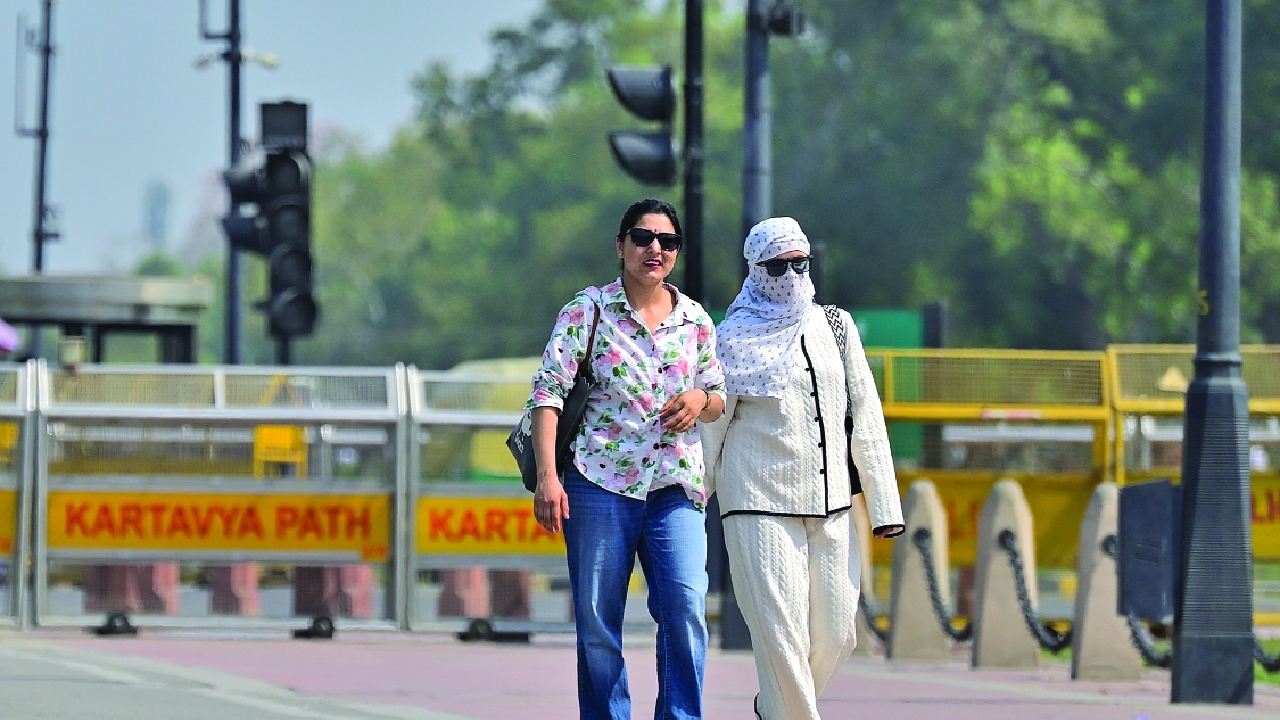
There is a dangerous gap between what climate models are telling policymakers and what is actually unfolding on the ground across India’s cities. That gap is not a rounding error. It is a matter of life and death for tens of millions of people, and it is widening with every passing summer.
It is only March, yet soaring temperatures across large parts of India are already testing human endurance, an early warning of what the months ahead may hold. Over the past four decades, India’s average surface temperature has already risen by about 1°C. With a large share of its population concentrated in already warm regions, the country faces some of the highest levels of human exposure to extreme heat anywhere in the world.
A landmark study published in the Proceedings of the National Academy of Sciences has found that 81 per cent of 104 medium-sized cities across Asia, Africa, the Middle East and the Americas are projected to warm faster than their surrounding rural areas even under a 2°C global warming scenario — the upper limit set by the Paris Agreement. Within this global pattern, India stands in a category of its own.
The urban heat trap
According to the study, Indian cities experience an additional 45 per cent increase in land surface temperature compared to surrounding rural areas under a 2°C global scenario. This pushes expected city warming from about 2.2°C in standard models to roughly 2.6-2.7°C once urban factors are included. In cities such as Patiala in Punjab, urban warming could nearly double regional projections.
Part of the explanation lies in India’s climate geography. Monsoonal and humid regions usually warm less than arid areas because evaporation and vegetation help regulate temperatures. Cities replace these natural cooling systems with concrete, asphalt and dense built environments that absorb heat during the day and release it slowly over time.
Urban expansion is intensifying the problem. According to the Lancet Countdown, India’s urban greenness declined by around 3.6 per cent between 2015 and 2024, removing natural cooling buffers and making cities more vulnerable to extreme heat.
A public health emergency
Indian cities located at similar latitudes are already hotter than many cities elsewhere in the world. Combined with uneven access to water, electricity, cooling infrastructure and air conditioning, this places large sections of India’s urban population at disproportionate risk of heat-related illness and mortality.
Extreme heat is also beginning to affect the economy. In 2024, India experienced close to 20 heatwave days on average. The result was the loss of nearly 247 billion labour hours, which translates into an estimated economic loss of about $194 billion.
The impact is not evenly shared. Workers in the informal economy, such as construction labourers, street vendors and delivery personnel, often have little choice but to continue working outdoors even during the hottest hours of the day. Women face additional risks in many workplaces where poor sanitation facilities discourage regular water intake, increasing the chances of dehydration and heat-related illness.
The night that never cools
Perhaps the most alarming shift is happening after sunset. Over the past decade, very warm nights have increased faster than extremely hot days. Nearly 70 per cent of Indian districts experienced five or more additional very warm nights each summer.
Night-time heat is especially dangerous because it prevents the human body from recovering from daytime stress. Over the past decade, Mumbai recorded around 15 additional very warm nights per summer, Bengaluru 11, while Bhopal and Jaipur saw about seven each. Much of this trend is linked to the urban heat island effect, where heat stored in buildings and roads during the day is released overnight. Rising humidity is compounding the risk. Relative humidity across North India and the Indo-Gangetic Plain has increased by up to 10 per cent in the past decade. Higher humidity raises the heat index — the measure of how hot conditions actually feel — making heat stress more likely even when temperatures remain constant.
An Ocean on the Boil
While the crisis is most visible in cities, the surrounding oceans are also warming rapidly. A study published in ScienceDirect suggests that the Indian Ocean could warm by 1.7 to 3.8°C per century between 2020 and 2100. In energy terms, this increase is equivalent to adding the heat of one Hiroshima atomic bomb every second for a decade.
The Indian Ocean drives nearly 70 per cent of India’s rainfall through the southwest monsoon. Marine heatwave days could rise from roughly 20 days annually today to between 220 and 250 days by the end of the century, threatening fisheries, rainfall stability, cyclone intensity and food security.
Seen in this light, India’s current heat preparedness appears inadequate. Many heat action plans at the district and state level rely on projections from global climate models operating at coarse resolution, models that, as the PNAS study demonstrates, fundamentally miss changing urban heat island effects. Tier-2 cities are not equipped to handle the projected scale of heat stress. Community cooling centres, emergency response measures, heat hotlines, public early warning systems and heat buddy networks are interventions that are standard in parts of the developed world but remain sparse or absent across much of India.
The district-level risk analysis points to the need for a far more layered response. Heat action plans must move beyond simple daytime forecasts to account for warm nights, rising humidity and local vulnerabilities. States should also make fuller use of disaster mitigation funds to build cooling shelters, expand green spaces and strengthen early warning systems. Measures such as heat insurance for vulnerable workers and a national repository of heat action plans could further improve preparedness and coordination.
The writer is a Humanitarian and Development Professional with more than 20 years of national and international experience; views are personal