Lessons in resolve, readiness and restraint
The anniversary of Operation Sindoor serves as a reminder that it requires preparedness, political clarity, technological advancement and public unity
It is one year since India launched Operation Sindoor on May 7, 2025, in retaliation for the terrorist attack in Pahalgam, where 26 innocent people were massacred, creating outrage across the country. The nation, in one voice, demanded action to show resolve and teach the perpetrators a lesson so that they would not dare commit such a heinous crime in the future. The action was swift and precise, and the result was astonishing. It decimated nine terror camps belonging to Jaish-e-Mohammed and Lashkar-e-Taiba, whose outfits had executed the terrorist act. One year on, India continues to reflect on a military operation that was a turning point in the country’s security doctrine and strategic posturing — the resolve of a New India, which will not tolerate terrorism and will go all out to protect and secure its people.
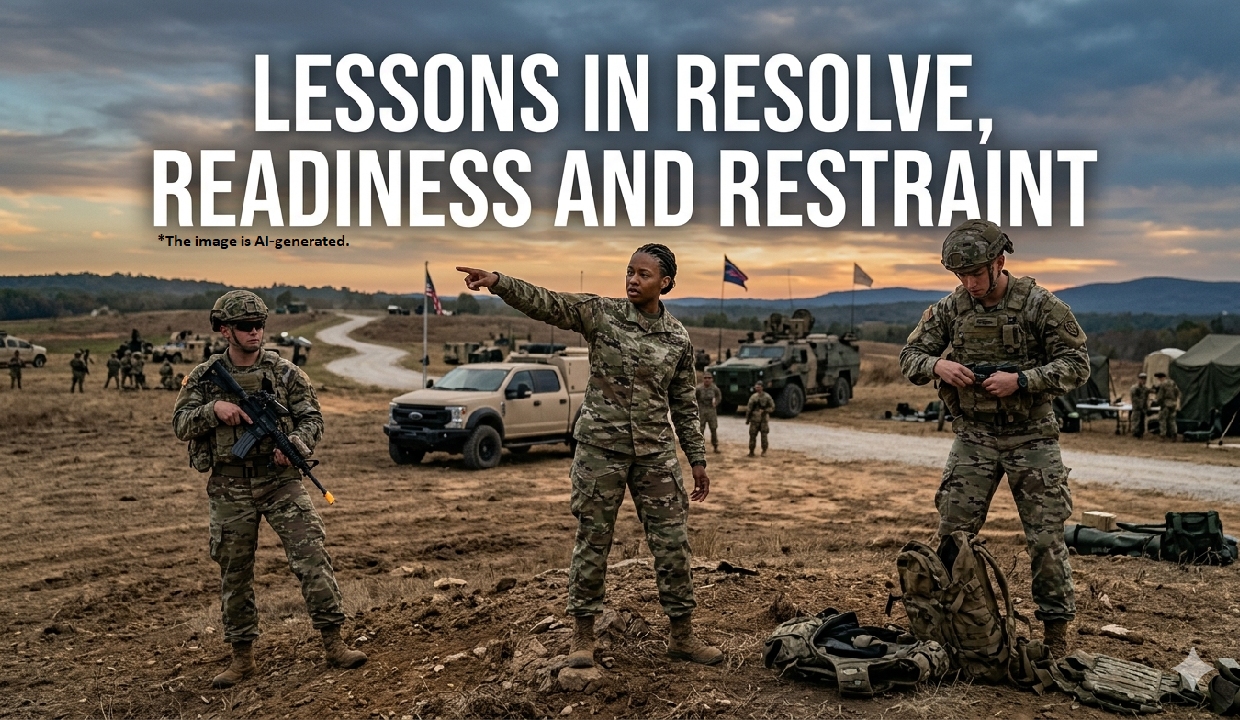
The operation was conducted between May 7 and 10, 2025, by the Army, Navy, Air Force and the Border Security Force along the western frontier, targeting terrorist infrastructure and military facilities in Pakistan and Pakistan-occupied Kashmir. Prime Minister Narendra Modi’s message on the anniversary was important as it reflected how Operation Sindoor has come to represent national resolve, military preparedness and coordinated statecraft. The foremost takeaway was coordination and seamless jointness among India’s armed forces. It also instilled a sense of relief that the country was no longer going to tolerate such acts and had the mettle to retaliate rather than plead for relief. India’s response was calibrated, targeted and time-bound, aimed at neutralising threats without triggering uncontrolled escalation.
What was a major military success was ably backed by diplomacy, as India was able to convince the world that it had retaliated militarily only to destroy terror camps without causing harm to civilians in Pakistan. In this respect, Operation Sindoor reflected India’s evolving diplomatic maturity. The operation also highlighted the significance of self-reliance in defence production. Indigenous technologies, surveillance systems and defence platforms reportedly played a critical role during the operation. In recent years, India’s push for Atmanirbhar Bharat in defence manufacturing has often been viewed through an economic lens. Operation Sindoor demonstrated that self-reliance is equally a strategic necessity.
At the diplomatic level, the operation underlined the importance of narrative management and international outreach. India successfully portrayed the operation as a counter-terror measure rather than an act of aggression, thereby maintaining its diplomatic credibility.
However, Operation Sindoor also offers sobering lessons. Military success cannot become a substitute for long-term political and diplomatic engagement. While deterrence is essential, sustainable peace requires addressing the issues of extremism, cross-border terrorism and regional instability diplomatically. The operation reaffirmed that India possesses both the capability and the will to defend its interests decisively. But its deeper lesson lies in balancing strength with restraint — a hallmark of a responsible and confident power.