What India must fix before embracing free trade
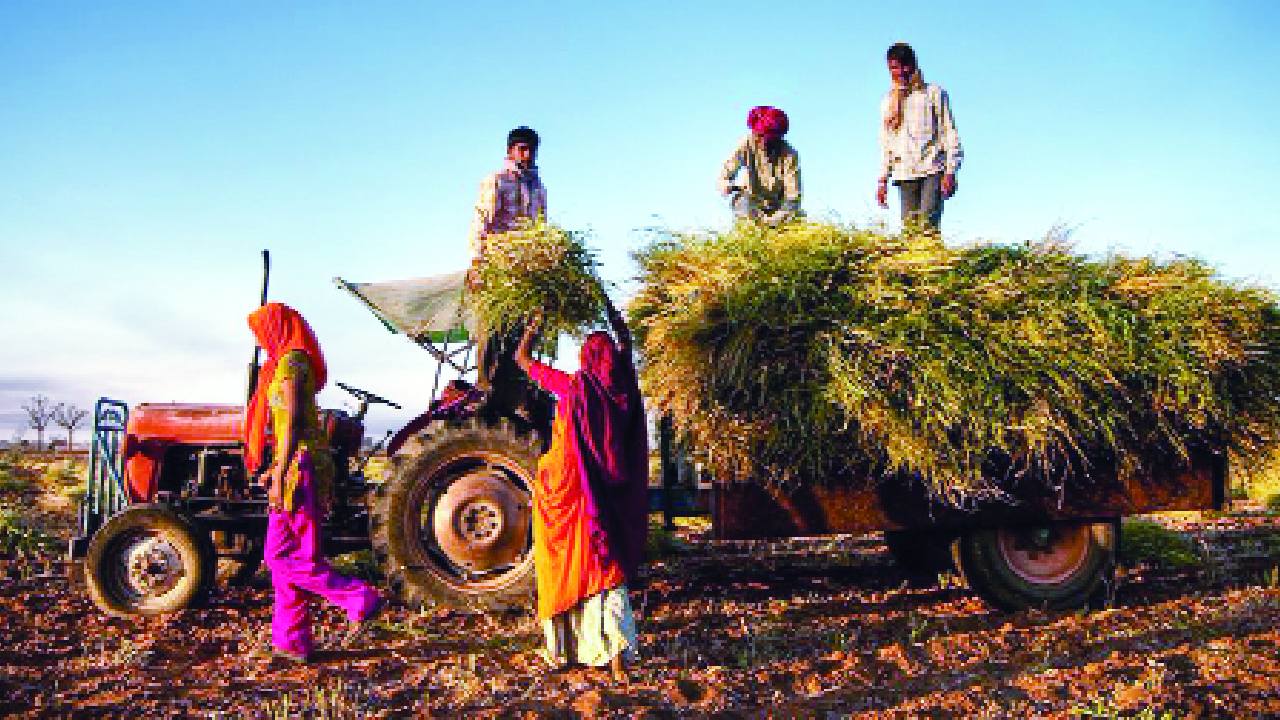
When the proposed India-US interim trade agreement was hailed as the "father of all free trade deals," it sounded impressive-almost civilisational in scale. But from an Indian perspective, the phrase raises an uncomfortable question: what kind of economic child is this father expected to produce? For Western economies, such trade deals are engines of growth. For India, they often feel like threats. The reason lies not in the agreement itself, but in the structure of India's economy-still weighed down by an excessive dependence on agriculture for employment. Every trade negotiation with the United States or Europe eventually circles back to one flashpoint: agriculture. Soyabean oil, dairy products, fruits, animal feed, genetically modified crops-each item triggers anxiety, protests, and political assurances. Commerce ministers promise protection, farmers fear displacement, and the nation debates food security as if it were under siege. Yet the deeper truth is rarely stated openly. India's problem is not trade liberalisation; **it is that too many Indians are still trapped in farming.
Nearly 45 percent of India's workforce depends on agriculture, while the sector contributes only around 16 percent of GDP. No major economy in the world carries such an imbalance. In the United States, agriculture employs barely 1.2 percent of the workforce; in the European Union, about 1.6 percent. Even countries that loudly defend farmers-France, Germany, Japan-do so with a small, technologically empowered agricultural population. Their farms are productive; their farmers are few. India's farms, by contrast, are crowded. Millions work on tiny, fragmented plots that cannot generate sustainable incomes. Climate uncertainty, volatile prices, rising input costs, and shrinking landholdings have turned agriculture into a livelihood of last resort rather than choice. People remain on farms not because farming is profitable, but because alternatives are scarce. This is why free trade agreements appear frightening. When half the population depends on agriculture, even modest imports can disrupt millions of lives. What is a routine policy adjustment for Washington becomes an existential issue in rural India. From a Western lens-where agriculture barely registers in GDP-calling an India-US FTA the "father of all deals" makes sense. From India's vantage point, it exposes how long we have delayed our economic transition.
Modern technology has fundamentally changed agriculture. Precision farming, mechanisation, artificial intelligence, improved seeds, and data-driven irrigation mean that "a very small percentage of people can now feed entire nations". Globally, food security is no longer a function of manpower, but of technology and logistics. In pure economic terms, India needs "no more than 1 percent of its population in agriculture" to ensure food security-perhaps 5 percent if one accounts for transition and diversity. Anything beyond that is disguised unemployment. Yet we continue to hold nearly half the workforce on the land.
The result is predictable: low incomes, high distress, and generational stagnation. Agricultural growth struggles to cross 4-4.5 per cent even when the overall economy grows above 7 percent. This gap is not accidental; it is structural. The greatest casualty of this delay is India's youth. Every year, millions of young Indians enter the labour market. Encouraging them-directly or indirectly-to remain in agriculture is an economic injustice. Landholdings are shrinking, not expanding. Farming incomes remain unstable. Climate risks are intensifying.
India's youth belong in industry and services, not on ever-smaller farms. The country's global reputation today is not built on wheat or rice, but on software engineers, doctors, nurses, technicians, managers, and service professionals. Services already contribute more than half of India's GDP and dominate export earnings. Manufacturing, too, holds enormous potential to absorb semi-skilled labour if supported by infrastructure, investment, and policy clarity. India's true natural resource is not land; it is human capital.
Unlike land, it multiplies when invested in. Skill development, vocational training, digital literacy, and industry-linked education must therefore be treated as national infrastructure. In a globalised economy, skill is the new land, and productivity is the new harvest. Manpower export, often viewed with suspicion, is actually a strategic advantage. Remittances already form a critical part of India's foreign exchange earnings. This is where the irony of the "father of all trade deals" becomes clear. Free trade agreements are designed for economies where agriculture is marginal, productivity is high, and labour is mobile. India enters these agreements carrying the weight of an unfinished transition. That is why every FTA feels unequal, every tariff cut appears dangerous, and every import triggers panic. Protectionism may seem comforting, but it is not a long-term solution. No country has ever grown rich by shielding low-productivity sectors indefinitely. Tariffs can buy time, but they cannot buy prosperity. Without structural change, protection merely delays the inevitable-and increases the eventual cost.
Moving people out of agriculture does not mean abandoning farming. On the contrary, it is the only way to rescue it. Fewer farmers mean larger holdings, better technology adoption, higher productivity, and dignified incomes. Agriculture must evolve into a high-value, high-tech sector, not a social safety net for surplus labour.India's own experience proves this point. Operation Flood transformed the country into the world's largest milk producer not by employing more people, but by improving efficiency, supply chains, and market access. The Green Revolution succeeded through science, not numbers. The next transformation must reduce manpower while increasing value.
As long as half the population depends on agriculture, India will negotiate trade deals from a position of fear. A confident India, by contrast, would enter global markets knowing that most of its people work in services and industry, while a small, skilled farming population ensures food security efficiently. The plough fed India for centuries. But the future will be built by skills, machines, and services. The real challenge before India is not whether to sign the "father of all trade deals," but whether it is ready to raise a new economic generation-one that earns its living not from protection, but from productivity. Or, as one blunt economic truth puts it, "Nations do not grow rich by protecting old livelihoods forever, but by creating better ones for the next generation."
The writer is Professor at Centre For South Asian Studies,School of International Studies & Social Sciences Pondicherry Central University; views are personal