UGC: The new regulations will increase the fault lines
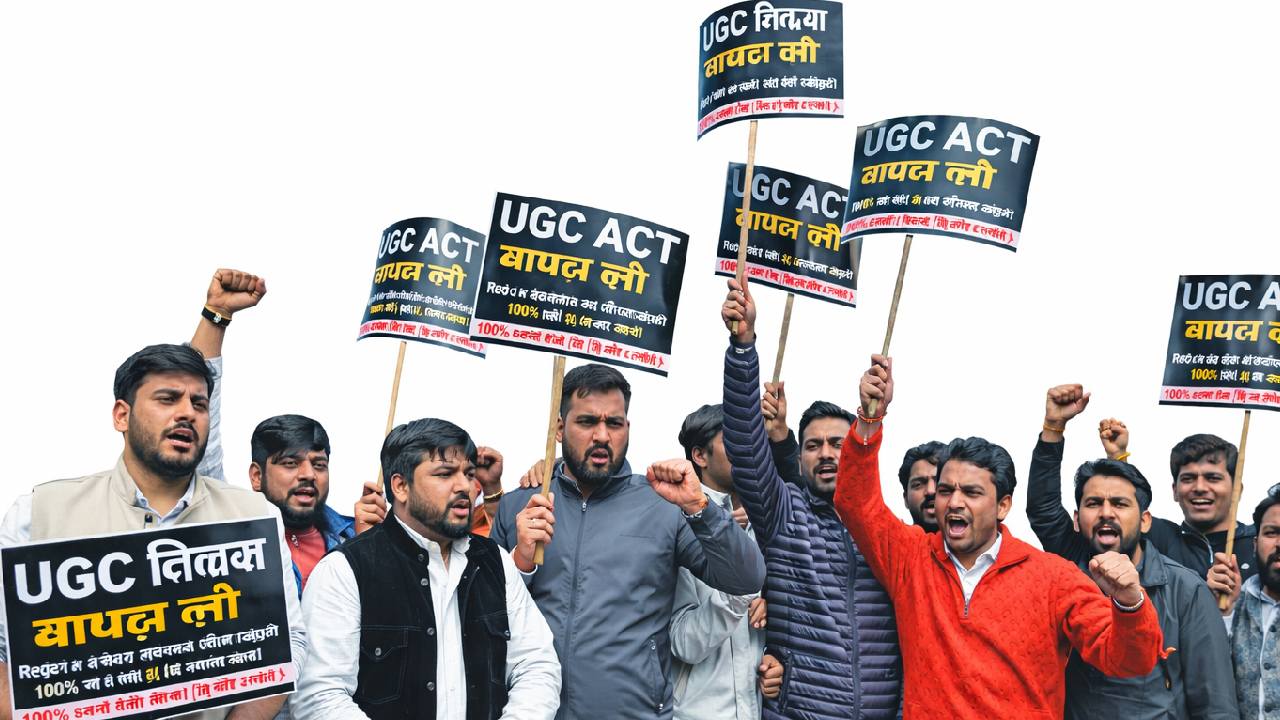
The University Grants Commission (UGC) notified the Promotion of Equity in Higher Education Institutions Regulations, 2026 to strengthen fairness, inclusion and equal treatment across Indian universities and colleges. These rules aim to eliminate discrimination on campuses and ensure that students, teachers and staff from all backgrounds feel safe, respected and supported. The Surpeme Court of India has put on hold the new regulations for now but protests against it continue. Some of the salient provisions of the new regulations are as follows:
Caste-Based Discrimination: The regulations clearly define caste-based discrimination to include unfair or biased treatment against Scheduled Castes (SCs), Scheduled Tribes (STs), and Other Backward Classes (OBCs). This explicitly extends legal protection to OBCs and addresses a major gap in earlier policy frameworks.
Definition of Discrimination: Discrimination is broadly defined as any unfair, biased or differential treatment, whether direct or indirect, based on caste, religion, race, gender, place of birth or disability. It also includes actions that undermine equality in education or violate human dignity.
Equal Opportunity Centres (EOCs): All higher education institutions are required to establish an Equal Opportunity Centre (EOC) to promote equity, social inclusion and equal access, and to handle complaints related to discrimination on campus.
Formation of Equity Committees: Each institution must constitute an Equity Committee under the EOC, chaired by the head of the institution, with compulsory representation from SCs, STs, OBCs, women and persons with disabilities, ensuring inclusive and balanced decision-making.
Reporting and Compliance: Equal Opportunity Centres must submit biannual reports, and institutions are required to file an annual report on equity-related measures with the UGC, strengthening transparency and institutional accountability.
Institutional Responsibility : The regulations place a clear obligation on institutions to eliminate discrimination and promote equity, with the head of the institution held directly responsible for effective implementation and compliance.
Monitoring : The UGC will set up a national monitoring committee comprising representatives from statutory bodies and civil society to oversee implementation, review complaints and recommend preventive measures. The committee will meet at least twice a year.
Penalties: Institutions that violate the regulations may face debarment from UGC schemes, restrictions on offering degree, distance or online programmes, or withdrawal of UGC recognition, making the regulations legally enforceable rather than merely advisory.
The interesting aspects are the inclusion of Other Backward Classes; formation of Equity Committees with representation of SC/ST/OBC/women and persons with disabilities; and a monitoring mechanism involving “civil society”, ie, NGOs.
We have major fault lines such as religion, language and caste. Of these, caste is the most potent and is used by political parties for electoral gains. This bill reinforces the presumption that communities other than Forward Communities are discriminated against. In the current situation, many complaints have arisen about malicious and frivolous complaints against faculty and students using SC/ST categories. Also, post-reservation for OBCs, we hear about “grade inflation” in many institutions of higher learning to avoid false accusations of ill-treatment by “upper caste” faculty.
Discrimination: Including OBCs enlarges the scope of such misuse. Why not make it universal — that is, no discrimination against any person based on region, religion, caste, etc? It would satisfy the need for equity across
the board. Also, OBC is not a uniform category — in many instances Muslims are categorised as OBCs, and one state’s OBC is FC in the next state, eg, Reddy in Karnataka and Andhra — in the former he is OBC, but in the latter he is FC.
The MPs’ committee involved in formulating this bill is known, but not the actual committee of the Ministry of Education/UGC that undertook this. It seems to be an enigma wrapped in a puzzle delivered by mystery. Many are upset since a large number of children of ministers, including those of education ministers, are studying in the USA or UK and are not affected by these laws.
The most important aspect is the lack of any deterrence or punishment for malicious complaints against FC faculty, etc. It takes years to disprove allegations, and the affected party suffers morally and financially. Already, we have stringent SC/ST laws where arrest and jail are preferred options initially. This writer has seen many cases that take years to settle, and if finally proved frivolous, there is no recourse for the FC community accused. We have also seen how Domestic Violence (DV) complaints are sometimes frivolous.
We have already implemented Mandal Commission recommendations based on the 1931 caste census, the last available caste data for OBCs, which itself is considered unscientific. We are adding fuel to the fire with these new rules, increasing fault lines and rupturing societal harmony.
What is the way out? Scrap the guidelines, which the government may not be willing to do given the politics surrounding this. Perhaps a committee could be constituted to study all aspects in full before implementation - effectively keeping it in cold storage.