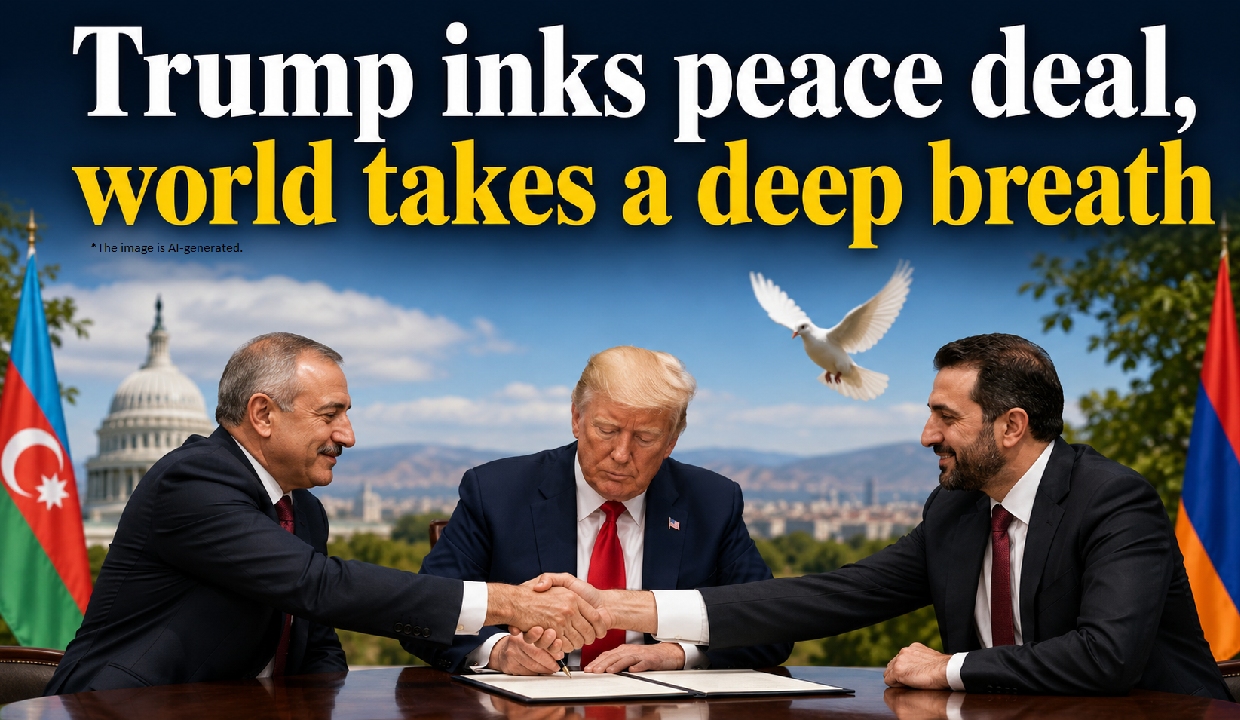
Trump inks peace deal, world takes a deep breath
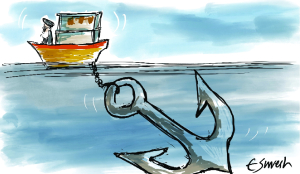
The Washington-Tehran agreement marks the first meaningful diplomatic breakthrough since the devastating US-Israeli strikes of February 28
History rarely arrives neatly. It comes instead in the form of a Truth Social post: “The Deal with the Islamic Republic of Iran is now complete. Congratulations to all!” The 14-point Memorandum of Understanding signed between Washington and Tehran, brokered by Pakistan in what is now called the Islamabad Declaration, is neither a triumph nor a treaty. It is a respite. And in a West Asia that has burned for nearly four months — since the US-Israeli strikes of February 28 that killed Supreme Leader Khamenei and shattered Iran’s military architecture — even a respite deserves acknowledgment.
The agreement asserts that Iran can never develop a nuclear weapon and commits both sides to addressing Iran’s existing enriched uranium stockpile, with the minimum methodology being down-blending on-site under IAEA supervision. Point 5 of the MOU commits Iran to arranging safe, toll-free passage of commercial vessels through the Strait of Hormuz for 60 days.
Point 6 pledges the United States, with regional partners, to develop a reconstruction and economic development fund of at least $300 billion for Iran. Points 9 and 10 establish a status quo freeze — Iran pauses its nuclear programme, the US issues waivers for Iranian oil exports and banking transactions, and frozen Iranian assets are made available for use.
Critically, the framework sets a 60-day window for negotiations to resolve the fate of Iran’s nuclear programme, enrichment levels, and highly enriched uranium stockpiles. Oil prices have already begun retreating from their $100-plus wartime highs towards $74-78 per barrel. Global inflation, supply chains, and energy-importing nations from India to Germany stand to benefit enormously if the Hormuz reopening holds. Markets the world over have celebrated the deal. The Dow hit a record high the day the deal was announced. Though not everyone was happy.
Israel’s Prime Minister Netanyahu, in his first comments on the deal, acknowledged that he and Trump “do not always see eye to eye”, while making clear Israel intends to continue its military occupation of Lebanon, Gaza and Syria. Israel’s ambivalence is a live fault line under this peace.
A memorandum is not a monument. To make this peace durable, several things must follow: the 60-day nuclear negotiations must yield a verifiable, permanent enrichment framework with genuine IAEA teeth; the $300 billion reconstruction pledge must materialise rather than remain a diplomatic abstraction; and crucially, Israel and Hezbollah must be brought formally into a comprehensive regional settlement — because both sides have continued sporadic strikes even after the April ceasefire, and the Lebanon front remains technically outside the MOU’s binding framework. Peace, like all fragile things, requires more care after signing than before. The world has its respite. Now comes the harder work — to prolong it as long as possible.