Tiny Voices, Timeless Echoes: How Children Are Carrying Indian Culture in the Modern Era
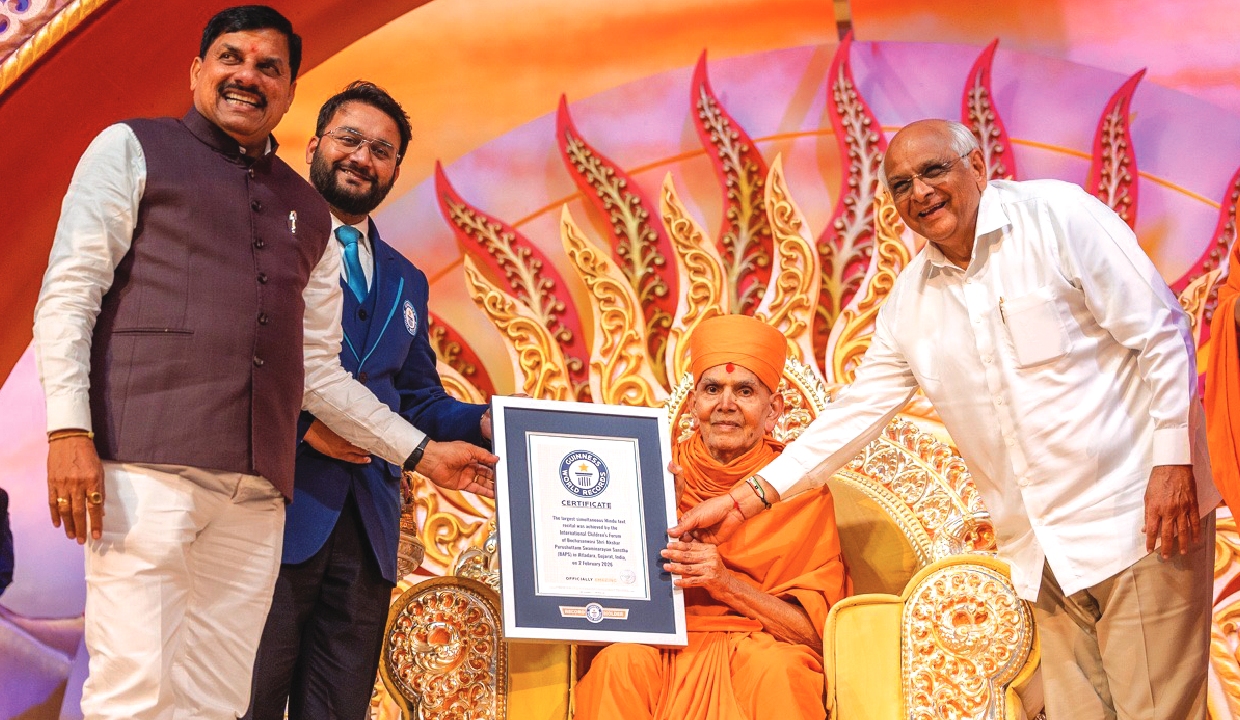
In an age where roots are fading, these young minds quietly hold on to them. Not only learning the Sanskrit language, but also reviving an entire culture. With verses on their lips and values in their lives, BAPS children are quietly taking India’s timeless wisdom to the world. In Vadodara, these young voices rose in unison and quietly entered the annals of the Guinness World Records. Through an extraordinary display of Sanskrit recitation and memorisation, these children transformed devotion into distinction. What echoed that day was not merely sound, but civilisation itself-ancient wisdom flowing through disciplined minds, turning a sacred tradition into a moment of global recognition
In recent years, a subtle yet significant shift away from traditional learning has begun to reshape the educational landscape. The Vice-Chancellor of LBS Central University, Murli Manohar Pathak, says, “With increasing focus on global careers and digital lifestyles, traditional Sanskrit studies and value-based sanskar education are often sidelined. This shift is not sudden, but visible in reduced familiarity with basic prayers, scriptures, and cultural practices.”
In earlier times, recitation and memorisation (kanthpath) formed the backbone of learning within the gurukul tradition. Knowledge was absorbed through listening, repetition, and daily immersion. However, Sanskrit kanthpath, the disciplined memorisation of scriptures, was never meant to be a mere intellectual exercise; rather, it marked only the first step, with equal emphasis placed on living and embodying those teachings in daily life. The values embedded in these verses-truth, restraint, non-violence, compassion, and devotion-were meant to shape daily conduct.
In moments of confusion or hardship, these remembered words naturally resurface, offering direction without external dependence. In this way, kanthpath becomes a lifelong guide. It anchors an individual to cultural roots while providing an inner compass, ensuring that tradition is not just preserved, but actively lived.
Observing this reality, Mahant Swami Maharaj (Head and Guru, BAPS) has emphasised a practical and structured revival of Sanskrit and Sanskriti. On October 25, 2024, Swamiji expressed: “By next Diwali [2025], 10,000 children shall memorise this scripture [Satsang Diksha] in the Sanskrit language.”
The Satsang Diksha, written by Mahant Swami Maharaj himself, is not merely a Sanskrit scripture, but a daily guide to refined living. It gently nurtures values like love, peace, harmony, non-violence, and right behaviour, seamlessly guiding their application in daily life. Rooted in faith and devotion, this scripture beautifully weaves these ideals into a practical code of conduct, inspiring a life of meaningful co-existence and inner refinement.
To fulfil this resolve, the ‘Mission Rajipo’ (to please God) campaign was launched, in which 103 swamis and more than 17,000 volunteers worked with unwavering dedication to make the Guru’s resolve a reality.
The children were eager to accept this guru agya, yet they were scattered across the world, spanning America, Europe, Africa, Australia, and many parts of Asia. Even within India, many studied in English-medium schools and felt more comfortable in English than in Gujarati or Hindi. One can then imagine the challenge for those whose families had lived abroad for generations. Sanskrit, for them, seemed far beyond reach. Its reading, pronunciation, and memorisation appeared almost impossible.
Time posed another test: Swamiji had given just one year. Adding to this was the tender age of the participants; over 4,500 children between three and seven years old. Many were still learning to read, speak clearly, or manage simple daily tasks. Yet, within these challenges, determination, faith, and grace quietly began to grow.
Structured classes soon began, offering clear Sanskrit explanation, guided recitation, and practical support, enriched by personal encouragement and meaningful interaction. Equal care was given to the children’s academic lives. Many centres thoughtfully provided study support alongside memorisation sessions without harming their leisure time. Throughout this journey, Mahant Swami Maharaj offered constant encouragement, while BAPS swamis and dedicated volunteers worked tirelessly to transform this noble vision into a living reality.
As a result, within just one year, a total of 15,666 children, aged 3 to 13 years, memorised all 315 Sanskrit verses of the Satsang Diksha text as a devotional tribute to Guru Mahant Swami Maharaj.
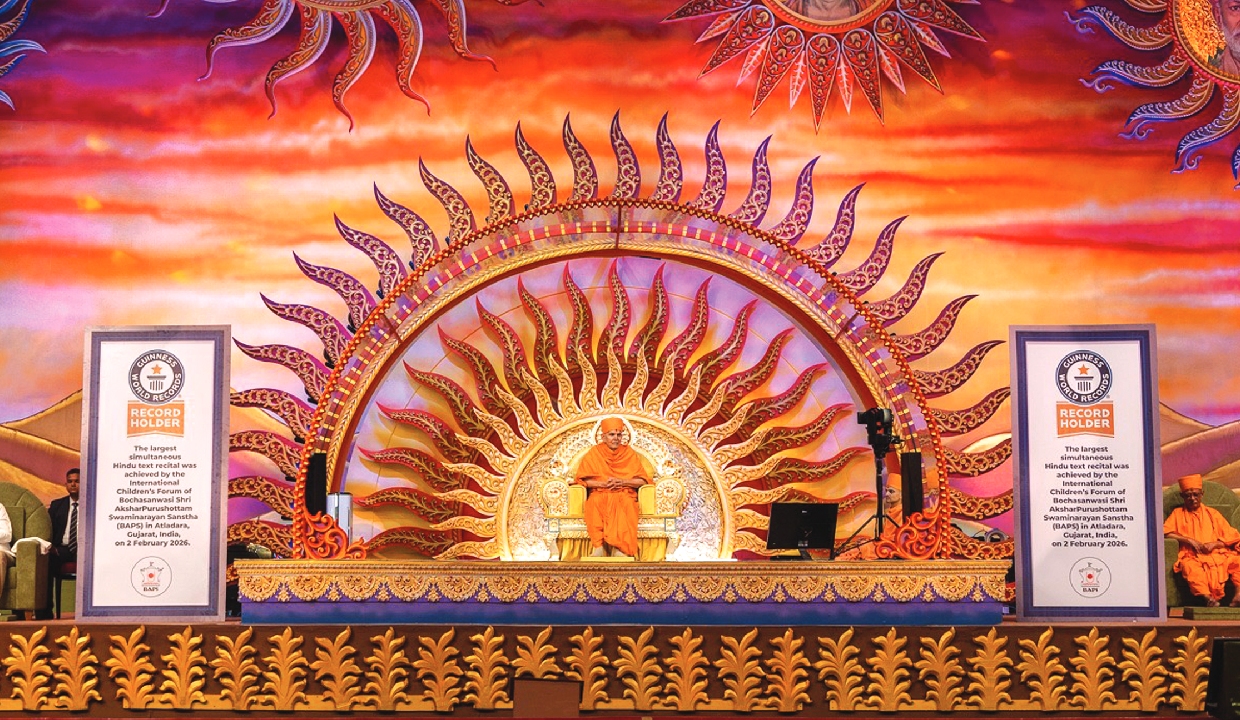
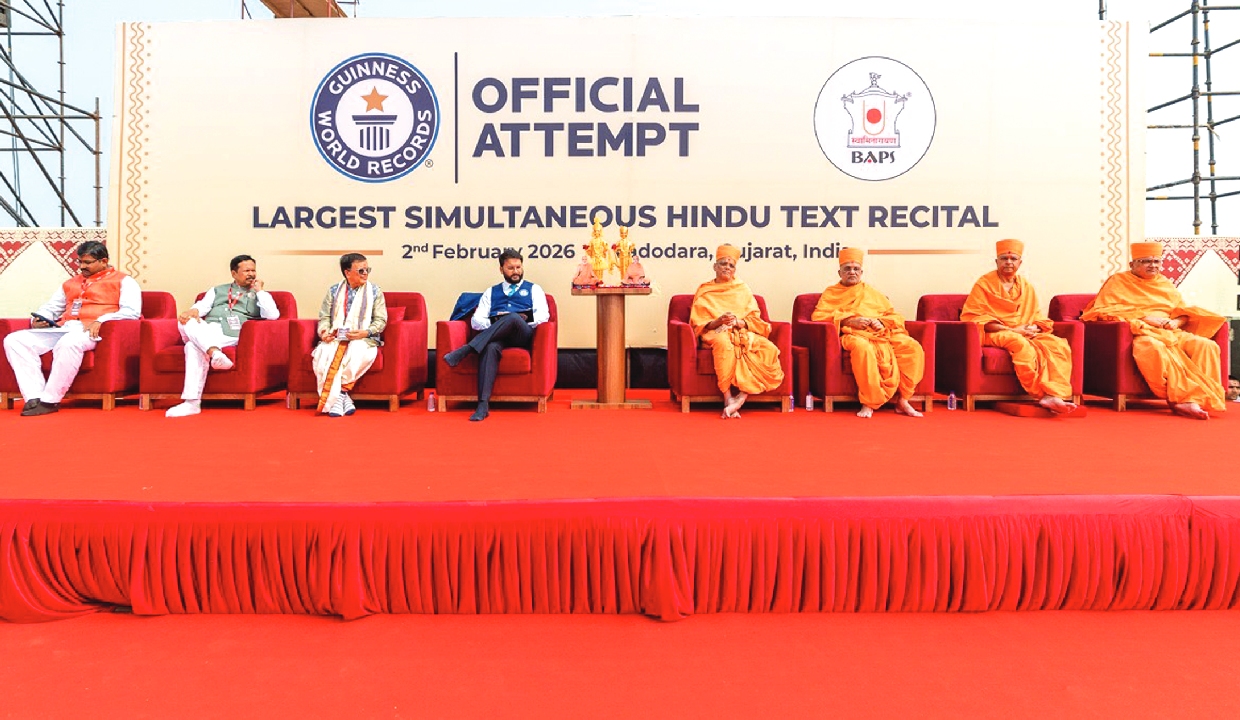
As if history itself sought to mark the occasion splendidly, the sun rose on February 2, 2026, with quiet grandeur. On the sacred 92nd birth anniversary of Mahant Swami Maharaj, 12,723 young scholars gathered in Vadodara and, in one unified voice, recited Sanskrit verses from memory, creating a Guinness World Record for the largest simultaneous Hindu text recital.
In the esteemed presence of adjudicator Swapnil Dangarikar, along with three university vice-chancellors and distinguished dignitaries, the achievement was carefully verified and formally recognised. The moment stood as a historic milestone, not only for BAPS but for the revival and global celebration of Sanskrit and Sanskriti.
This unique initiative has sparked a cultural revival, awakening deep appreciation for Sanskrit among the younger generation while strengthening their memory, focus, and academic growth. It has also nurtured character, instilling values like honesty, non-violence, respect, and patience in thousands of children.
The writer Swami Gyanananddas is a dedicated follower of the Swaminarayan tradition and has earned a PhD from MS University; Views presented are personal.
Leave a Comment
Comments (2)
The Satsang Diksha is where these Vedic values truly come to life. It’s incredible how it condenses the vast wisdom of the Upanishads and Bhagavad Gita into practical daily commands. I feel that reciting these shlokas isn't just about tradition; it’s about aligning our daily actions with the highest spiritual principles. It’s a modern-day guide for anyone looking to live a life of purity and devotion.
The Vedas are considered 'apaurusheya', i.e., not of human origin. Moreover, they have passed through generations, overcoming criticism and agitations, yet they stand stalwart. All of this was possible because of the ancient pāth tradition. Students in gurukuls did recitation (pāth) of the Vedas and eventually memorized them. Today, Param Pujya Mahant Swami Maharaj is revitalizing the same age-old tradition by inculcating it into the new generation—the echoes of which simple yet profound event will change the future of Bharat.