Rekindle The Sense of Sacredness for The Planet
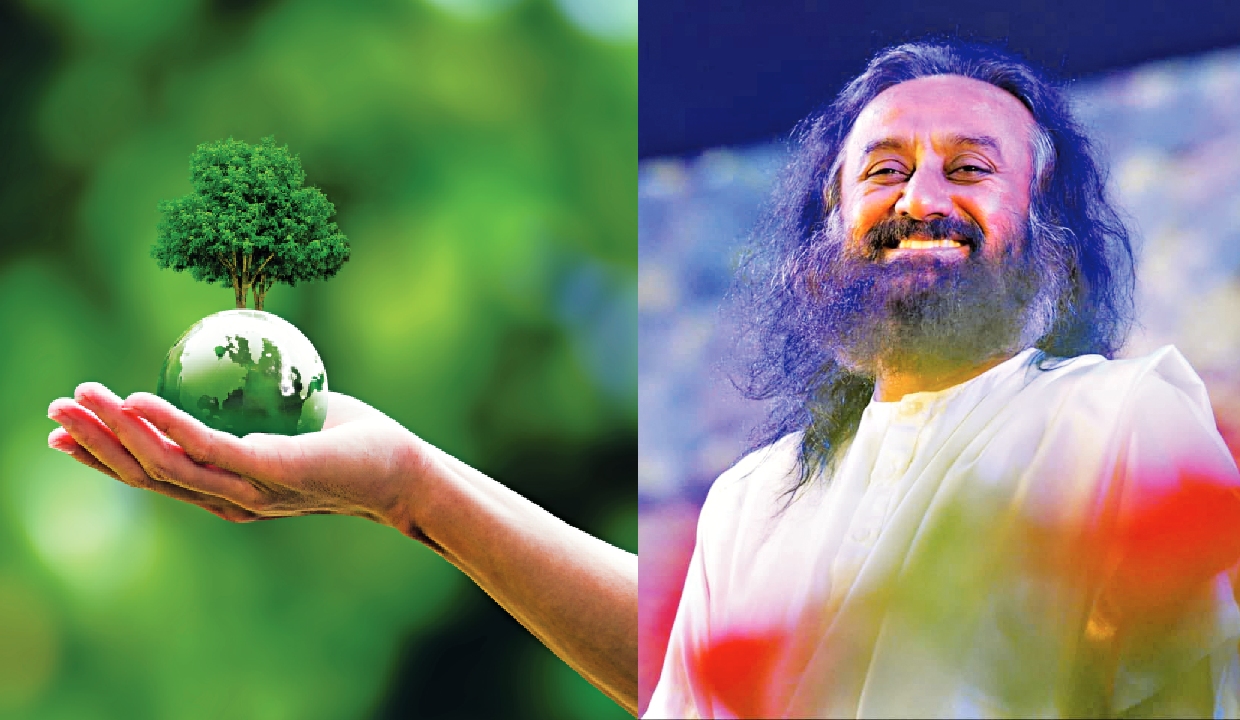
People should be encouraged to treat the planet as sacred, to treat trees and rivers as sacred, to treat people as sacred, and to see God in nature and in people
In many ancient cultures across the world, every morning, before placing their foot on the ground, people would honour the Earth and express gratitude before moving on with their day. This is a very good practice that makes you recognise that the boundary between you and the Earth is an illusion. You are made of the same substance.
Only life can sustain life. According to ancient scriptures, human beings have five sheaths: the environment, the physical body, the mind, the intuitive sheath, and the blissful sheath. The environment is our first body. Historically, nature-mountains, rivers, the sun, the moon, trees, and animals-has always been honoured. It is only when we start moving away from nature that we begin polluting it. We need to revive the ancient practice of honouring and conserving the balance of nature.
But this was not always the case. If you observe indigenous and aboriginal cultures, reverence for nature has always been deeply embedded in their practices. When I travelled through these regions, I saw how much they valued purity in nature, how well they maintained their surroundings, and kept their environment clean. You will not find litter or pollution in these villages. This discipline and care offer an important lesson for modern society.
Ancient cultures across the world considered nature to be alive and expressed gratitude for all its bounties. Natural elements were not seen as inert objects but as living expressions of existence. Everything in nature was considered sacred. Rivers, mountains, the sun, and the moon were all worshipped. This was part of daily life. If you observe children, they talk to the moon; they form a bond with it. Trees, too, were revered as the lungs of our planet. Knowing their importance, ancient Vedic philosophy stated that if one wished to cut a tree, one had to first seek its permission and promise to plant five more of the same kind. The peepal or banyan tree, which releases oxygen throughout the day, was regarded as especially sacred.
A popular belief is that damage to ecology is an inevitable by-product of technological progress. This is a misconception. Science and technology should not be regarded as inherently anti-environment. The purpose of technology is to harness nature and bring information and comfort to human beings. When spiritual and human values are ignored, technology leads to pollution and destruction instead of comfort. We need to find ways to maintain harmony with the environment while advancing science and technology. This is the greatest challenge of this century.
Sustainable development is that which considers the long-term effects and benefits of any programme. Ravaging natural resources without a long-term vision will destroy the ecology, which is the very source of life. The purpose of development should be to support and sustain life. With the bigger picture in mind, all development plans must factor in ecology, social impact, and the effect on the lives and minds of the local population. Then, the process of development becomes a conscious endeavour to preserve the planet and its resources.
When we revere nature, it begins to reveal its hidden wisdom. For example, the five elements appear to oppose each other-water extinguishes fire, fire transforms air-yet they coexist in perfect harmony. Similarly, there are many species in nature-birds, reptiles, and mammals-that may seem hostile to one another, yet they remain in balance. A forest, with all its diversity, remains self-sustaining and free from pollution. We need to learn how nature digests waste and transforms it into something beneficial.
Human beings, however, have not yet mastered the art of living in harmony with nature. This reflects a disconnect from natural intelligence. To restore balance, we must learn from nature not just through observation, but through a shift in consciousness-from selfishness to a sense of belonging with the whole planet. When there is a sense of belonging, care and responsibility arise naturally.
The Earth has been changing constantly, but what humankind has done to the planet is deeply unfortunate. Many of the natural disasters we witness today reflect the imbalance in nature caused by human neglect; what we now call climate change is a manifestation of this deeper disconnect. It is a lack of reverence for nature that has resulted in such insensitivity. A mind that is disconnected, insensitive, or driven by greed inevitably leads to actions that harm the Earth.
Destroying the environment, cutting down trees, dumping toxic waste, and using non-recyclable materials are crimes against the environment, and we need to recognise them as such. The greatest pollutant is not industrial waste alone, but human greed. It hinders the preservation of ecology, placing quick profit and immediate results above sustainable, planet-friendly ways of living. We need to discover ways to protect this beautiful planet Earth. For that to happen, human consciousness must rise above greed and exploitation. Exploitation has two phases: first, the exploitation of others; second, the exploitation of the Earth. This must be checked. For that, human beings need a broader vision and a deeper understanding of life, and of themselves in relation to the cosmos.
Human beings are the only species that pollute the elements of nature. We must stop polluting the Earth with plastic, poisonous fertilisers, and chemicals. There are also many dangers associated with genetically modified food. There is an urgent need to return to natural farming. In India, there is a long tradition of honouring rivers-the water element. Yet today, hardly any river is fit for drinking, even a hundred kilometres from its source. We must stop discharging industrial waste, sewage, and garbage into our rivers. Nor does a river ask for flowers and fruits to be offered to it; what it requires is cleanliness and care. To protect the air element, we need clean energy that can sustain this beautiful creation. The space element, though subtle and beyond our grasp, can be polluted by negativity in the mind. When you free your mind from negativity, you fill that space with joy, confidence, and positive energy.
Who can stop polluting the Earth? Someone who is aware, someone who respects the planet. Respecting the Earth requires a big heart, and respecting inanimate objects requires an even greater one. A certain level of awareness and awakening is essential for this to happen. It is insensitivity that makes a person act carelessly towards the environment. If a person is sensitive, they will nurture the environment and, in doing so, reduce pollution and prevent the degradation of the planet.
Addressing environmental issues, therefore, requires more than policies and regulations. It calls for a transformation in human awareness. When compassion and care are awakened within the self, they naturally reflect in our actions. A sense of sacredness begins to arise towards the Earth, nature, and life itself. When we start seeing the divine presence in trees, rivers, and all forms of existence, our relationship with the Earth changes fundamentally.
The Earth sustains life, and life must, in turn, sustain the Earth. Nature nourishes us, and we must care for it. A healthy future for the coming generations depends on how we treat our environment today. Let us rekindle the sense of sacredness that once guided us to live in harmony with nature.
In nurturing the planet, we nurture life; and in sustaining life, we fulfil our own purpose.
“In nurturing the planet, we nurture life; and in sustaining life, we fulfil our own purpose” — gurudev
Views presented are personal.