The nation progresses when women progress
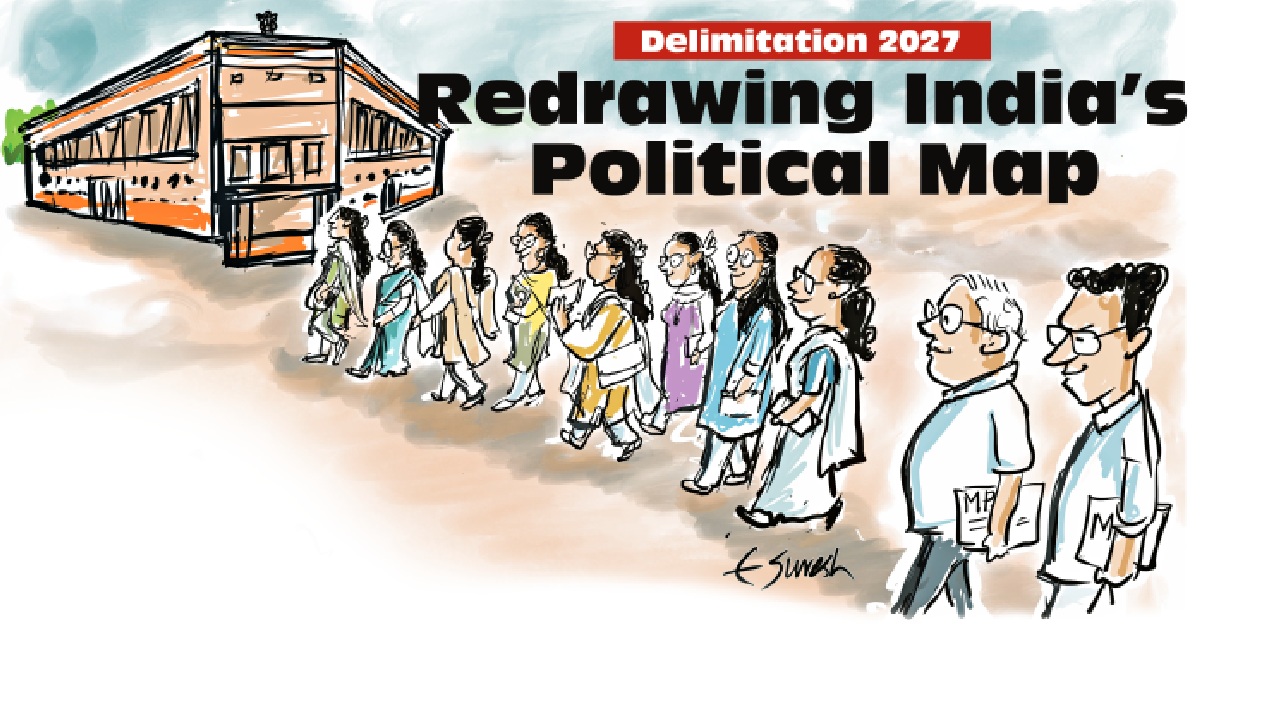
On April 16, Parliament will discuss and pass a momentous women’s reservation Bill. In the words of the Prime Minister, “It is an affirmation of a principle that has long guided our civilisational ethos-that society progresses when women progress.” Women in ancient Bharat were central to the intellectual, spiritual, social, and even political spheres, and their potential was consciously recognised as Nari Shakti: the divine feminine energy that sustains and renews the world.
The Rigveda, the oldest known literary text of the Indian subcontinent (roughly circa 1500-1000 BCE), contains unmistakable evidence of women’s elevated standing. Composed by rishis (seers), it includes hymns by at least 27 named women rishikas, or female seers. As A. S. Altekar notes in his exhaustive survey, such female authorship underscores that women in the early Vedic age “enjoyed a comparatively high status… surpassing contemporary civilisations in ancient Greece and Rome.”
Vedic society recognised two distinct educational paths for women: the Brahmavadini (women who pursued Vedic studies throughout their lives) and the Sadyodvaha (women who studied until marriage). Women who chose the path of lifelong learning were honoured as Brahmavadinis, a term denoting “someone with supreme knowledge” who was considered eligible to teach and debate on the scriptures. These women, also known as Rishikas (female seers), underwent initiation, studied the Vedas alongside men in gurukulas (residential schools), and participated fully in Vedic rituals and sacrifices.
The Rigveda and Upanishads mention numerous such learned women. Maitreyi and Gargi exemplify this intellectual tradition. The participation of women in religious sacrifices, which were crucial in the Vedic worldview, further reinforced their dignity. The Rigveda addresses women as “independent, loving, happy, tolerant, preserver of truth, scholar, learned, and glorious” (eg, Rigveda 5.61.6). No bar existed on their performing rituals or composing mantras. The early Vedic evidence thus shows women contributing to the sacred life of the household and community.
The Vedic speech goddess Vach is celebrated as the source of all utterance and knowledge. Legendary figures such as Gargi and Maitreyi appear as Brahmavadinis-women who debate with learned sages and kings over the nature of Atman (self) and Brahman (the highest power or ultimate reality), thereby embodying the same spiritual competence as their male interlocutors.
Texts such as the Devi Mahatmyam and other Puranic works shape and cement the concept of Devi, who is described as the power that resides in all beings and as the source of both cosmic order and final liberation.
Every woman in this worldview is not just a social actor but a living expression of that Shakti, whether as mother, scholar, queen, or renouncer. In the Epics, figures like Sita, Draupadi, and Savitri are not secondary in the story; they are Dharmic and spiritual agents whose verbal, moral, and yogic profundity directly determines the course of events.
Archaeological finds from Harappan cities such as Mohenjo-daro and Harappa display a remarkable respect for the feminine. The artistic figurines, often interpreted as mother goddesses, pinpoint a culture that saw the female as the source of life, sustenance, growth, and abundance.
Social and legal rights complemented the prominent status of women. Marriage often took place by choice (swayamvara in the epics) or mutual consent in approved forms such as Brahma and Daiva. The eight forms of marriage in the Dharmashastras include Gandharva (love marriage), reflecting agency. Altekar’s chapter on marriage details that early texts permitted widow remarriage (niyoga in limited cases) and emphasised the wife’s central role in the grihastha (householder) stage.
Ancient Indian jurisprudence recognised a distinct category of women’s property known as Stridhana. As documented in legal texts such as the Yajnavalkya Smriti, a woman had inalienable rights over property she received from her father, mother, husband, or brother, as well as gifts acquired during marriage ceremonies.
The Gupta Empire, often hailed as the “Golden Age”, saw women flourishing in the arts. Kalidasa’s works portray women as literate, skilled in painting, and deeply engaged in the aesthetics of the court.
Furthermore, historical inscriptions reveal women in administrative roles. Queen Prabhavatigupta, daughter of Chandragupta II, ruled the Vakataka kingdom as regent for at least twenty years. Her copper-plate inscriptions show her exercising full sovereign power, issuing land grants, and managing state affairs.
As ancient Indian society evolved, scholarly research traces a “chronological decline in their status and function”. This transformation, while gradual, was significant and complex. By the later Vedic period (approximately 1000-600 BCE), women’s presence in rituals was no longer considered necessary. Society became increasingly male-dominated. The marriageable age of girls began to decline. One begins to find clear evidence of restrictions imposed on women as part of the Smriti literature, particularly the Manusmriti (approx. circa 200 BCE-200 CE). This influential legal text outlined binding laws on marriage, inheritance, and female autonomy.
Women were increasingly subordinated to male control, and their educational opportunities contracted. The same legal codes that enshrined Stridhana also increasingly circumscribed women’s autonomy, creating a tension that persisted throughout Indian history.
However, in modern India, today, women have emerged as a transformative force in shaping new Bharat- contributing significantly across political, economic, social, scientific and cultural spheres. Their growing participation reflects not only progress toward gender equality but also a strengthening of the nation’s democratic and developmental foundations. In politics and governance, women have taken on leadership roles at local, state, and national levels. Economically, women are key drivers of growth and innovation. In education and science, Indian women have made remarkable strides. Socially, women play a crucial role in driving change and fostering development. In the armed forces and security services, women are breaking traditional barriers and taking on challenging roles. Similarly, in sports and culture, women have brought laurels to the nation, inspiring future generations and challenging stereotypes.
It is heartening to see that the government has started several programmes and schemes and many more are underway to empower and encourage women to take more decisive roles in the development journey of India.
While these achievements are significant, they represent only the beginning of a larger transformation. To truly dismantle the systemic hurdles of gender discrimination, bridge the gap in access to opportunities, and rectify the stark underrepresentation of women in our political realm, the passage of the women’s reservation bill is not just a policy shift-it is a moral and developmental necessity. By institutionalizing the role of Nari Shakti at various levels of governance, we will infuse national progress with diverse perspectives and equitable leadership. This act of restorative justice will grant women their rightful place finally fulfilling the egalitarian vision of our constitutional framers and ensuring a future where progress is defined by the participation of all.
The author is a Former Chairman, Haryana Public Service Commission, Chairman, Haryana Electricity Regulatory Commission, DG-ITBP, DG-NDRF and Commissioner of Police, Kolkata. He is Director, Bharat Ki Soch. His views are personal.