Fleeting Emotions, Meandering Lives: ‘Ek Tarengan, Do Tarengan’
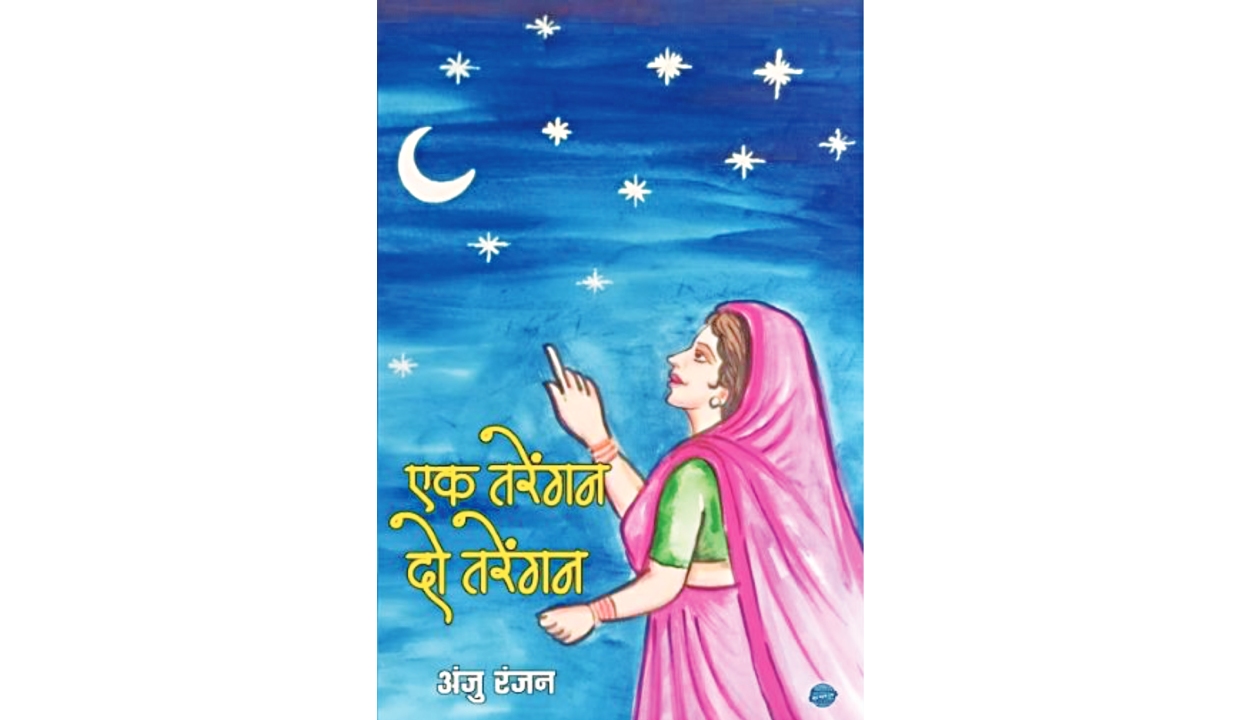
Author-Diplomat Anju Ranjan’s ‘Ek Tarengen, Do Tarengen’ is an evocative ensemble of stories deeply anchored in human emotions
Life abhors linear narratives; it likes meandering curves. And by doing so, in a way, it prepares us to face uncertainties, away from the comfortable and familiar rhythm of daily life. Alas! We always remain unprepared. Yet, the journey gives rise to a web of emotions that defines not just our personality but also our relationship with family as well as society. Author-diplomat Anju Ranjan’s characters in her deeply intimate collection of stories, Ek Tarengen, Do Tarengen, live in different geographies, cultures, and life phases, oscillating between enduring melancholy and sensory elation.
The collection of 10 stories gives us not just a peek into the lives of the characters but also enough opportunity to be part of their individual journeys. Evocatively expressed through the eyes of female protagonists, the stories unravel deeper layers of emotion, resilience, and quiet strength.
What makes Ranjan’s storytelling deeply personal and engaging is the introduction of each and every character. Irrespective of the temporal and spatial existence of the story, the characters look familiar and personal, charmingly inviting the reader into their inner selves. Their lives are far from perfect, marred by contradictions, swinging heavily between the freedom to dream and the pressure to compromise. Her female characters are strong-even when they choose death or are forced to die. Love, longing, trust, aspirations, and a deep desire to remove the shackles of societal imposition give characters like Reema, Rekha, Meeta, Sarika, and Swati a distinct voice and the confidence to take decisions they have been contemplating in their inner selves.
“The Funeral Service” lays threadbare the incongruity of emotions in an intimate relationship between a husband and wife of forty years. The hollowness of social ceremonies, together with the pain of self-inflicted detachment, makes Swati a vulnerable soul and leaves a deep scar on the reader. In “Aansu na Behne Dena”, the lives of Reema, Amit, Akash, and Swati are so deeply interconnected that it becomes difficult to identify who should be blamed. In contrast, “Parem ki Khatir” makes it impossible for the reader to resist rebuking and punishing Bhuvan for stifling the vivacious life of Rekha. Amidst this raging anger for Bhuvan, the ‘sin’ committed by Pahun of bringing Rekha into an illicit relationship remains away from memory.
From Glasgow to Barcelona and Hazaribagh, the deep-rootedness of the stories in societal contexts, as well as diverse emotions, makes the reader actually enter the family and community of the characters. So immersive is the experience that sometimes knowing the name of the character does not seem important for the continuity of the narrative. As happens in “Love in Hazaribagh”, where the social complexity in the relationship between an Oraon tribal boy and a Rajput girl has been so vividly expressed that the name of the girl, ‘Sushma’, appears only once, quite late in the story. Yet, as readers, we seem to have known her since the beginning.
Ranjan’s female characters are not just individuals drifting into the unexpected, alone and helpless, but each time they emerge as the ones steering the direction of their lives. Be it Mukti in Mukti or Sarika in Golden Jubilee Talak. Stories like “Mushroom Picking” and “Bread-Jam” show how revenge-instant or long-drawn-is a deeply human impulse, born out of hurt, distrust, and injustice. For Meeta, the decision not to eat bread-jam becomes the best form of revenge; it turns into a driving force that she wants to keep alive. In “Tumhe Kaise Na Karun”, Ranjan tries to bring in the impact of social media, weaving a story of romance, tragedy, and hope. Meanwhile, in “Aisa Kyon Hota Hai?”, the sense of unease, moral disquiet, and the hollowness of social engagements, as reflected in the lives of Fatima and Yakub, compel the reader to pause and reflect. EkTarengan, Do Tarengan not only leaves readers with deep thoughts but also gently urges them to explore the intricate web of their own emotions.
The book reviewer is the Director of the African Centre of India, an independent think tank; Views presented are personal.