Rabindranath Tagore jayanti: A celebration of literature, culture, and Bengal’s living cuisine
Rabindranath Tagore Jayanti is not merely the commemoration of the birth anniversary of one of Bharat’s most luminous minds, but a celebration of the spiritual and humanistic milieu he inspired. A poet, philosopher, composer, educationist, artist, and institution-builder his work continues to shape the moral and cultural imagination of the nation. He was the first non-European to win the Nobel Prize in Literature in 1913 for his collection of poems, Gitanjali: Song Offerings, and is credited for composing India’s national anthem, ‘Jana Gana Mana,’ besides Bangladesh’s, ‘Amar Shonar Bangla.’ During his lifetime, he pioneered a holistic, nature-based education, in Shatiniketan that blended the best of Eastern and Western ideals that continues to be nurtured till the present time.
Born on 7 May 1861, corresponding to 25 Boishakh in the Bengali calendar, at the Jorasanko Thakur Bari in Kolkata, Tagore belonged to a family that stood at the heart of Bengal’s intellectual and cultural renaissance. The Tagore household was not merely a residence, but a centre of music, literature, theatre, reformist thought, and artistic exchange. Over time, his legacy came to be associated not only with literary genius, but also with a refined way of living in which art, nature, education, hospitality, and simplicity were held together. Rabindra Jayanti, therefore, is observed with both reverence and warmth not only in his birthplace but across the nation with cultural pride, affection, and collective memory.
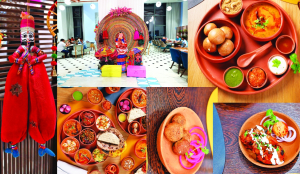
The special occasion invites a distinctive cuisine known for its refinement and celebration of Bengali taste and seasonal sensitivity. Rice, lentils, vegetables, fish, curd, mango, coconut, milk, and cooling drinks form its core and unfolds gradually, course by course, allowing each preparation to be admired and relished as part of our common civilization.
A traditional meal often begins with shukto, one of Bengal’s most distinctive preparations. Made with bitter gourd, raw banana, drumstick, potato, brinjal, and sometimes bori (sun-dried dumplings made with ground lentils), it is cooked with a mild, creamy base flavoured with mustard, ginger, and a touch of panch phoron (whole spice blend of cumin, mustard, fenugreek, nigella and fennel). Served with plain steamed rice, shukto reflects the Bengali understanding that a meal should begin with restraint before moving toward richness.
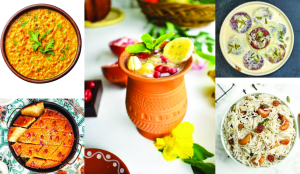
From there, the meal moves naturally toward lentils and vegetable preparations that give it a nutritious foundation. Bhaja moong dal is made by dry-roasting split yellow moong dal before cooking it with a tempering of cumin, ginger, bay leaf, and ghee that lifts the dish without making it heavy. Cholar dal brings a more festive note, prepared from Bengal gram and often enriched with pieces of coconut, raisins, bay leaf, cumin, dried red chilli, and ginger. These dals appear as dignified dishes with their own personality and not as mere accompaniments. They provide not only comfort and nutrition but add to the mood of celebration.
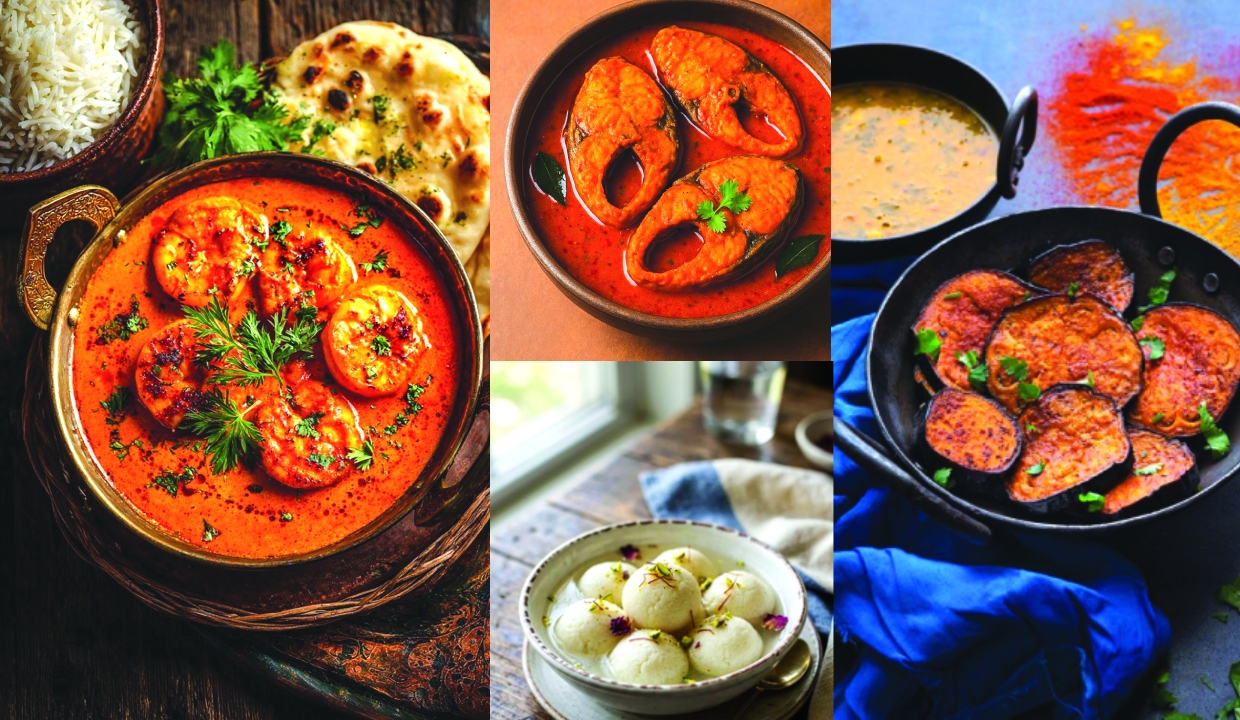
Vegetables play an equally important role, and begun bhaja is among the simplest yet most relished preparations on the menu. Brinjals are sliced and sprinkled with turmeric and salt, sometimes lightly dusted with rice flour, and shallow-fried till they are crispy on the edges while retaining a softer texture. It accompanies dal and rice, and provides a savoury contrast with its smoky taste. Aloo posto, cooked with a paste of poppy seeds, green chillies, and mustard oil, creates a dish that is creamy, nutty, and gently pungent. It is especially suited to the summer months because it is light, cooling, and deeply comforting.
Mochar ghonto adds a more elaborate vegetarian dimension. Prepared from banana blossoms, it requires patience, as the florets must be cleaned carefully before being chopped and cooked with potatoes, coconut, spices, and sometimes chickpeas. The result is earthy, fragrant, and layered. The dish reflects Bengal’s gift for transforming humble ingredients into something festive and dignified. Similarly, dhokar dalna, made from steamed and fried cakes of ground chana dal cooked in a light gravy, offers richness and a healthy dose of proteins. The meal then expands into more festive territory with luchi and alur dom, a combination beloved across Bengal. Luchi is made from refined flour kneaded into a soft dough, rolled into small discs, and fried until it puffs into delicate golden rounds, while alur dom, prepared with potatoes simmered in a spiced tomato or yogurt-based gravy, provides warmth and aroma. The potatoes absorb cumin, ginger, chilli, and garam masala, becoming rich without losing their homely character. Together, Luchi and Alur Dom carry the comfort of Bengali hospitality, where guests are welcomed with familiar dishes prepared carefully and served generously.
Basanti pulao gives the meal a more ceremonial feel. Made with gobindobhog rice, known for its aromatic, fragrant and sticky texture, it is ideal for festive dishes like pulao, biryani, and payesh (rice pudding). Cooked with ghee, turmeric or saffron, bay leaf, cinnamon, cloves, cardamom, cashews, and raisins, it is mildly sweet, and visually festive especially suited to celebratory meals and pairs well with richer dishes. On Rabindra Jayanti, where the mood is one of refinement rather than loud festivity, basanti pulao sits naturally within the meal, graceful, fragrant, and quietly celebratory.
Fish remains central to the Bengali festive imagination, and macher jhol is among its most recognizable expressions. Prepared with rohu, katla, or other freshwater fish, the curry is usually light, flavoured with turmeric, cumin, ginger, green chilli, and sometimes tomatoes or vegetables such as potato and cauliflower. On a warm May afternoon, macher jhol speaks of Bengal’s riverine culture, where fish is not an occasional luxury, but a marker of daily life, ecology, and identity.
The connection between the Bard and his fondness for fish, finds its way into the famed Bengal’s cuisine through the recipes of the Thakurbari, the Tagore family home. In this context, ilish mach, or hilsa, acquires special significance. Preparations such as doi ilish, cooked in a gently spiced yogurt gravy, and ilish narkol dudh diye, prepared with coconut milk, reflect the refined balance of richness, delicacy, and seasonal taste associated with Bengali cooking. Their inclusion gives the Rabindra Jayanti table a deeper historical resonance, linking the festive meal not only to Bengal’s riverine identity, but also to the remembered culinary world of Jorasanko.
For a richer preparation, chingri malai curry brings elegance to the table. Prawns are cooked in coconut milk with whole spices, ginger, turmeric, and a gentle sweetness that gives the dish its signature softness. The gravy is creamy but not aggressive, allowing the sweetness of the prawns to remain central. Paired with basanti pulao, it creates a sense of occasion while preserving the grace associated with Bengali dining. Another treasured preparation is paturi, in which fish fillets, often bhetki or hilsa when available, are coated with a paste of mustard, green chilli, coconut, turmeric, and mustard oil, then wrapped in banana leaves and steamed or pan-cooked. When opened at the table, the banana leaf releases a warm fragrance, and the fish remains moist, sharp, and aromatic. Paturi is almost poetic in its method, revealing its beauty only when unwrapped and shared.
In many homes, kosha mangsho may also appear, particularly when the celebration becomes a larger family gathering. Mutton is slow-cooked with onions, ginger, garlic, yogurt, and spices until the gravy turns dark, thick, and deeply flavoured. It is not a dish to be rushed. Its richness comes from time, patience, and careful stirring, as the meat absorbs the masala and becomes tender. Served with luchi, pulao, or rice, kosha mangsho adds grandeur to the festive meal. Yet evenhere, the Bengali table retains balance, as heavier dishes are often placed alongside lighter vegetables, dal, chutney, and curd.
No Bengali celebration feels complete without chutney, and on Rabindra Jayanti, mango chutney is especially appropriate because of the season. Raw or semi-ripe mangoes are cooked with sugar or jaggery, panch phoron, dried red chilli, and sometimes raisins or dates. The result is sweet, tangy, and gently spiced. Traditionally served toward the end of the savory course, mango chutney prepares the palate for sweets. Tomato khejur chutney, made with tomatoes and dates, may also be served, offering a glossy, sweet-sour finish. These chutneys are not merely condiments. They mark the transition from the meal’s savory movement to its sweeter conclusion.
The sweet course is where Bengal’s culinary imagination becomes especially expressive. Payesh, made by slow-cooking rice in milk with sugar or jaggery, cardamom, bay leaf, and sometimes nuts and raisins, is among the most cherished preparations. In many Bengali homes, payesh is associated with birthdays, auspicious beginnings, and affectionate remembrance, making it particularly meaningful on the birth anniversary of Rabindranath Tagore. Served in small bowls, it carries the warmth of blessing and memory.
Sandesh, made from fresh chhena kneaded with sugar and shaped into delicate forms, is another essential sweet. It may be plain, flavoured with cardamom, decorated with pistachio, or infused with seasonal mango. Unlike heavier sweets, sandesh is soft, elegant, and lightly sweet, reflecting the refined taste often associated with Bengal’s cultural gatherings. Rasgulla, prepared from chhena balls cooked in light sugar syrup, brings a different kind of joy. Its spongy texture and syrupy sweetness make it one of Bengal’s most famous offerings, and it remains a favourite at public functions and household celebrations alike.
Mishti doi adds coolness and depth to the sweet spread. Milk is reduced, sweetened with caramelized sugar or jaggery, and then set with curd culture until it becomes thick and creamy. Served chilled, it is especially welcome in May, when the heat calls for cooling foods. Pantua, made from chhena or khoya, shaped into balls, fried, and soaked in sugar syrup, brings a richer sweetness to the table. Malpua, prepared from a batter of flour, milk, fennel, and sometimes mashed banana, is fried and dipped in syrup, creating a dessert that is crisp at the edges and soft within. Patishapta, a delicate crepe filled with coconut and jaggery or kheer, may also be included in homes that enjoy bringing a wider range of traditional sweets to the occasion.
Aam doi, made by blending mango pulp with sweetened curd, offers a seasonal variation that feels both festive and refreshing. The beverages of the day complete the summer character of the celebration. Aam panna, made from roasted or boiled raw mango pulp, sugar, salt, cumin, and mint, provides relief from the heat while echoing the seasonal presence of mango. Gondhoraj lebu sharbat, prepared with the fragrant Bengali lime, water, sugar, and a pinch of salt, is light, aromatic, and refreshing. Bel sharbat, made from the pulp of wood apple, is valued for its cooling quality and is often consumed during the hot months. Daab er jol, or tender coconut water, offers natural simplicity, while ghol, a lightly salted or sweetened buttermilk, helps balance a rich meal. Tea remains part of Bengali cultural life as well. A cup of masala chai or lightly brewed milk tea may accompany morning rehearsals, poetry readings, or evening gatherings, connecting the formal observance of the day with everyday conversation.
Though enjoyed throughout the year, this cuisine acquires a deeper cultural and emotional resonance during the celebration as it is prepared with memory and sensitivity. There is respect for the season, affection for guests and, importantly, pride in regional inheritance. In its progression, one sees the spirit of Bengal itself, thoughtful, artistic, hospitable, and deeply attached to memory.
Rabindranath Tagore gave India and the world a language of beauty, freedom, and human dignity. His Jayanti reminds us that culture is not preserved only in books, songs, and institutions, but also in the everyday practices through which families remember, gather, cook, serve, and share. The meal prepared on this day becomes a tribute not only to Gurudev’s genius, but also to the civilization that nurtured him. I believe that at a time when inherited traditions are often reduced to occasional remembrance, Rabindra Jayanti offers an important call to action and reminds us to preserve the songs, stories, recipes, languages, and customs that have shaped our collective identity, and to pass them on with care to future generations. To celebrate such cuisine, therefore, becomes our shared responsibility to honour the past, enrich the present, and ensure that the cultural inheritance of Bharat remains alive in the homes and hearts of those who will carry it forward.
The writer is Secretary, Cuisine India Society; Views presented are personal.