Buddha Purnima: The cuisine of compassion, restraint, and shared nourishment
Buddha Purnima, commemorating the birth, enlightenment, and Mahaparinirvana of Gautama Buddha, is observed across India with a quiet reverence that reflects the spirit of his teachings. Unlike many festive occasions marked by grandeur and indulgence, this day is distinguished by simplicity, restraint, and a conscious return to purity, in thought as much as in food. The cuisine associated with Buddha Purnima is therefore not merely about nourishment, but about embodying the ideals of moderation, compassion, and mindfulness. From monasteries in Bodh Gaya to households across diverse regions, the day is marked by offerings and meals that are sattvic, unpretentious, and deeply symbolic. In its culinary expression, Buddha Purnima becomes a lived reminder that sustenance, when approached with awareness, can itself be an act of devotion.
Gautama Buddha's life gives this observance its deepest meaning. Born as Siddhartha in Lumbini and raised amid princely comfort, he was nevertheless moved by the realities of suffering, illness, old age, and death. Renouncing privilege in search of truth, he passed through years of severe austerity before realising that neither indulgence nor extreme self-denial could lead to lasting wisdom. That insight guided him towards the Middle Path, and under the Bodhi tree at Bodh Gaya, he attained enlightenment. Over time, the day commemorating this sacred journey came to be observed through rituals and customs that reflect the essence of his teachings. Devotees visit monasteries, recite scriptures, perform acts of dana, and offer flowers, incense, and lamps before his images. Monasteries and temples reverberate with chants and hymns, lamps are lit by devotees often dressed in white to symbolise the purity of their purpose, monks are offered food and alms, the needy are fed and offered refreshments, and animals are treated with compassion in recognition of the equality of creation. The mood is one of humility, restraint, and generosity. It is within this framework of reflection that the cuisine of Buddha Purnima emerges, not as a celebration of abundance, but as an expression of balance, purity, and simple sustenance.
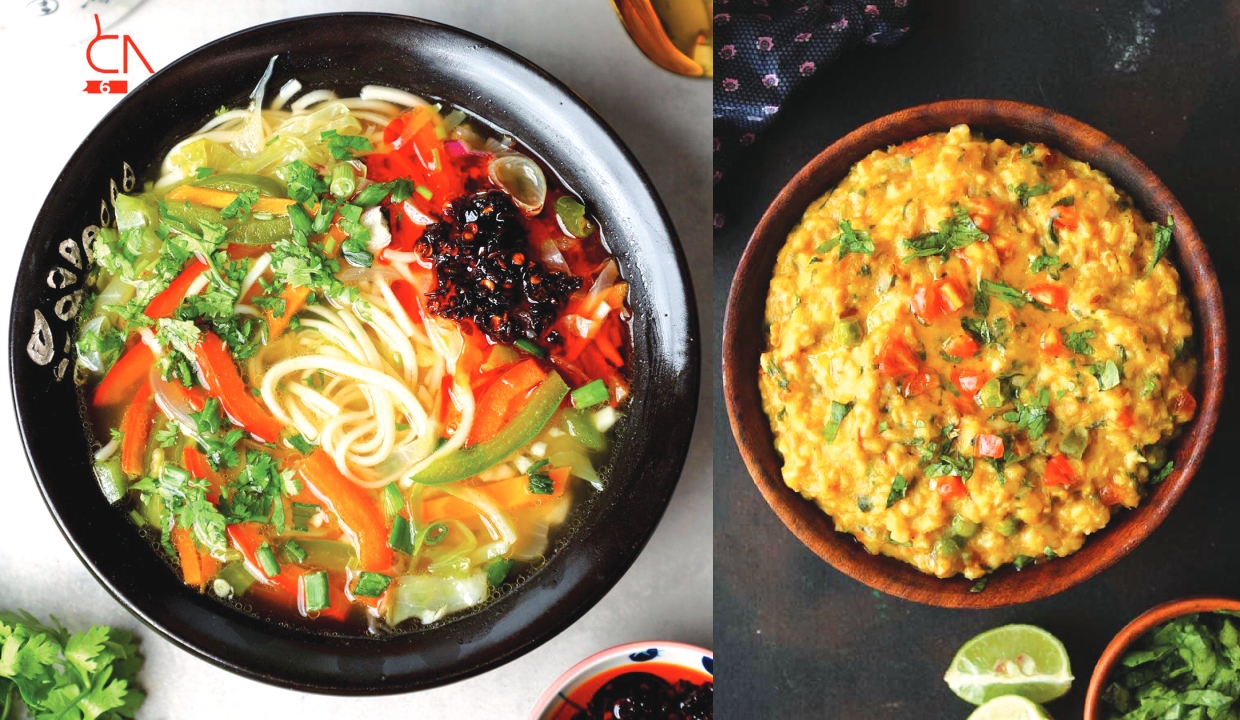
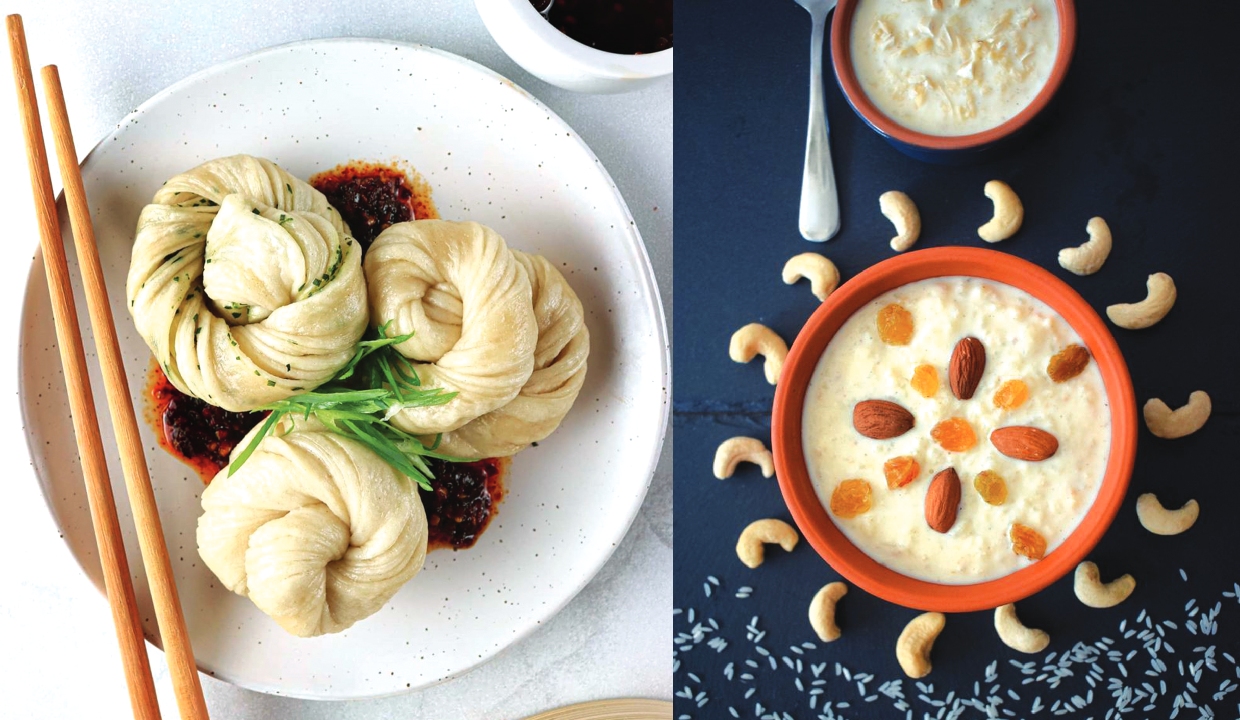
In the sacred geography stretching from Bodh Gaya to Kushinagar, the cuisine of Buddha Purnima finds its most direct and symbolic expression. At the heart of this culinary tradition lies kheer, associated with Sujata, a village woman who encountered Gautama Buddha during his period of severe austerities near Bodh Gaya. Seeing his weakened state, she offered him a bowl of milk-rice, prepared as a simple, nourishing repast. This act is regarded as deeply significant, for it marked a turning point, prompting the Buddha to move away from extreme asceticism and embrace the Middle Path. Prepared by slowly simmering rice in milk until the grains soften and the mixture thickens into a creamy consistency, it is then lightly sweetened with sugar or jaggery, with cardamom added for a gentle aroma. The dish is cooked over a low flame with continuous stirring, allowing the flavours to develop gradually without becoming heavy or overly rich. Alongside it, dishes such as lapsi, made from broken wheat and jaggery, offer a coarse, grounding texture, emphasizing substance over refinement. Boiled gram, soaked and cooked until tender, is shared as prasad. Khichdi, a soft blend of rice and lentils, further reflects this ethos, cooked with minimal seasoning to ensure digestibility and balance. Seasonal vegetables, lightly steamed or boiled, and fresh fruits consumed in their natural form complete the meal. Taken together, these preparations form a culinary language that is quiet yet profound, where food aligns with a discipline of moderation and mindful living.
In the Himalayan regions, where Buddhist monastic traditions continue to shape daily life, the cuisine of Buddha Purnima takes on a distinctly functional and climate-responsive character. In places like Ladakh, the Buddhist pockets of Himachal Pradesh and Sikkim, food is closely tied to sustenance in a demanding environment, and this practicality aligns naturally with the philosophical emphasis of the day. The preparations here are simple, but carry a quiet robustness, shaped by both geography and monastic discipline. Barley, a staple grain of the region, forms the basis of many preparations. Tsampa, made from roasted barley flour, is consumed in its most basic form, mixed with water (or sometimes tea) and kneaded into a soft dough-like consistency. It may be shaped into small portions and eaten directly. Light seasonal vegetable broths and simple noodle-based dishes, often resembling a toned-down thukpa, are also prepared. They consist of a light broth with diced vegetables and soft noodles, seasoned gently so that the flavours remain clear and unobtrusive. The use of spices is restrained, allowing the natural flavours of the ingredients to remain undisturbed. In many Himalayan communities, especially in colder regions like Ladakh, versions with meat, such as chicken, mutton, or yak, are quite common, as they provide greater warmth and sustenance. However, on occasions like Buddha Purnima, the preparation is typically kept vegetarian, aligning with the day's emphasis on compassion, restraint, and sattvic simplicity.
The wider food culture of these regions also includes preparations such as tingmo, the soft steamed bread that pairs easily with simple vegetables and soups. In some areas, momos may also be prepared, especially vegetable filled versions whose communal preparation carries its own sense of togetherness. None of these foods are considered specific to the festival but assume a special place during this austere period. Their warmth suits the climate, their simplicity suits the occasion, and their textures suit a mode of eating that is meant to sustain rather than stimulate. Fresh fruit also has a meaningful place, both as an offering and as food that preserves purity in its simplest form. Taken together, these foods form a culinary language of quiet strength. They do not seek to impress. They seek to align eating with mindfulness.
Western India presents a different but equally revealing expression. In Maharashtra and Gujarat, the cuisine associated with Buddha Purnima is less tied to a distinct Buddhist ceremonial tradition and more to an already familiar culture of dietary restraint. In these regions, the day resonates easily with the logic of light fasting foods and measured eating. That is why dishes such as sabudana khichdi are suitable on this occasion. Soft tapioca pearls, peanuts, and mild seasoning create a preparation that is both filling and gentle. It gives energy without heaviness and satisfaction without indulgence. Similarly, simple boiled potatoes, lightly roasted potato preparations, and small peanut based dishes can form part of the meal because they preserve the principle of control rather than abundance. Simple preparations like batata bhaji (lightly sauteed potatoes) and shengdana chi amti (a mild peanut-based curry) often find a place in meals. Batata bhaji is made by boiling or parboiling potatoes, then lightly sauteing them with minimal seasoning like cumin and a touch of turmeric, taking care to keep the flavours gentle and unobtrusive. Shengdana-based preparations, whether as a thin curry or a dry paste, use ground roasted peanuts mixed with water and mild spices, cooked briefly to form a light, nutty accompaniment that is both sustaining and easy to digest. Rich in protein, healthy fats, and antioxidants, shengdana is known to support heart health by managing cholesterol. Together, these dishes reflect a balance of simplicity and nourishment, offering substance without departing from the day's ethos of moderation. These foods are not elaborate, but are thoughtfully composed to provide energy without heaviness.
What matters in this western expression is not whether a dish is uniquely marked as Buddha Purnima food, but whether it fits the contemplative discipline of the day. The cuisine here tends toward the practical. Even when there is variety, it remains within an ambit of simplicity. Seasonal fresh fruit, light yogurt based accompaniments, or mild preparations made from ingredients already familiar to fasting traditions are also used.The result is a table that neither imitates the symbolic centre of Bodh Gaya nor the monastic austerity of the Himalayas. Instead, it reveals how Buddha Purnima can enter an existing regional habit of disciplined eating and give it a more reflective and ethical emphasis. In eastern India, particularly in West Bengal and Odisha, the cuisine of Buddha Purnima carries a quieter refinement. The underlying values remain the same, but the region's long familiarity with rice based sweets, devotional offerings, and temple linked food traditions gives the observance a distinct tone. Here, the milk and rice grammar associated with the Buddha's story naturally takes the form of payesh, the eastern variation of kheer. Delicately sweetened and often perfumed with cardamom or bay leaf, payesh carries the same symbolic gentleness, but with a regional flavour of its own. Alongside it, chuda or flattened rice preparations fit the day beautifully because they are light, easy to prepare, and suitable for both offering and consumption.
In parts of West Bengal, mishti chaler payesh, made from aromatic small-grain rice, is sometimes preferred. Doodh-chire, flattened rice soaked in milk with a hint of jaggery, is also served as a softer, cooling preparation suited to the season. In Odisha, temple-influenced traditions occasionally include very simple forms of manda pitha or kakara pitha, prepared without elaborate fillings or richness, keeping them aligned with the day's sattvic discipline. Another quiet inclusion is gopal ballabh style offerings, a combination of fruits, lightly sweetened dairy, and simple grains thus reflecting the broader temple culture of offering unadorned, balanced foods.
Southern India offers another important variation. In Karnataka, Tamil Nadu, Andhra Pradesh, and neighbouring regions, the cuisine associated with Buddha Purnima aligns closely with established traditions of sattvic and temple style cooking. The festival may not occupy the same historical place in the south that it does in the Buddhist heartland, yet its observance fits comfortably within culinary habits that already honour purity, digestibility, and balance. Pongal, the soft combination of rice and lentils, is especially apt in this context. It is wholesome, satisfying, and gentle on the body. Around it, one may find lightly cooked vegetable dishes, modest lentil accompaniments, and simple rice preparations seasoned just enough to preserve flavour without pushing toward heaviness. Coconut may appear, but sparingly, as part of the region's natural culinary vocabulary rather than as ornament. The meal supports prayer, calm, and continuity. In that sense, Buddha Purnima in the south is not marked by culinary exceptions, but by a deepened return to principles that temple and household kitchens have long known well. Across all these regions, beverages continue the same logic as the food. Since Buddha Purnima falls in the heat of late spring, drinks tend to be cooling, simple, and restorative. In the north, sattu-based drinks fit naturally into the season, offering steadiness and nourishment without weight. Elsewhere, one may find chaas, mild lemon-based refreshments, and lightly sweetened summer drinks that calm the body rather than excite it. Plain water distributed to pilgrims and visitors may appear simple, yet on a day defined by dana and compassion it carries its own significance.
When one looks at Buddha Purnima region by region, its cuisine reveals unity not through uniformity, but through moral continuity. The Gangetic heartland gives the day its most direct symbolic food memory in kheer and its ethic of nourishing balance. The Himalayan belt expresses Buddhist restraint through tsampa, broths, and warming, practical foods such as thukpa and tingmo. Western India brings the discipline of moderated eating into conversation with the observance through dishes like sabudana khichdi and light potato preparations. Eastern India refines simplicity into offering through payesh, chuda, and delicately handled rice and vegetable foods. Southern India absorbs the day into long-standing traditions of sattvic harmony through pongal, gentle vegetables, and restrained lentil-based preparations. The dishes vary, but the principle remains uniform.
In an age when celebration is too often measured by display, Buddha Purnima offers a different civilisational lesson. It reminds us that a meal need not be excessive to be meaningful, and that regional culinary traditions can carry civilisational memory as powerfully as rituals or texts. To preserve such food cultures is not merely to preserve inherited recipes. It is to carry forward a way of thinking rooted in the philosophical depth and moral clarity of the Buddha's teachings. This is a legacy that we, as inheritors of a living civilisation, are duty bound to honour and transmit to future generations. Across regions, mindful eating is not a denial of life, but an affirmation of moderation, balance, and inner discipline. In that balance, the kitchen continues the work of memory, devotion, and civilisational continuity.
The writer is Secretary, Cuisine India Society; Views presented are personal.