Time to perform or perish
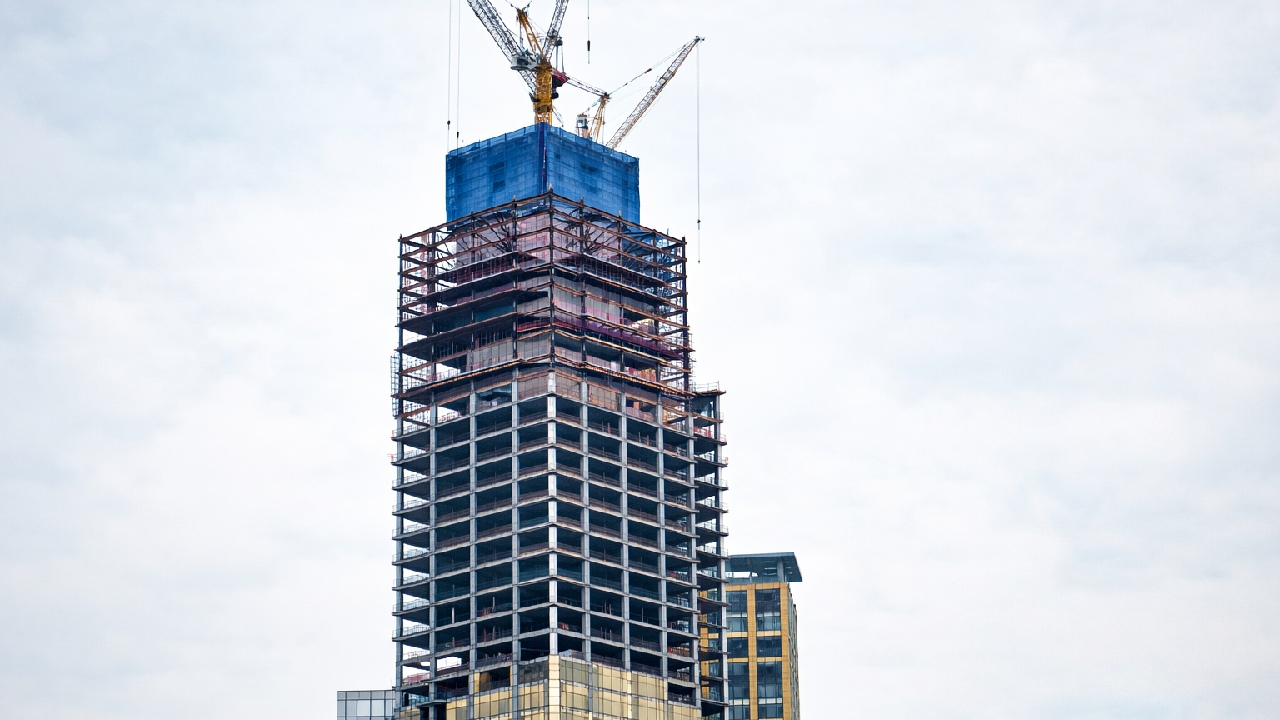
The Supreme Court recently issued strong criticism of RERA, suggesting it primarily benefits defaulting builders and questioning its continued existence. This stems from a case involving Himachal Pradesh RERA, amid a history of real estate woes triggered by tax incentives. RERA was enacted to curb builder malpractices, but faces challenges in implementation and constitutional scrutiny.
Tax incentives spark a boom
Section 80-IB(10) of the Income Tax Act, 1961, provides a 100 per cent deduction on profits derived by an undertaking from developing and constructing approved affordable housing projects. Key conditions include a minimum plot size of 1 acre, residential unit carpet areas restricted to 1,000-1,500 sq. ft., depending on location, and completion within 4-5 years. A 100 per cent deduction of profits was available for undertakings developing and building housing projects approved before March 31, 2008, provided they met specific size and, in certain cases, completion deadlines. A key benefit was the extension of tax holidays under Section 80-IB(10) for approved housing projects completed by March 31, 2008 (or within four years of approval). The tax holiday provision, as stated above, brought a boom to the real estate sector, leading to increased demand for financial assistance in the form of loans from banks and NBFCs. Banks lent heavily to the real estate sector. Builders began constructing multi-storey housing projects, but the issue that cropped up was the management of housing inventory, in which some projects were complete and others were incomplete, leading to chaos among consumers.
To deal with this, the government enacted RERA, as prior to it there was no specific law governing the real estate sector. Alongside RERA, Section 80-IBA offers a 100 per cent deduction on profits from developing housing projects, introduced via the Finance Act 2016 and effective from April 1, 2017. The deduction applies to projects approved by competent authorities between June 1, 2016, and March 31, 2022. Projects must be completed within five years from the approval date, with specific conditions on land area, unit size and stamp duty valuation. For metro cities, residential units must not exceed 60 square metres in carpet area, while for other locations the limit is 90 square metres.
Amendments over the years have adjusted project completion timelines and area specifications, including a transition from built-up area to carpet area measurements. The income tax provisions favouring builders flooded the market with huge pending and incomplete flat stocks because supply was very high in comparison to demand. Buyers who had already entered tripartite agreements with builders were left with incomplete projects, as the builders had already invested the pooled money in acquiring more land rather than completing the projects.
RERA’s enactment and provisions
To address this chaos, Parliament passed the Real Estate (Regulation and Development) Act, 2016, effective May 1, 2017, after Rajya Sabha approval on March 10 and Lok Sabha on March 15. It established state-level RERA authorities (notified in most states except a few northeastern ones and Ladakh) to promote transparency and protect buyers.
Key mandates include 70 per cent of buyer funds in a separate project account, withdrawable only after certification by architects, CAs, and engineers.
Implementation failures
Builders evaded rules by using proxies for approvals and diverting funds, leading to stalled projects. Examples include Maharashtra RERA’s sales ban on 189 delayed Pune projects, ignored by builders backed by CREDAI, who cited upload issues. Nationwide, 1.58 lakh projects and 1.12 lakh agents are registered, with 1.89 lakh complaints filed and 1.55 lakh resolved, per RERA data.
Supreme Court Scrutiny
The February 12, 2026, remarks by CJI Surya Kant and Justice Joymala Bagchi-calling RERA ineffective and suggesting abolition-came during a Himachal Pradesh appeal on office relocation. Prior critiques include September 2024 (Justices Surya Kant and Ujjal Bhuyan labelling it a “rehabilitation centre for bureaucrats”) and September 2025 (Justices JB Pardiwala and R Mahadevan mandating legal experts and infrastructure).
Section 22 Challenge
Section 22’s qualifications for RERA Chairperson (20 years’ experience) and members (15 years) in fields like urban development, law, or administration, selected by a committee with executive majority (Housing and Law Secretaries) and one judicial nominee. The petitioner challenged the provision on the grounds that Section 22 violates the Basic Structure of the Constitution, principles of independence of the judiciary, and separation of powers. It has been contended that Section 22 does not provide for any judicial member in the composition of the Authority. Furthermore, Section 22 has been challenged on the ground that the Selection Committee envisaged under the provision has Executive predominance over the Judiciary, with the number of representatives from the executive outnumbering those from the judiciary.
Weak enforcement mechanisms
Execution Failure: While RERA can order refunds or penalise builders, it lacks the machinery to enforce these orders effectively, such as police power to execute warrants.
Slow Justice: Despite the promise of resolving disputes within 60 days, many RERA authorities are overwhelmed with cases, leading to a huge backlog and long delays because the dates provided in the hearing by the RERA authority are more than the gap of 60 days.
Alternate mechanism
Due to the serious challenges under RERA, the homebuyers are strictly advised to pursue the remedy before the District/State Consumer Commission. RERA has become an arena of Babudom and is no longer a place where effective remedies can be granted.